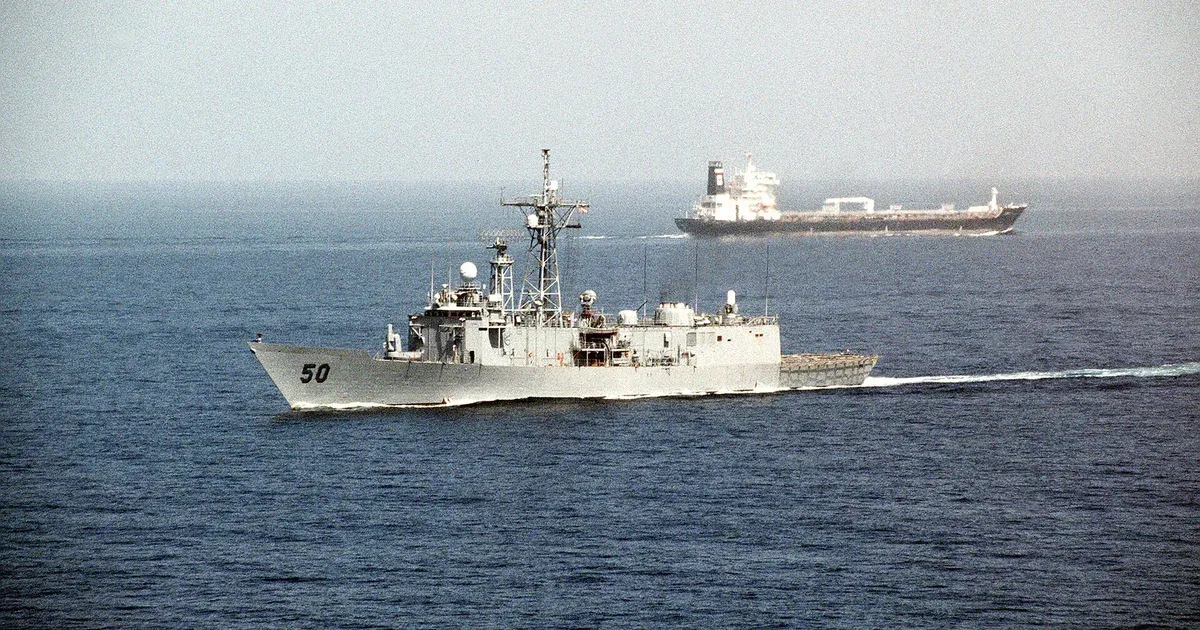
Tehran's military maneuvers in the Persian Gulf triggered a sharp sell-off in semiconductor futures Monday morning. As the Iran conflict stretches into a third week, the global semiconductor industry faces mounting threats that the hostilities will choke off key supplies essential for chipmaking. These risks extend beyond the immediate war zone, reaching the power grids of East Asia and the fueling docks of Southeast Asia. Energy markets reacted with immediate instability to the prospect of a closed Strait of Hormuz. Singapore fuel distributors, who manage the world's top bunkering hub, have already begun cutting back their purchases. This retreat reflects a growing fear that dramatic price swings will leave suppliers holding expensive inventory during a market crash. Many shipping firms now face the prospect of fuel shortages at a time when they must reroute vessels around the Cape of Good Hope. Shipowners are paying record premiums for marine gasoil. Price surges in the bunkering market have reached 15 percent in less than ten days. Distributors in Singapore told Bloomberg Economics that the unpredictability of Middle Eastern shipping lanes makes standard contract pricing nearly impossible. This withdrawal of liquidity from the fuel market suggests a broader slowdown in global freight movements.
Energy Stress Reaches Chip Markets
Distributors are not only raising prices, they are actively shrinking their exposure. Small and medium-sized fuel traders in Singapore have halted spot market purchases entirely to avoid the risk of sudden price reversals. Even the demand for fuel remains high as ships prepare for longer voyages to avoid the northern Indian Ocean. This imbalance is creating a bottleneck at one of the world's most critical maritime nodes. Freight rates for tankers have tripled since the initial missile exchanges. According to maritime analysts, the cost of insuring a single transit through the region has become prohibitive for all but the largest state-backed carriers. The impact on shipping is only the first stage of a deepening economic crisis. Higher fuel costs are now cascading through the global manufacturing sector, raising the floor for inflation at a time when central banks hoped for stability. Energy shortages in the Middle East have a direct, if somewhat overlooked, impact on the Pacific. Taiwan, the foundation of today's technology industry, relies heavily on imported liquefied natural gas to power its massive chip fabrication plants. Rising prices for energy imports are forcing these foundries to consider major price hikes for their customers. Power in Taiwan is no longer just a utility but a political variable.
Singapore Fuel Hubs Pull Back
Fabrication plants operated by the world's leading chipmakers consume vast amounts of electricity. If the Iran conflict leads to a sustained spike in global energy prices, the cost of producing advanced logic chips will climb by double digits. Bloomberg Economics notes that these manufacturing hubs are particularly vulnerable to supply chain chokepoints that provide the neon gas and other specialty gases necessary for lithography. Many of these gases are transported through the very sea lanes now under threat. And the financial pressure is not limited to manufacturing. Financial markets are beginning to price in a permanent shift in the cost of capital. The Bank for International Settlements has issued a warning that a prolonged war could spark a broader market slump and a surge in interest rates. Central banks may find themselves forced to raise rates to combat war induced inflation, even if the underlying economy is slowing. Investors are fleeing from what the Bank for International Settlements describes as rich asset prices. Stock markets in London and New York showed steep losses in the technology and transport sectors during early trading. Defense contractors and domestic energy producers saw a sharp rise in valuation. The rotation reflects a defensive posture that has not been seen in the markets for several years. Government borrowing costs are rising alongside corporate debt yields. The risk of a debt crisis in emerging markets grows as the US dollar strengthens against currencies in the Middle East and Asia. The Bank for International Settlements warns that the hit to asset prices could be more severe than the initial shocks of the 2020 pandemic. Large-scale liquidations of equity holdings are already occurring in several major pension funds.
Instability has become the only constant for currency traders. For instance, the euro and the yen have both struggled to maintain value against the dollar as investors seek a safe haven. The traditional safety of the dollar is being tested by the scale of the potential disruption to global trade. If Taiwan cannot maintain its export volume of high-end semiconductors, the entire global electronics market will stall within months.
Supply chain managers are scrambling to find alternative routes for raw materials. The cost of air freight has jumped as companies abandon sea routes in favor of faster, albeit more expensive, delivery methods. The shift is not sustainable for low-margin products, leading to empty shelves in some consumer electronics categories. The disruption is no longer theoretical.
Taiwan Costs Face War Pressure
Major tech firms in Silicon Valley have already begun issuing profit warnings. In practice, the problem is one of inventory. Most companies moved away from deep stockpiles years ago, leaving them exposed to even brief interruptions in the flow of goods. Iran possesses the capability to disrupt these flows for months, not just weeks, if the conflict continues to escalate.
Military developments in the region are now the primary driver of the Nasdaq. Markets are no longer responding to earnings reports or domestic economic data. Instead, they are tracking the movement of carrier strike groups and the language coming from Tehran. The decoupling of financial reality from corporate performance seems nearly complete.
The instability is a structural change in how global trade operates. The era of cheap, predictable logistics appears to be ending. The Bank for International Settlements suggests that the global economy may be entering a period of stagflation that will last for years. Governments may be forced to intervene in energy markets to prevent a total collapse of consumer spending.
Consumer confidence is already showing signs of a sharp decline. But the biggest impact may be the permanent reorganization of the semiconductor supply chain. Taiwan is now accelerating plans to move production closer to its end markets in Europe and North America. Such a transition will take years and cost hundreds of billions of dollars.
The price of silicon wafers is set to rise by 20 percent by the end of the quarter. Prices for shipping containers from Asia to Europe have already surpassed 10,000 dollars per unit.
Chip Markets Learned Energy Is the Chokepoint
The polite fiction of a clean semiconductor economy is collapsing under the weight of fuel prices and shipping risk. The chip industry likes to present itself as weightless, digital, and immune to the physical world, but every advanced wafer depends on electricity, specialty gases, maritime routes, and political stability. The Iran war has exposed that dependency with brutal efficiency.
If Taiwan, Singapore, and the Gulf cannot keep energy moving predictably, Silicon Valley cannot keep pretending that quarterly guidance is insulated from missiles and tanker insurance. The market is not reacting irrationally; it is finally pricing the physical fragility beneath the digital economy. The next chip shortage will not begin in a fab. It will begin at a fuel dock.