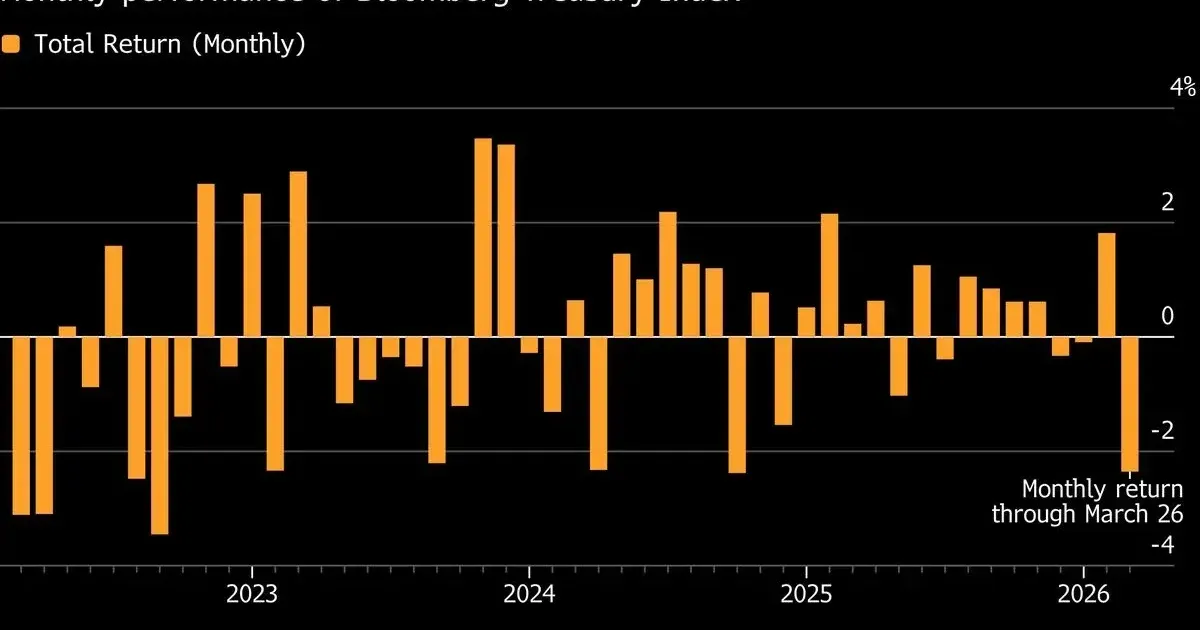
Global markets suffered their sharpest pressure since 2022 as the Iran conflict lifted oil prices, pushed Treasury yields higher and hit stocks that depend on discretionary spending. The damage was broad enough to challenge the usual safe-haven playbook. By March 27, 2026, the selloff had become especially painful because equities and bonds weakened at the same time.
Bloomberg reported that Treasury yields reached yearly highs as investors priced in a longer stalemate and a more inflationary energy shock. That matters because higher yields reduce bond prices and raise borrowing costs across the economy.
The usual portfolio cushion did not work cleanly. In many downturns, bonds rise when stocks fall. This time, inflation fears pushed both sides of the traditional 60-40 portfolio lower, leaving investors with fewer places to hide.
Treasury Yields and Oil Prices Rise Together
The selloff began with the energy channel. Higher crude prices make transport, manufacturing and consumer goods more expensive. Bond investors responded by demanding more compensation for inflation risk, which pushed yields up and prices down. That dynamic hit stocks because companies face thinner margins when energy and financing costs rise together. It also hit bonds because central banks may have less freedom to cut rates if inflation remains sticky. Investors initially treated the conflict as a regional risk. As the war dragged on, they began treating it as a global inflation event. That shift explains why the market reaction broadened across asset classes.
Luxury Stocks Lose Ground
Luxury groups were among the visible losers. CNBC reported that the Iran war wiped roughly $100 billion from luxury stock values as spending and travel in the Middle East came under pressure. Dubai and the wider Gulf have been important growth markets for high-end retail. When regional travel slows and wealthy consumers become more cautious, brands that rely on tourism, watches, fashion and premium real estate can lose momentum quickly.
The damage was not limited to stores in the Gulf. Investors marked down global luxury companies because the sector was already facing slower growth in other markets. A Middle East shock arrived at a bad time for a business built on confidence and discretionary wealth.
Portfolios Face a Nowhere-to-Hide Month
The Financial Times described classic balanced portfolios as heading for their worst month since 2022. The reason is correlation: stocks and bonds were falling together instead of offsetting each other. Gold and energy positions offered some relief for investors who already held them, but most retirement portfolios are not built around geopolitical hedges. Pension funds, retail investors and institutions with standard allocations all felt the same pressure.
The selloff also showed how thin investor patience has become after two years of rate uncertainty. Traders were not only repricing energy risk; they were questioning whether companies can protect margins if shipping, insurance and credit costs all move higher together. That combination explains why the market reaction looked broader than a simple energy-stock rotation. Investors were also testing bank exposure, airline margins, industrial orders and the chance that consumer spending weakens before policymakers can respond. The hardest part for investors is judging whether the drop reflects a temporary war premium or the start of a more durable repricing of global risk assets. A second-order worry is liquidity: when risk desks pull back together, even sound companies can face wider spreads and more expensive hedges. That can turn market fear into real financing pressure. That is why the next trading sessions may matter more than the first shock.
Selloff Transmission
The market lesson is that geopolitical risk becomes systemic when it changes the price of energy. A conflict that keeps oil elevated can affect inflation, interest rates, corporate margins, consumer spending and currency expectations at the same time. Markets can recover from headline shocks quickly. They recover more slowly from shocks that force investors to rethink the inflation path. Until traders see a credible route toward de-escalation, volatility is likely to remain tied to every signal from the Gulf, oil markets and central banks.
The stress was also visible in investor behavior. Cash, short-term bills, gold and energy-linked trades became more attractive as portfolio managers looked for assets less exposed to simultaneous inflation and growth shocks. That rotation can reinforce the pressure on equities when risk managers reduce exposure at the same time.
For companies, higher yields change the cost of refinancing. Firms that planned to roll over debt in 2026 now face a less forgiving market. That matters most for businesses with weaker balance sheets, but it can also slow mergers, buybacks and expansion plans at stronger companies. The broader question is whether the selloff remains a repricing or becomes a credit event. If liquidity stays orderly, markets can adjust. If lenders pull back, the damage can spread from asset prices into the real economy.
That cross-asset pressure complicates portfolio defense. In a normal equity slide, high-quality bonds can absorb part of the damage. When bond prices are also falling because inflation expectations and yields are rising, managers have fewer simple hedges and may reduce risk more aggressively. Market depth is therefore as important as the headline index move. If buyers continue to appear at lower prices, the slump can remain a repricing of war risk. If liquidity thins and credit spreads widen quickly, the selloff can start feeding on itself as leveraged investors are forced to cut positions.
The danger for policymakers is that market stress can tighten conditions before any official rate decision. Falling stocks, higher yields and cautious lenders all make financing harder, which can slow spending even if central banks have not yet changed policy. That is why traders are watching funding markets as closely as stock indexes. A sharp index decline is painful, but a freeze in short-term financing would be more dangerous. For now, the distinction between volatility and systemic stress remains the central question.