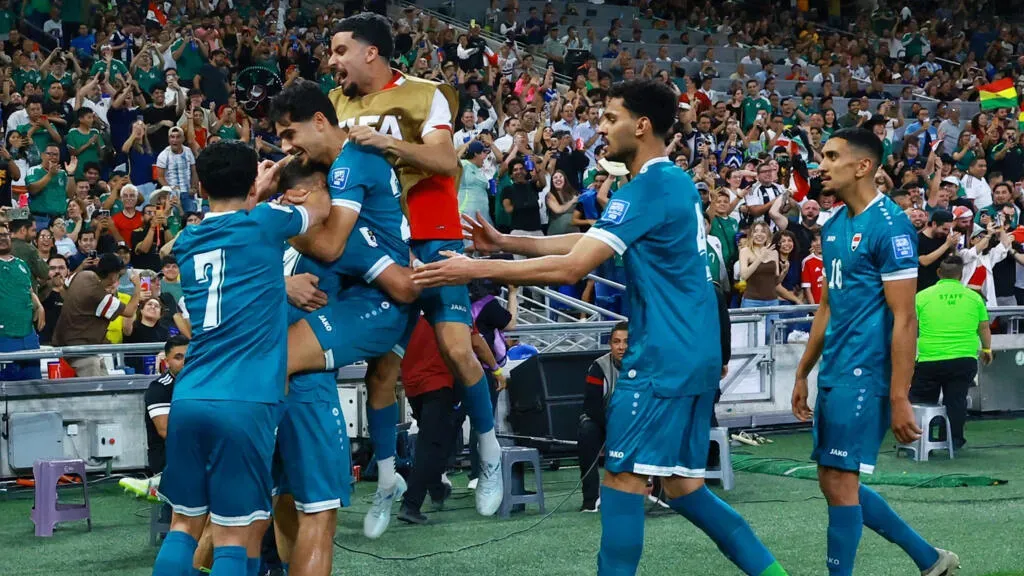
The final alignment of the 48-team field for the upcoming soccer tournament in North America is now set. On April 1, 2026, final spots were decided as regional underdogs overcame veteran sides in the intercontinental playoffs. Baghdad and Kinshasa became the epicenters of celebration as enduring sporting droughts came to an abrupt end. Global soccer fans now look toward the summer finals with a complete list of participants for the first time in this qualifying cycle. Iraq defeated Bolivia 2-1 on Tuesday to secure their first appearance at the finals since the 1986 tournament in Mexico. Early pressure from the Iraqi front line forced defensive errors from the South American side. Ali Al-Hamadi opened the scoring with a clinical finish that shifted the momentum of the playoff final. Moments later, Aymen Hussein doubled the advantage to provide the cushion necessary for the victory. Bolivia managed a late consolation goal but failed to dismantle the organized Iraqi defense in the closing minutes.
Iraq Secures First World Cup Spot in Decades
Forty years of waiting concluded for the Lions of Mesopotamia as the final whistle sounded in the intercontinental playoff. Previous qualifying campaigns for the Iraqi national team often crumbled in the final stages of the Asian confederation brackets. Support for the team remained firm despite the repeated setbacks over the last four decades. Coaches and analysts point to the professionalization of the domestic league as a primary reason for the recent surge in performance. Iraq now enters a challenging Group I that includes France, Senegal, and Norway.
International observers note that Iraq will face a steep learning curve in their return to the world stage. Senegal enters the group as the reigning African powerhouse, while Norway features some of the most prolific individual talent in European soccer. France, the 2018 champions, will undoubtedly provide the greatest test for the Iraqi squad in the opening round. Preparations are already underway in Baghdad to ensure the team has the necessary resources for their June debut. The match against Bolivia provided a template for how the team might handle high-pressure environments.
Financial investments in Iraqi youth academies are finally yielding results in the senior national team. Ali Al-Hamadi is a new generation of players competing in top-tier European leagues. His presence on the pitch creates space for teammates like Aymen Hussein to exploit. This tactical flexibility helped the team overcome a physical Bolivia side that relies heavily on altitude advantages at home. Iraq proved they could compete on neutral ground with disciplined positioning and rapid counter-attacks. The victory ensures Asia will have strong representation in the expanded format.
DR Congo Ends Half Century Qualifying Drought
DR Congo players collapsed in joy after a 1-0 extra-time victory over Jamaica on March 31, 2026. Neither side could find a breakthrough during the regulation ninety minutes of the intercontinental playoff. Physical play dominated the midfield as both nations struggled to maintain possession under intense humidity. Axel Tuanzebe rose above the Jamaican defense in the 100th minute to connect with a corner kick. His header found the back of the net to send the Congolese fans into a frenzy. Jamaica applied meaningful pressure in the final ten minutes but could not find an equalizer before time expired.
Fifty-two years have passed since the nation last qualified for the tournament under the name Zaire in 1974. That appearance in West Germany remains a bittersweet memory for older fans who recall the team's struggles against top European sides. Modern investment in the Congolese federation has prioritized infrastructure and scouting across the diaspora. Axel Tuanzebe, a former England under-21 international, chose to represent the Leopards to help bridge the gap between European professional standards and African talent. His goal validates the federation's long-term strategy of recruiting dual-nationality players.
Kinshasa erupted in huge street parties as news of the qualification reached the capital city. Government officials declared a public holiday to commemorate the achievement. Players and coaching staff will return to a hero's welcome before beginning their intensive training camps in May. The victory over Jamaica highlights the closing gap between African and CONCACAF nations. DR Congo will look to improve upon the 1974 performance where they failed to score a single goal. Recent form suggests the team possesses the scoring depth to be competitive in the group stages.
Turkiye Returns to Global Soccer Stage
Turkiye secured their place in the 2026 World Cup after a 24-year absence that frustrated one of the most passionate fan bases in Europe. Success in the qualifying rounds came through a mix of tactical discipline and the emergence of creative midfielders. Fans in Istanbul celebrated late into the night as the national team confirmed their return to the global elite. The 2002 third-place finish in South Korea and Japan had previously been the pinnacle of Turkish soccer history. Players now face the burden of living up to that legacy in the expanded 48-team field.
Iraq grabbed the last available place at the World Cup by beating Bolivia 2-1 in their intercontinental playoff on Tuesday, sealing their return to the finals after a 40-year absence.
Vincenzo Montella, the national team manager, praised the resilience of his squad throughout the grueling European qualifiers. Consistency at the back proved essential as Turkiye navigated a difficult group featuring several established powers. Young talents have integrated seamlessly with veteran leaders to create a balanced roster. Domestic clubs like Galatasaray and Fenerbahce have also seen an uptick in performance which directly benefits the national pool. Turkiye will enter the tournament as a dangerous dark horse capable of upsetting higher-ranked opponents.
Economic impact studies suggest that Turkiye's qualification will boost local merchandise sales and tourism revenue. Sponsorship deals for the national team have already seen a serious increase in valuation. Broadcast rights for the tournament are expected to reach record numbers within the country. This financial windfall will be reinvested into grassroots programs to ensure the 24-year drought does not repeat itself. The national team travels to the United States next month for a series of friendly matches. These games will finalize the selection process for the 26-man roster.
FIFA Expansion Reshapes World Cup Competitiveness
FIFA officials have defended the decision to expand the tournament to 48 teams despite criticism regarding the dilution of quality. Proponents of the move argue that giving nations like Iraq and DR Congo a platform grows the game globally. Commercial revenue for the 2026 cycle is projected to exceed $11 billion due to the increased number of matches. This expansion allows for more diverse representation from Asia and Africa. Traditional soccer powers in Europe and South America must now prepare for a more varied tactical landscape in the early rounds.
Skeptics worry that the group stages will feature too many lopsided results between giants and newcomers. However, the performance of DR Congo and Iraq in the playoffs suggests that the gap is narrowing sharply. Professional leagues in secondary markets are producing athletes who can compete physically with the best in the world. Modern scouting technology allows smaller nations to identify and train elite talent more efficiently. The democratization of soccer expertise is a direct result of increased global connectivity and investment. The 2026 tournament will serve as the ultimate test for this new format.
Logistical challenges for the tournament remain a primary concern for the host cities in the US, Canada, and Mexico. Travel distances between venues could impact player recovery and performance levels. FIFA has grouped matches geographically to reduce the effects of long-haul flights. Teams will need to manage their rosters carefully to survive the expanded knockout rounds. The inclusion of more teams means the path to the final is now longer than in any previous edition. The final tournament structure consists of twelve groups of four teams each.