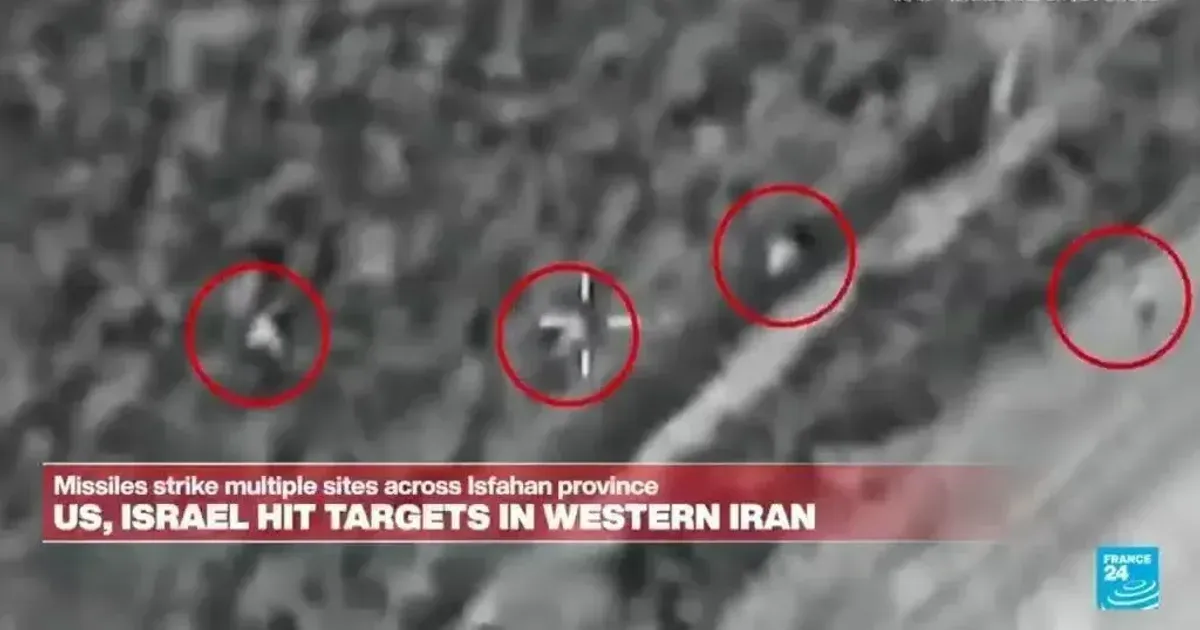
Explosions rocked the outskirts of Kermanshah before dawn on Sunday. Billowing smoke from industrial sites and military depots signaled a new phase in a conflict that has now gripped the region for twenty-one days. Local residents reported the sound of low-flying jets followed by sustained anti-aircraft fire. This activity occurred shortly after midnight, marking the largest escalation since hostilities began earlier this month. Israel intensified its air campaign against Iran across multiple western provinces to dismantle military infrastructure and command centers. Military officials in Tel Aviv confirmed the strikes were wide-scale and targeted specific regime assets. Intelligence units detected incoming missiles from Iranian territory earlier that morning, which prompted the immediate retaliatory response. The defense ministry maintains these operations aim to neutralize immediate threats to Israeli civilians. Western Iran is a strategic hub for missile storage and logistics, making it a primary focus for the Israeli Air Force. Reports from Doha suggest that the bombing campaign is expanding beyond border regions into the Iranian heartland. Hoda Abdel-Hamid, a journalist on the ground, confirmed the targets include regime infrastructure designed to support long-range ballistic operations. The scale of the destruction suggests a coordinated effort to cripple the logistics of the Islamic Revolutionary Guard Corps. But the conflict is no longer confined to the air over the Zagros Mountains. Strategic tension has moved to the water, specifically the maritime choke points that dictate global energy stability. Foreign Minister Abbas Araghchi stated on Sunday that the Strait of Hormuz remains open to most international shipping. He clarified that this access does not extend to the United States or its immediate regional allies. This selective blockade is a direct test of freedom of navigation in one of the world's most essential sea lanes.
Israel Expands Western Iran Strikes
Israel initiated these latest sorties with a focus on radar installations and surface-to-air missile batteries. By suppressing Iranian air defenses, the Israeli Air Force gained the freedom to strike deeper targets with less risk to its pilots. Analysts at the Institute for the Study of War note that these strikes have degraded the Iranian ability to monitor its own western airspace. The precision of the munitions indicates high-level intelligence regarding the location of underground facilities. The human cost is beginning to mount as the war enters its third week. While official casualty figures remain difficult to verify, state media in Tehran reported serious damage to non-military structures near the strike zones. The Iranian government has used these reports to strengthen domestic support for its ongoing resistance. They have consistently framed the Israeli actions as violations of national sovereignty that require a harsh response. Yet the Israeli government remains undeterred by international calls for restraint. Prime Minister Benjamin Netanyahu has repeatedly asserted that the safety of the Israeli people depends on the total degradation of Iranian offensive capabilities. The current air campaign shows no signs of slowing down or shifting toward a diplomatic resolution. Every night brings a fresh wave of reports regarding strikes on missile silos and drone manufacturing plants.
Tehran Rejects Ceasefire Demands
President Trump has taken an increasingly aggressive posture regarding the maritime restrictions imposed by Tehran. He threatened to strike the main oil export terminal of Iran if the de facto blockade on the Strait of Hormuz is not lifted immediately. The warning targets Kharg Island, the facility responsible for the vast majority of Iranian crude exports. Such a move would effectively sever the economic lifeline of the Iranian regime. The Iranian leadership has shown little interest in backing down from the confrontation. Foreign Minister Abbas Araghchi dismissed the possibility of high level talks or a cessation of hostilities. He noted that the time for words had passed, and the current reality demanded action on the battlefield. The Iranian foreign ministry continues to maintain a stance of defiance against what it terms American and Israeli aggression.
We have never asked even for negotiation, and we will fight for as long as it takes.
Meanwhile, the global energy market is reacting with extreme instability to the threats against oil infrastructure. Crude prices have fluctuated wildly as traders weigh the possibility of a total shutdown of the Strait of Hormuz.
Hormuz Risk Shadows the Campaign
The Strait of Hormuz is a narrow waterway through which roughly twenty percent of the world's oil consumption passes.
At the same time, regional neighbors like Saudi Arabia and the United Arab Emirates are on high alert. They fear that an escalation into a full-scale naval war would jeopardize their own export capabilities. The Pentagon has moved additional carrier strike groups into the North Arabian Sea to provide a visible deterrent against Iranian naval aggression. These movements signal a readiness to engage if the blockade is enforced against American-flagged vessels.
The naval presence in the region is now at its highest level in over a decade. The U.S. Navy has increased its patrols near the Bab el-Mandeb and the Strait of Hormuz to reassure commercial shipping companies. Many insurance providers have hiked premiums for vessels traversing these waters, leading to a de facto tax on global trade. The economic pressure is precisely what the Iranian leadership hopes will force the West to blink. Diplomatic channels are now cold as both sides prepare for a long-term engagement. Abbas Araghchi reiterated that the regime is prepared for a war of attrition. He emphasized that the Iranian military has spent decades preparing for exactly this type of direct confrontation with Western powers. For instance, the extensive network of tunnels and hardened sites across western Iran was designed to withstand a sustained bombing campaign.
In particular, the rejection of a ceasefire suggests that Tehran sees a strategic advantage in continuing the fight. They believe that as the conflict drags on, the international community will eventually pressure Israel to halt its strikes. The Iranian strategy relies on the hope that the high cost of energy and the risk of a wider regional war will become unbearable for the West. They are betting on the fatigue of their adversaries.
The missiles continue to fly and the tankers remain anchored in safe harbors. The language from Washington and Tel Aviv suggests a commitment to a decisive outcome rather than a frozen conflict. Trump has made it clear that he views the current Iranian leadership as an obstacle to regional peace that must be dealt with firmly. The resolve is being tested nightly by the persistent barrages from both sides.
The war has now reached a point of no return for the current political structures in the Middle East. Predictions of a swift conclusion have been replaced by the grim reality of a multi-front engagement. Military commanders on all sides are now preparing for the possibility that this three-week-old conflict could last for months. Total victory remains the stated goal for both the Israeli defense forces and the Iranian high command.
Escalation Is Outrunning Diplomacy
Ask any veteran of the 1980s Tanker War what happens when shipping lanes become targets, and they will describe the current scenario with grim familiarity. The world is sleepwalking into a global energy catastrophe because it refuses to acknowledge that the Iranian regime is not a rational diplomatic actor. For decades, the West has treated the Strait of Hormuz as a bargaining chip rather than a non-negotiable artery of civilization. The failure of resolve has allowed Tehran to weaponize the global economy, holding billions of people hostage to the whims of a revolutionary council.
President Trump is correct to threaten the oil terminals at Kharg Island, because the only language this regime understands is the systematic destruction of its revenue streams. We must stop pretending that a ceasefire is a victory; a ceasefire is only a pause that allows the aggressor to reload. If the Israeli Air Force has the capability to dismantle the Iranian military machine, they should be encouraged to finish the job without the interference of hand-wringing diplomats. The alternative is a perpetual state of maritime blackmail that will eventually bankrupt the global consumer.
Force is the only viable currency in this theater.