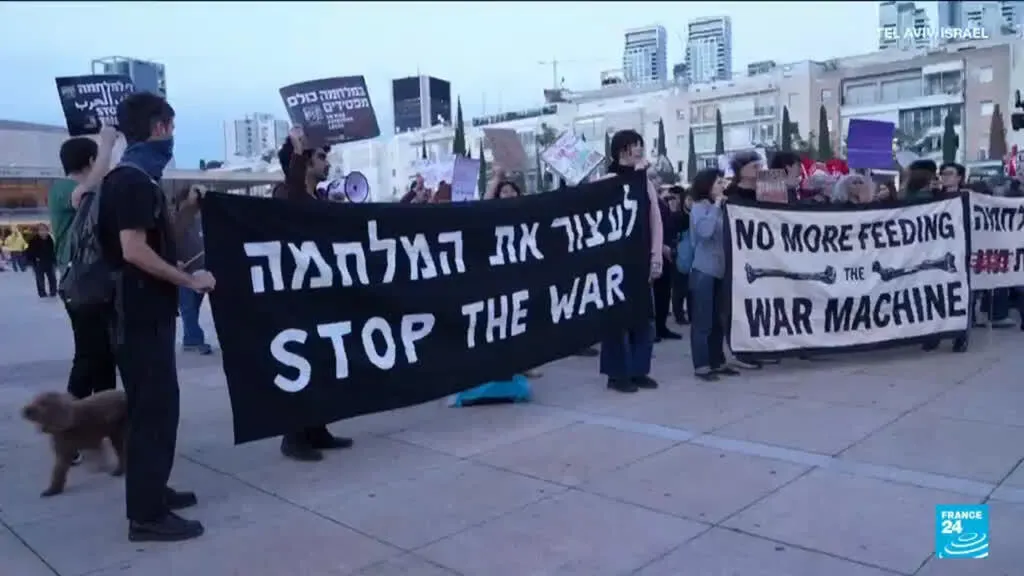
Israel Police units moved into central Tel Aviv to disperse hundreds of demonstrators gathered to oppose the ongoing military conflict with Iran. Officers took 18 people into custody during a series of scuffles that broke out near the city center. The March 29, 2026 protest followed a month of weekly demonstrations, with France 24 reporting that attendance numbers are climbing. The trend suggests a shift in public sentiment regarding the multi-front engagement.
Violence erupted near the intersection of major thoroughfares when security forces attempted to push the crowd back toward designated protest zones. While Al Jazeera noted that the Saturday event turned confrontational, police spokespersons defended the use of force as necessary to clear blocked roadways. Mounted units and specialized dispersal teams remained on standby as the sun set over the Mediterranean coast. Detainees were transported to local precincts for questioning and processing throughout the evening.
Tel Aviv Police Launch Dispersal Operations
Police records show that the 18 individuals arrested face charges ranging from obstructing public order to assaulting officers in the line of duty. Security protocols became more stringent as the night progressed, with local media outlets capturing images of physical altercations between protesters and uniformed personnel. High-pressure water systems were stationed nearby, though their deployment was limited to specific flashpoints where the crowd refused to move. Israel Police commanders emphasized that while the right to protest is recognized, the disruption of critical infrastructure remains a violation of emergency regulations.
High-ranking officials within the internal security ministry have expressed concern over the logistical strain these weekly rallies place on urban resources. Patrol units normally assigned to neighborhood safety have been redirected to the Tel Aviv metropolitan area to manage the influx of activists. This logistical pivot have coincided with a period of heightened alert across the country. Tactical teams have established temporary barriers around government buildings and major transportation hubs to prevent the escalation of civilian dissent into institutional paralysis.
"Police in Tel Aviv dispersed protesters opposing the US-Israeli war on Iran on Saturday," according to reports from Al Jazeera.
Conflict between the Iran-led regional axis and the joint US-Israeli forces have entered its second month without a clear path toward a ceasefire. Regional tensions have fueled domestic debates within the Israeli Knesset, where opposition members have questioned the long-term sustainability of the current military strategy. Public participation in the anti-war movement, once confined to small activist circles, now includes a broader demographic of urban professionals and families. France 24 documentation highlights that these protesters are increasingly vocal about the economic toll of the military campaign. The intensifying Israel-Iran military conflict has necessitated the mobilization of reservists, further fueling civil unrest.
Military strategists in Tel Aviv are currently focused on neutralizing long-range missile capabilities that have threatened the coastal plain for weeks. This objective, however, requires a level of resource commitment that some civilians believe outweighs the immediate benefits of the offensive. The mobilization of reserve units has pulled thousands of citizens from the workforce, creating a palpable sense of fatigue in the commercial sector. Businesses in the city center reported lower foot traffic on Saturday as the protest activity effectively shut down several key shopping districts.
Israel Security Forces Tighten Protest Restrictions
Washington stays committed to the joint defense pact, providing logistical and intelligence support for the operations against Tehran. Critics of the administration has pointed to the rising number of civilian casualties in the broader region as a reason for immediate de-escalation. These calls for peace are echoed by the demonstrators in the streets, many of whom carry signs demanding a negotiated settlement rather than a protracted war of attrition. International monitors have noted that the Israeli government has maintained a firm stance against such negotiations, citing the necessity of absolute security.
Security protocols at the Saturday rally were especially more aggressive than those seen in early March. Human rights observers present at the scene reported that the use of physical force appeared more frequent as the crowd size increased. Protesters responded by forming human chains and chanting slogans aimed at the defense ministry. The interaction between these two groups has created a volatile environment that local authorities are struggling to manage without resorting to sharper measures. Future demonstrations are expected to draw even larger numbers if the military situation remains stalemated.
What the Tel Aviv Arrests Signal
Western observers often misinterpret the intensity of street demonstrations in Tel Aviv as a sign of imminent government collapse. History suggests that internal friction in Israel frequently sharpens the edge of military policy because the state views domestic dissent as a luxury of a functioning democracy that must not interfere with existential survival. The arrest of 18 people is not a sign of failure but a demonstration of the state's determination to maintain order during a generational conflict with Iran. This resolve is the true metric of the current administration's stability.
Expect the Israeli government to tighten emergency regulations further if these protests reach a critical mass that threatens to disrupt the mobilization of reserve forces or the flow of international aid. Washington is unlikely to pressure its primary ally into a ceasefire while Iranian capabilities remain a threat to global energy markets. Protesters may be growing in number, but they lack the institutional leverage to override the security establishment's consensus on the necessity of this campaign. Sentiment does not drive strategy in a war for regional dominance.