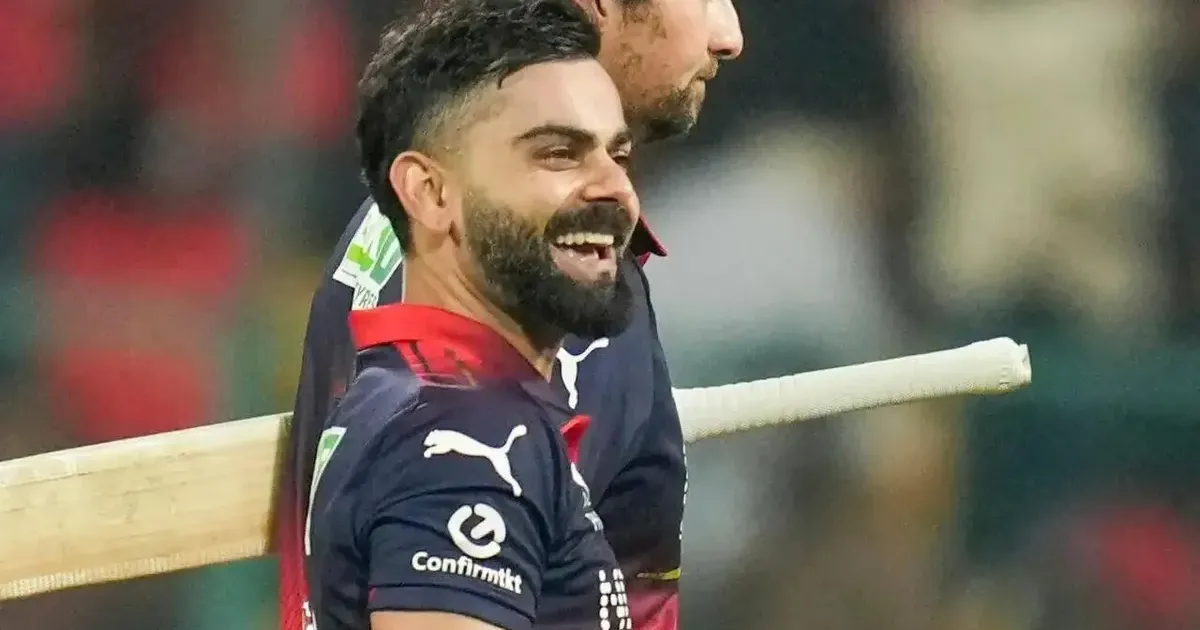
Virat Kohli dominated the crease during a record-breaking Indian Premier League performance that revived debate over his international red-ball future. The 37-year-old veteran produced an unbeaten 69 to guide Bengaluru past a target of 202 against Sunrisers Hyderabad. Spectators at the M. Chinnaswamy Stadium watched as a vintage display of clinical power-hitting dismantled one of the most disciplined bowling attacks in the league. On March 29, 2026, the innings also fit Kohli's broader late-career T20 record surge and maintained Bengaluru's playoff momentum.
Ambati Rayudu, acting as a commentator and former teammate, led the chorus of voices demanding a formal return to the national side for the former captain. Rayudu noted that the technical proficiency on display suggested a player who has yet to reach the twilight of his career. Despite Kohli stepping away from the longest format of the game to manage his workload and focus on white-ball commitments, the vacuum in leadership within the Indian Test squad has kept his name at the center of selection discussions. Domestic performance remains the primary metric for international readiness in the eyes of many analysts.
Ambati Rayudu Challenges Kohli to Reclaim Captaincy
Rayudu argued throughout the broadcast that the current leadership structure in Indian Test cricket lacks the aggressive edge that defined the Kohli era. He emphasized that the physical fitness and mental acuity shown during the chase against Hyderabad were indicators of a player capable of enduring five-day matches. Critics of the current Test setup often point to a lack of tactical consistency since the transition away from the old guard. Rayudu used the post-match analysis to make a direct plea for a reconsideration of the retirement decision.
He’s far from a finished product and should return to Tests.
Direct observations of Kohli's footwork against the spinners from Sunrisers Hyderabad provided the basis for Rayudu's assessment. Quick hands and a stable base allowed the veteran to exploit gaps in the field with surgical precision. Many former cricketers believe that the intensity Kohli brings to the field is exactly what the red-ball team requires to stabilize its recent erratic form. The conversation has now moved beyond mere sentiment into a discussion about technical necessity. Bengaluru finished the game with several overs to spare.
Bengaluru Chase Sets New Twenty20 Benchmarks
Bengaluru secured the fastest successful chase of a target exceeding 200 runs in the history of the Indian Premier League during this encounter. Support from Devdutt Padikkal and Rajat Patidar ensured that the pressure never mounted on the middle order. While Kohli anchored the innings, his strike rate remained consistently high, forcing the Hyderabad captain to cycle through six different bowlers in a desperate attempt to break the opening stands. The cooperation between the three batsmen neutralized the threat of the dry surface. Sunrisers Hyderabad had earlier posted 201 for the loss of nine wickets.
Success in this format often relies on a blend of youthful aggression and experienced game management. Padikkal provided the early fireworks, allowing Kohli to settle into a rhythm before accelerating in the middle overs. Patidar then joined the fray to deliver the final blows, ensuring that the run rate remained comfortably above the required ten per over. The efficiency of the run-chase has redefined the expectations for batting lineups facing 200-plus scores in the 2026 season. Bengaluru hit twelve sixes during the innings.
Statistical dominance against Sunrisers Hyderabad became the immediate evidence for those arguing that Kohli still has another international chapter left.
Statistical milestones punctuated the evening as Kohli surpassed 4,000 runs specifically accumulated during run-chases across various T20 formats. This achievement places him in a unique bracket of consistency that few active players can replicate. He also moved ahead of Shoaib Malik in the all-time list of most prolific run-scorers in high-pressure pursuit scenarios. Such numbers reinforce the argument that his ability to read a game remains unmatched even as younger talents emerge. Sunrisers Hyderabad struggled to contain the flurry of boundaries in the final powerplay.
Records fell in rapid succession as the lights dimmed over the stadium. Beyond the personal tallies, the partnership between Kohli and Patidar generated 84 runs in just seven overs. Every bowler who attempted a short-ball strategy found themselves dispatched to the mid-wicket boundary. The technical execution of the pull shot by the veteran suggested that his reflexes have not slowed with age. This physical condition is a key requirement for anyone considering a return to the rigors of Test match cricket. Total attendance for the match reached 35,000 people.
Red Ball Return Faces Strategic Hurdles
Returning to the Test arena involves not only batting form; it requires a commitment to the grueling schedule of overseas tours and five-day fatigue. India faces a heavy international calendar in late 2026, including a critical series against Australia. Supporters suggest that Kohli's presence at number four would provide the backbone the team has lacked during recent batting collapses. By contrast, some board officials remain cautious about disrupting the current transition phase intended to blood younger captains. The selection committee has not yet commented on the speculation.
India currently sits in an unstable position on the World Test Championship table. Leadership stability has been a recurring theme in press conferences throughout the current season. While the public clamor for a Kohli comeback grows, the player himself has remained silent regarding any desire to don the white flannels again. Instead, his focus appears fixed on securing a trophy for Bengaluru in the ongoing IPL season. The team travel to Chennai for their next fixture. Professional athletes often prioritize their physical longevity over the demands of multiple formats.
What Kohli's Form Forces India to Weigh
Nostalgia rarely wins championships, yet the Indian cricketing establishment seems about to fall into its familiar trap. The fervor surrounding a potential return for Virat Kohli to the Test captaincy is less a reflection of his current readiness and more an indictment of the catastrophic failure of the Board of Control for Cricket in India to develop a successor. Since Kohli stepped down in early 2022, the leadership has been a rotating door of interim choices and unconvincing appointments. The vacuum has created a desperate environment where a single 69-run innings in a domestic T20 match is enough to spark a national debate about red-ball leadership. It is a symptom of systemic weakness.
Rayudu's comments, while grounded in a genuine admiration for Kohli's fitness, ignore the fundamental reality that Test cricket is an entirely different beast. Reintegrating a retired superstar into a squad currently trying to find a new identity would be a regression. It would signal to every young captain-in-waiting that their progress is irrelevant if a legacy brand name is still available. If India truly wants to regain its status as a Test powerhouse, it must look forward, not backward. Relying on Kohli to solve the current leadership crisis is a short-term fix that will only deepen the long-term structural rot. The board should ignore the noise and commit to the future.