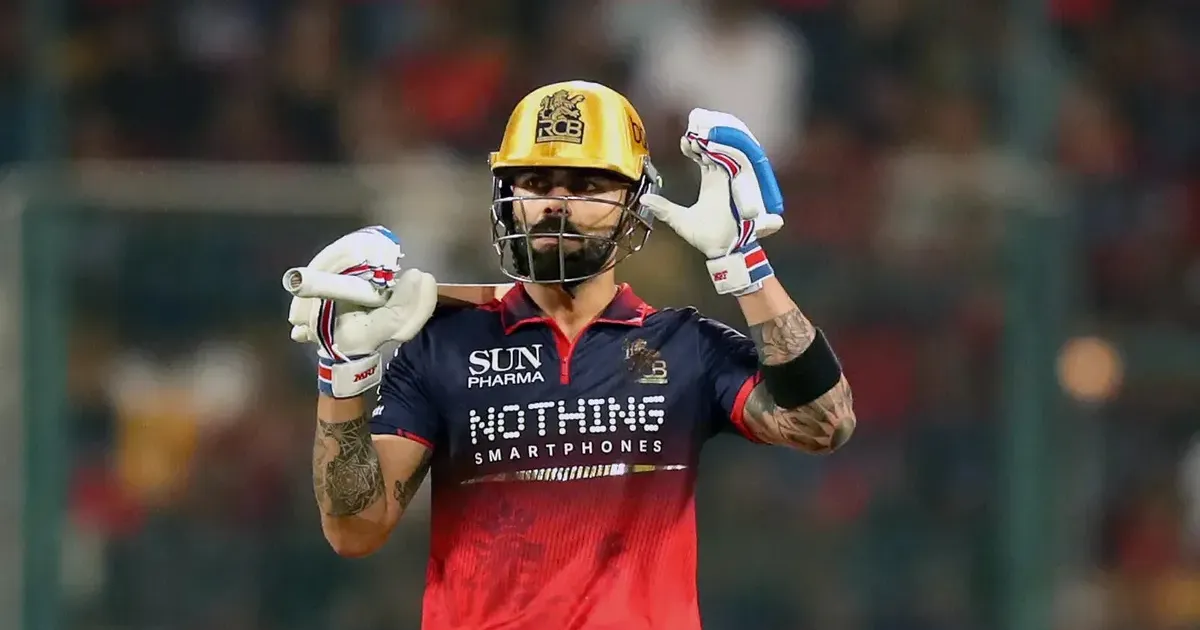
Virat Kohli turned Royal Challengers Bengaluru's chase into a record-setting statement against Sunrisers Hyderabad. The March 29, 2026 win also moved Kohli beyond Shoaib Malik as the leading Asian run-scorer in T20 cricket. The innings combined familiar control with a scoring rate that kept the target from becoming pressure.
Victory arrived with startling efficiency despite a competitive total posted by the visitors. Sunrisers Hyderabad managed 201 for 9 in their allotted overs, a score that usually provides a powerful defense on most Indian grounds. Devdutt Padikkal joined Kohli in a relentless opening partnership that exposed systemic flaws in the Hyderabad bowling strategy. The scoreboard pressure failed to materialize because the opening pair maintained a scoring rate well above 12 runs per over.
Success for the Bengaluru franchise rested on tactical aggression and technical precision. Kohli looked sharp from the first delivery, finding gaps with the same dexterity that characterized his peak years in international competition. This clinical approach ensured the required run rate never climbed toward double digits. He reached his half-century in just 28 balls, primarily through calculated risks against the spin bowlers in the middle overs.
Historical Context of the Asian T20 Run Record
Surpassing Shoaib Malik places the Indian batter at the pinnacle of regional cricketing history. Malik had long held the title of Asia's most prolific T20 run-getter through a career spanning decades and multiple global leagues. Data provided by official statisticians confirms that Kohli reached this milestone in far fewer innings than his Pakistani counterpart. His ability to maintain a high average while scoring at a rapid strike rate distinguishes him from other anchors in the format.
Cricketing analysts often categorize T20 players as either accumulators or power hitters. Kohli, by contrast, has blurred these lines by using superior fitness and strike rotation to build large totals without relying solely on boundary clearing. His commitment to physical conditioning allowed him to sprint between wickets even in the humid conditions of the late March heat. He has now solidified his position as the most consistent run-producer in the shortest format of the game.
Workload management remains a central theme of his late-career resurgence. Two years have passed since his retirement from T20 internationals, yet his domestic form suggests no decline in motivation or physical capacity. Kohli attributed his sustained performance to a strict regime and a narrowed focus on franchise success. Professional cricket demands a grueling schedule, but the veteran batter appears to have found a balance that preserves his elite reflexes.
Breakdown of the Sunrisers Hyderabad Bowling Failure
Sunrisers Hyderabad coaching staff expressed immediate dissatisfaction with the execution of their defensive plans. The head coach publicly criticized the bowling unit for failing to adhere to the agreed-upon lengths during the Powerplay. Errors in line and length allowed Padikkal and Kohli to exploit the field restrictions with ease. The bowling group conceded 74 runs in the first six overs, effectively ending the contest as a competitive struggle.
Bowling changes failed to stem the flow of runs. Every replacement brought into the attack suffered similar treatment, as the Bengaluru openers seemed to anticipate every variation. Spinners struggled to find grip on a surface that offered minimal assistance, while the pace bowlers lacked the discipline to target the stumps consistently. Hyderabad finished the match having used seven different bowlers, none of whom could break the momentum. The tactical collapse forced the Sunrisers leadership to defend a series of inexplicable field placements during the post-match briefing.
Statistical Milestones in the IPL Run Chase
Milestones continued to pile up as the match neared its conclusion. Kohli became the first player in history to cross the 4,000 run mark specifically in IPL run chases. This statistic highlights his temperament under pressure, a trait that has defined his tenure with the Bengaluru franchise. Chasing 200 plus is a difficult task for most top orders, but the efficiency of the March 29 performance made the target look insufficient. Statistical models now rank him as the most effective second-innings batter in the history of the league.
Pressure often causes technical breakdowns in lesser players. Kohli, however, thrived on the requirement to score at 10 runs per over from the start. He manipulated the field with wristy flicks and late cuts, forcing the Sunrisers captain to frequently alter his defensive ring. The pursuit of the target was so clinical that the required rate dropped to six runs per over by the twelfth over. Bengaluru secured the win with 26 balls to spare.
The margin of victory sent a clear message to the rest of the league. Only a handful of teams have successfully chased a 200-plus target with such a huge surplus of deliveries. Bengaluru moved to the top of the table on net run rate, a metric that often determines playoff qualification in the later stages of the tournament. The team reached 202 without losing a single wicket, a rare feat in the modern T20 era.
Evolution of Kohli after T20 International Retirement
Retirement from the international circuit in 2024 allowed the former captain to refine his approach to the franchise game. Freed from the burden of national expectations and the constant travel of the bilateral calendar, he has focused exclusively on the IPL. Critics who predicted a decline in his intensity have been proven wrong by the sheer volume of runs produced in the last two seasons. His game has evolved to include more lofted shots over extra cover, a zone he previously targeted primarily along the ground.
This strategic shift has increased his scoring rate without sacrificing his wicket. Mohammad Kaif noted on social media that the veteran player looks more dangerous now than he did five years ago. His presence at the crease provides a psychological advantage that few other players can replicate. Young bowlers often appear intimidated when facing him, leading to the very lapses in discipline that Kohli is expert at punishing. The aura of the player remains his most potent weapon.
Consistency at the elite level requires a level of dedication that few athletes can sustain over two decades. Kohli continues to lead the training sessions at Bengaluru, setting the pace for teammates who are ten years his junior. His influence extends beyond the scoreboard, as his preparation methods have become the blueprint for the younger generation of Indian cricketers. The match on March 29 was a definitive exhibition of his enduring relevance. Bengaluru fans celebrated into the night as their captain left the field with his head held high.