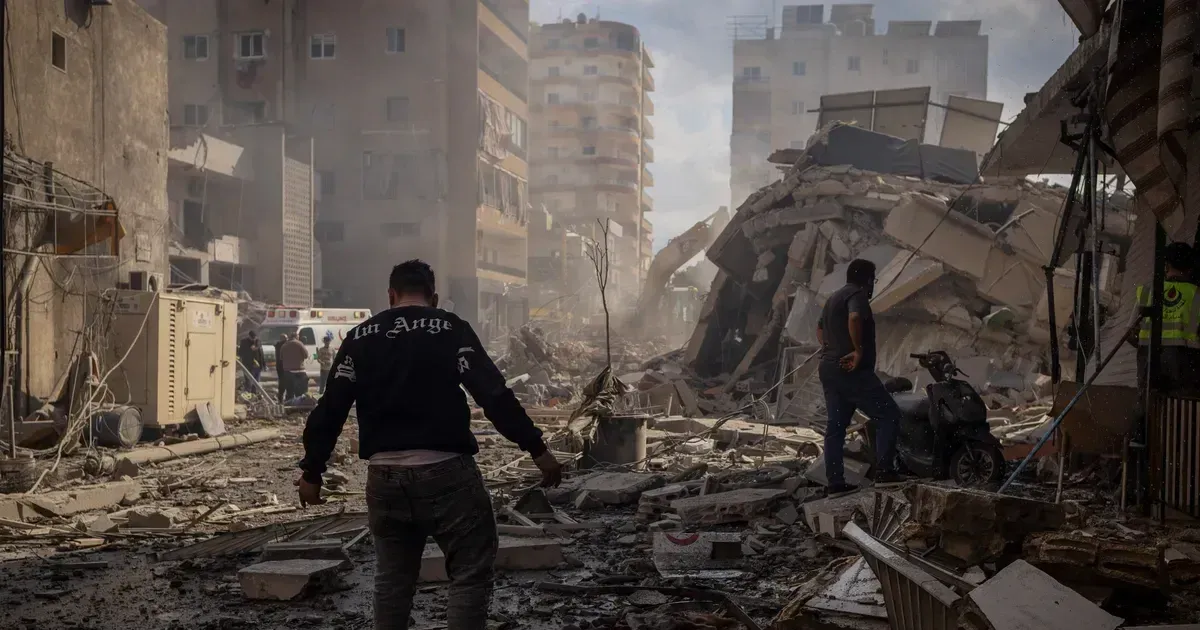
Israeli strikes across Lebanon killed 254 people, sharply escalating a conflict already straining hospitals, aid routes and diplomatic efforts to prevent a broader war. The scale of the casualties turned a series of cross-border attacks into a regional crisis with immediate civilian consequences. Lebanese officials said rescue teams were still trying to reach damaged areas as families moved away from exposed towns. The movement of civilians also complicates casualty verification because some communities are difficult to reach while roads remain damaged or under threat.
The strikes were reported on April 8, 2026, after Israel expanded operations beyond the border zone and hit targets deeper inside Lebanese territory. Israeli officials described the campaign as an effort to degrade militant infrastructure and reduce rocket fire into northern communities. Lebanese authorities said the bombardment caused heavy civilian harm and overwhelmed local emergency services.
The casualty figure gives the conflict a different political weight. It also changes the humanitarian math for outside governments that had treated the border crisis as dangerous but containable. A limited exchange of fire can be treated as deterrence, but hundreds of deaths in one wave create pressure on governments that had hoped to contain the confrontation. The United Nations and regional mediators are now trying to prevent the violence from becoming a sustained air and rocket campaign.
Civilian Toll
Hospitals in southern and eastern Lebanon faced a surge of wounded residents, including people injured by collapsing buildings and shrapnel. Medical workers reported shortages of trauma supplies, fuel and safe transport. Those constraints matter because even survivors of an initial blast can die if ambulances cannot move or operating rooms lose power. Doctors must also decide which patients can be transferred safely and which must remain in facilities close to the fighting.
Lebanon was already dealing with economic collapse before the latest escalation. That background makes disaster response weaker than it would be in a more stable state. Families who flee damaged neighborhoods often find few public shelters, limited cash and unreliable access to medicine.
Israel says militant groups use civilian areas to store weapons and move fighters. Lebanese officials reject that framing when strikes hit residential districts, saying the military logic cannot erase the obligation to protect noncombatants. That dispute is now central to the international response because casualty numbers shape whether outside governments view the campaign as defensive, disproportionate or both.
Lebanese emergency officials said the death toll could rise as rescue crews reached damaged buildings.
Diplomatic Pressure
The United States and European governments are urging restraint while also acknowledging Israel's security concerns. That balancing act has become harder as the civilian toll rises. Every additional strike makes it more difficult for allied governments to argue that the conflict is being contained.
Regional mediators are focused on two immediate goals: stopping rocket fire and preventing a broader Israeli ground operation. Neither goal is simple. Armed groups may see continued attacks as leverage, while Israeli leaders face domestic pressure from displaced northern residents who want security guarantees before returning home.
The risk is that both sides believe escalation can improve their bargaining position. Once that logic takes hold, humanitarian pauses become fragile and local commanders gain more influence over the pace of events. A single misread strike or rocket barrage could pull additional actors into the fighting. That risk explains why diplomats keep returning to monitoring language, even when the immediate public debate focuses on casualty figures. A ceasefire without observers, reporting lines and consequences can collapse as soon as either side accuses the other of moving weapons or preparing another strike.
Regional Risk
The deaths in Lebanon will likely intensify calls for a ceasefire mechanism that includes monitoring, withdrawal rules and protected aid corridors. Verbal restraint is unlikely to satisfy aid groups if roads remain unsafe and hospitals cannot function. Diplomats need terms that can be verified on the ground, not only announced in statements.
Israel also faces a strategic problem. Heavy strikes may damage militant capacity, but they can also widen hostility and make a political settlement harder. If the campaign produces more displacement without a clear security arrangement, the border may become less stable rather than more secure.
The immediate priority is civilian protection. The longer-term question is whether any actor can build a durable framework for the border before the conflict hardens into another open-ended war. The death toll shows that time is already running out. Civilian protection cannot wait for a final political settlement. If the next phase is driven by retaliation rather than a monitored pause, the conflict will become harder for any mediator to slow. The immediate casualty figure is therefore also a warning about what happens when border exchanges become national campaigns. Once hospitals, roads and shelters are part of the battlefield, diplomacy has to solve humanitarian access and military restraint at the same time.