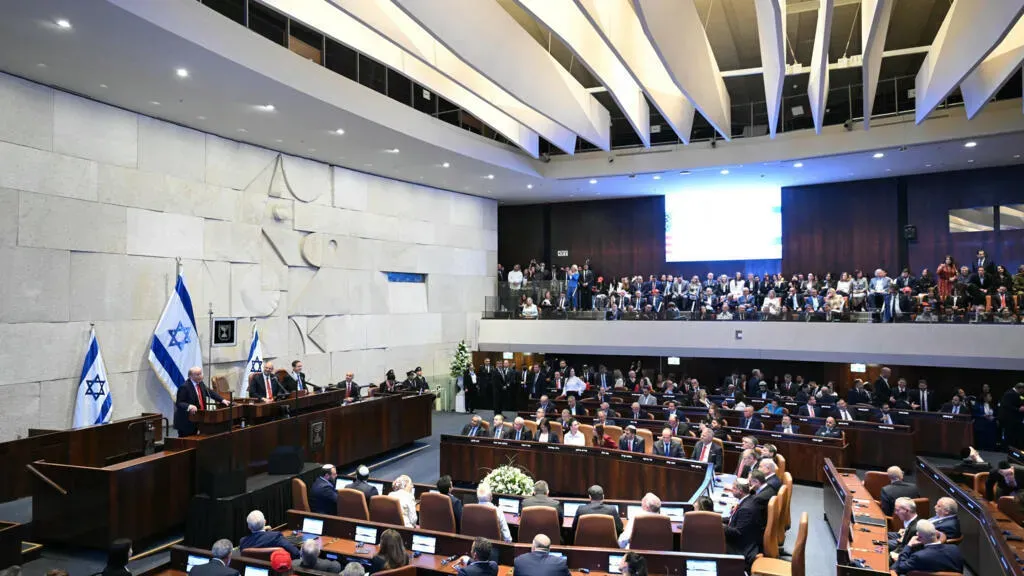
The vote reopened a legal debate Israel had largely avoided for decades. Coalition politics shaped the timing. Human rights groups are preparing challenges. Knesset members voted on March 30, 2026, to authorize capital punishment for individuals convicted of fatal terrorist attacks against Israeli citizens. Legislators ratified the measure during a late-night session characterized by intense shouting matches between coalition members and the opposition. The final tally showed a narrow majority in favor of a policy shift that ends decades of judicial restraint regarding the ultimate sanction. Israeli authorities previously reserved the death penalty for extraordinary crimes like genocide or treason against the state. Most legal experts agree the new statute specifically targets individuals committing acts of violence with a nationalistic or ideological motive. Execution would follow a conviction in either a civilian or military court depending on the jurisdiction of the offense.
National Security Minister Itamar Ben-Gvir led the legislative push, arguing that existing prison sentences fail to deter potential attackers. Opponents inside the chamber warned that the moves would only create more martyrs and fuel further cycles of violence in the West Bank and Gaza. Proponents of the bill countered by stating that the families of victims deserve the highest form of justice available under the law. One clause in the document allows courts to apply the penalty to any citizen, though political commentators suggest its application will focus almost exclusively on Palestinian militants.
Security officials within the Shin Bet expressed private reservations about the impact on intelligence gathering and prisoner swaps. The law requires a second and third reading for final administrative implementation, but the current political momentum suggests these hurdles are minor formalities.
Knesset Framework for Capital Punishment
Legal definitions within the bill focus on the intent of the perpetrator rather than the specific weapon used in the attack. If a court determines a murder was committed to harm the State of Israel or the revival of the Jewish people, the death penalty becomes a sentencing option. This specific wording links the crime to nationalistic goals, separating it from criminal homicides or domestic violence cases. Judges will have the discretion to choose between life imprisonment and execution, a detail that was heavily debated during the committee stage.
Unlike the mandatory death sentences seen in some other nations, the Israeli version provides a window for judicial leniency under specific circumstances. The prosecution must prove beyond a reasonable doubt that the act was intended to undermine national security or spread terror among the civilian population.
Administrative procedures for the executions have not yet been established by the Ministry of Justice. Historically, Israel has carried out only one judicial execution since its founding in 1948. Adolf Eichmann, the Nazi war criminal, was hanged in 1962 after a high-profile trial that captured global attention. Since that time, the state has effectively maintained a moratorium on the death penalty, even for the most severe cases of mass murder. Modern prisons have been the primary method of incapacitation for those convicted of high-level security offenses.
Critics argue that resurrecting the gallows after six decades of dormancy contradicts the humanitarian values the country often promotes on the international stage. Defense lawyers believe the first sentence handed down under this law will trigger an immediate and exhaustive appeals process.
Israel Legal Precedents and Historical Context
Military courts in the West Bank already possessed the technical authority to issue death sentences, but such rulings required a unanimous decision by a three-judge panel. The new legislation lowers this threshold to a simple majority, making it sharply easier for military prosecutors to secure a capital conviction. Palestinian prisoners currently held in Israeli jails have historically used their incarceration as a platform for political organizing and education. Government ministers believe that removing the possibility of future release through prisoner exchanges will neutralize this tactical advantage.
Human rights organizations, however, claim that the disparity in how the law is applied between different ethnic groups constitutes a violation of international legal standards. They point to that Jewish settlers who kill Palestinians rarely face the same level of prosecution or sentencing as their counterparts. Data from previous years shows a meaningful gap in conviction rates for nationalistic crimes depending on the identity of the defendant.
"The goal of this law is to cut off the hope of our enemies," stated Itamar Ben-Gvir during the legislative debate.
Prime Minister Benjamin Netanyahu supported the bill as part of his coalition agreement with far-right factions in the government. His involvement has drawn criticism from international allies who view the law as a step away from democratic norms. United Nations officials warned that these moves could violate the International Covenant on Civil and Political Rights, which Israel ratified in 1991. That treaty limits the use of the death penalty to only the most serious crimes and mandates a fair trial with extensive protections.
European Union diplomats have also signaled that the introduction of capital punishment could complicate trade and security cooperation agreements. These external pressures have so far failed to sway the legislative agenda of the ruling coalition. Supporters of the government maintain that domestic safety outweighs any concerns regarding foreign diplomatic standing.
Human Rights Objections and Judicial Review
Legal challenges to the new law are expected to reach the Supreme Court within days of its official publication. Petitions from groups like B'Tselem and Adalah argue that the statute is discriminatory and unconstitutional under Israel's Basic Laws. These laws serve as a de facto constitution and protect the right to life and human dignity. Attorney General Gali Baharav-Miara previously warned that the law might not withstand judicial scrutiny due to its specific targeting of a certain population. If the court strikes down the law, it could trigger a constitutional showdown between the judiciary and the executive branch.
The government has already proposed reforms that would allow the Knesset to override Supreme Court decisions with a simple majority. This legislative battle is now closely linked to the debate over the death penalty and the future of judicial independence.
International observers note that Palestinians living under military rule have fewer legal protections than those living within the pre-1967 borders. The application of the death penalty in military courts further complicates the legal picture for residents of the occupied territories. Some analysts believe the law is primarily a political tool intended to satisfy a frustrated voter base instead of functional security measures. They argue that the logistical challenges of conducting executions would be immense, requiring specialized facilities and personnel that do not currently exist.
Public opinion polls show a sharp divide along political lines, with right-wing voters overwhelmingly favoring the measure. Secular and left-wing Israelis express concern that the law marks a broader shift toward religious and nationalist extremism. Protests against the bill have drawn thousands of participants to the streets of Tel Aviv and Jerusalem.