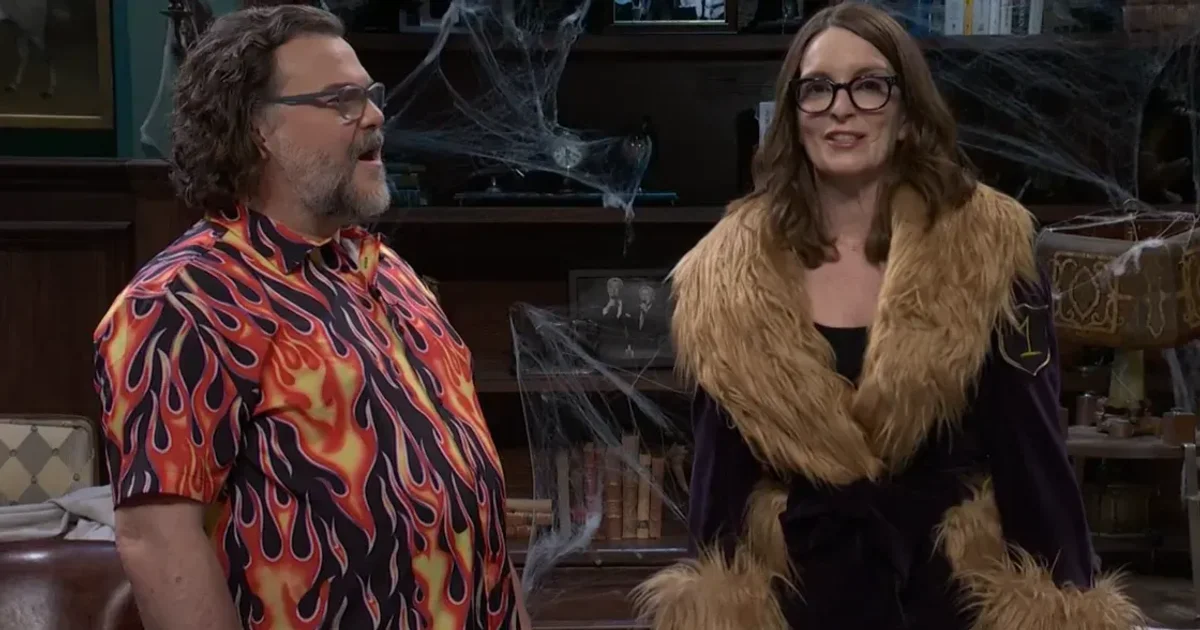
Jack Black joined Saturday Night Live's Five-Timers Club with a monologue built around celebrity cameos, backstage mythology and the show's long memory for its own traditions. That self-awareness is central to the appeal. The April 5, 2026, episode turned Black's fifth hosting appearance into a celebration of recurring SNL ritual. The Five-Timers Club works because it treats repeat hosting as both honor and joke. The velvet robe, the private lounge and the knowing cameos let the show congratulate a performer while mocking the idea of comedy aristocracy. Black's energy made him a natural fit for the bit. His hosting style has always leaned on physical commitment, musical timing and a willingness to look ridiculous without seeming detached from the joke. Jonah Hill helped frame the sketch by guiding Black toward the club's mythology. Cameos from veteran performers gave the moment the intergenerational feel that SNL often uses when it wants to remind viewers of its history.
The segment leaned on the Five-Timers robe and lounge as visual shorthand for SNL status.
Cameos Carry the Sketch
The club format depends on surprise. Viewers expect familiar faces, but the joke lands when the lineup feels both prestigious and silly. Tina Fey, Candice Bergen and Melissa McCarthy all bring different eras of SNL credibility. The bit also rewards longtime viewers. The Five-Timers Club first became a recurring idea decades ago, and each new induction adds another layer to the archive. SNL is at its strongest when it can turn its own history into a live sketch rather than a museum piece. Black's induction also fits his broader career. He moves easily between film comedy, music, animation and family entertainment, making him recognizable to several generations of viewers.
SNL Uses Nostalgia Carefully
Nostalgia can flatten a sketch if the show relies only on applause. The stronger version uses recognition as a setup, then gives the performers room to undercut the ceremony. The Five-Timers Club remains useful for that reason. The episode gave SNL a clean promotional hook: a beloved host reaching a milestone, surrounded by performers who signal institutional approval. For a live show competing in a fragmented media market, that kind of shareable moment remains valuable.
Black's membership does not change the history of the show, but it confirms his place inside one of its most durable traditions. The robe is a prop, yet the milestone is real enough for fans who track SNL as a living comedy institution.
The moment also underlined why SNL still leans on host milestones. In a media environment where sketches are consumed as clips, a recurring institution gives casual viewers a reason to understand the joke quickly. The Five-Timers Club does that work instantly: even viewers who do not know every prior induction understand that the show is welcoming Black into a comic fraternity.
Black brings a specific kind of value to that tradition. He can sell broad physical comedy, musical absurdity and sincere enthusiasm without seeming embarrassed by the format. This commitment matters on SNL, where a host who fully commits can lift sketches that might otherwise feel thin.
The episode did not need the club sketch to be subtle. It needed it to be warm, fast and shareable. By that standard, Black joining the Five-Timers Club gave the show a clean cultural moment and another entry in a running bit that still has enough elasticity to work.
The comedy value also came from contrast. Black is a maximalist performer, while the Five-Timers Club premise is built on mock exclusivity and polished self-importance. Placing his chaotic enthusiasm inside that lounge lets the sketch celebrate him without turning sentimental for too long. That balance is important for SNL, which can quickly become too reverent when honoring its own history. The best milestone sketches let the audience enjoy the nostalgia while still watching performers make fun of the institution. Black gave the show that kind of energy, and the cameos gave the moment enough scale to feel like an actual induction.
There is also a business reason SNL continues to stage these milestones. A host entering the Five-Timers Club gives the show a clean promotional angle before the episode and a shareable clip afterward. The promotional value increases when live television competes with short-form platforms for attention. Black's induction worked because it was easy to explain, easy to clip and rooted in a tradition viewers already understand. The show did not need to reinvent itself; it needed to use its history with enough energy to feel current.