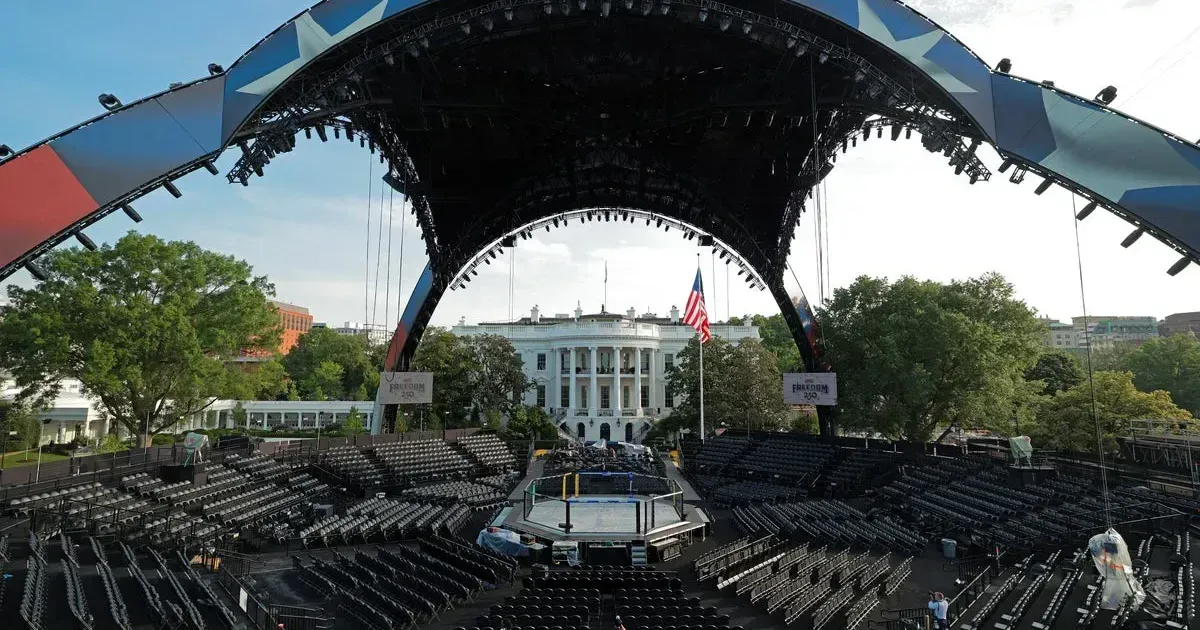
A federal judge has left Donald Trump's White House UFC event on track, rejecting an emergency attempt to stop a spectacle already built into the South Lawn. The ruling does not end the political fight over the event. It means opponents failed to meet the demanding legal standard for stopping it at the last minute. The cage is now a legal fact as much as a visual one.
On June 12, 2026, U.S. District Judge Amit Mehta declined to block the planned UFC event tied to Trump's birthday weekend and the broader America 250 celebration. The decision allows organizers to use the White House grounds, even as critics argue that the event turns federal property into a stage for private promotion.
The Legal Door Stayed Open
The core legal issue was not whether the event is tasteful, traditional or politically wise. The court focused on whether the challengers had standing to sue and whether they could show the kind of immediate, irreparable harm that justifies emergency relief.
That distinction matters. Judge Amit Mehta's ruling did not bless every ethical or symbolic aspect of the plan. It said the lawsuit had not cleared the threshold required to stop the event before it happens.
Legal challengers had argued that the South Lawn was being used in a way that blurred public authority, private gain and presidential image-making. The administration countered that the White House has broad control over ceremonial and cultural events on its grounds.
The South Lawn Becomes a Fight Venue
The physical setup has already changed the argument. Images of an arena structure on the White House lawn make the dispute more concrete than an ordinary regulatory case.
The White House UFC event is not a normal presidential ceremony. It combines a combat-sports brand, a birthday celebration, security planning, broadcast logistics and the symbolism of the executive mansion in one highly visible package.
Supporters can describe it as populist showmanship and a new way to mark a national anniversary. Critics can fairly see it as another collapse of boundaries between state property, personal spectacle and allied commercial brands.
The Ethics Fight Is Not Over
The event can proceed, but the court's refusal to block it does not answer the larger ethics question. Emergency legal relief is a narrow tool. Public judgment is wider.
The South Lawn fight venue will now become a precedent whether officials call it one or not. Future administrations, sponsors and advocacy groups will study what was allowed, who paid, who benefited and what rules were stretched.
The sharp conclusion is that the White House won the legal round, but not necessarily the institutional argument. A presidency can stage a spectacle and still leave the country asking whether the office was made smaller by the show.
The immediate issue is transparency. If federal property, private contractors and a global sports brand are sharing the same stage, the public deserves clear answers about costs, access, security and any revenue arrangements. Without those answers, the fight may be legal and still look corrosive.
The standing issue is also important for future challenges. A court can reject emergency relief because the plaintiffs are not the right parties or because the harm is too speculative, even when the underlying event raises serious public concerns. That leaves ethics watchdogs with a practical problem: by the time a massive temporary structure is built and security plans are in motion, the legal window for stopping it may be narrow. The administration will likely treat the ruling as vindication, but that reading is too broad. The sharper reading is procedural. The court allowed the event to proceed because the challengers did not carry their emergency burden, not because every contract, access rule or sponsorship arrangement has been publicly settled. That procedural distinction should matter to Congress, inspectors general and future litigants. If the event produces evidence of preferential access, hidden subsidy or improper commercial benefit, the legal questions may return in a different form after the fight. A pre-event injunction is only one tool. Oversight, records requests and post-event accounting are another.