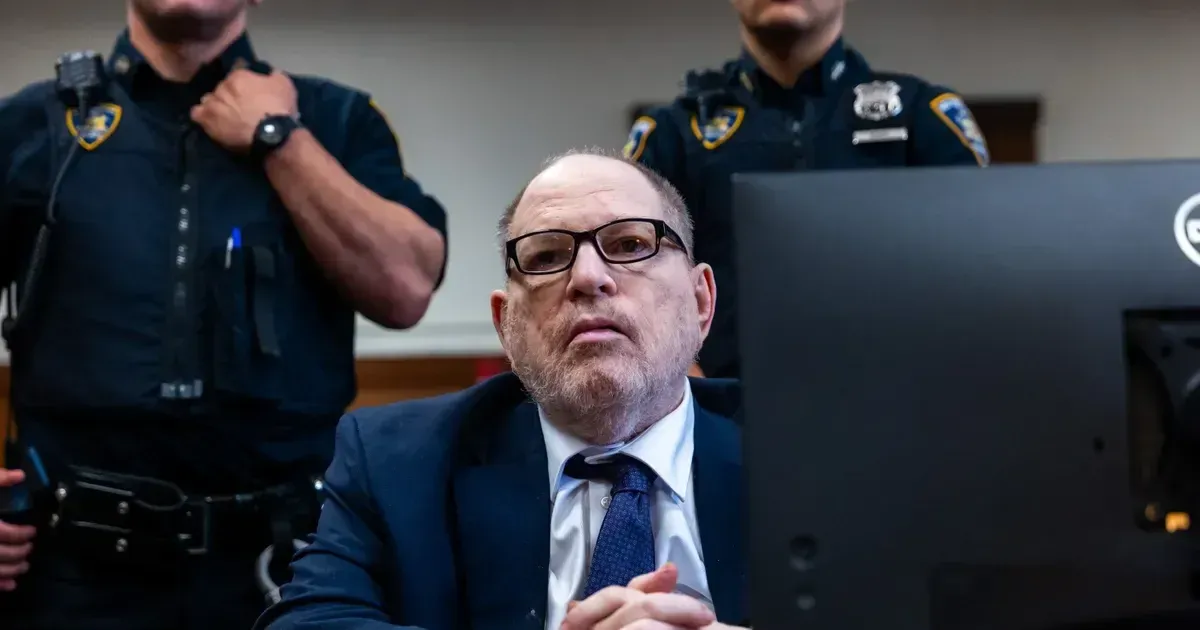
The mistrial shifts the legal story from testimony to procedure. Prosecutors now face a strategic decision, while court scheduling and witness fatigue shape the unresolved charge. Manhattan Supreme Court proceedings against Harvey Weinstein collapsed Friday after a jury failed to reach a consensus on a high-profile sex crimes charge. The judge declared a mistrial on May 15, 2026, after jurors informed the court they were hopelessly deadlocked regarding allegations brought by Jessica Mann.
Jurors spent several days deliberating over a single count of rape linked to a 2013 incident. The case centered on Mann's testimony that the former film producer assaulted her inside a Manhattan hotel more than a decade ago. This stalemate marks the second time in a year that a New York jury has been unable to reach a unanimous verdict on this specific charge.
Prosecutors sought to secure a conviction in what was the third criminal trial for the 74-year-old former mogul in the city. The failure to reach a verdict highlights the difficulties inherent in prosecuting decade-old allegations that rely heavily on witness memory and testimony. Mann, an aspiring actress at the time of the alleged assault, had provided testimony in previous proceedings that also failed to produce a final judgment.
The judge declared a mistrial in Harvey Weinstein's third Manhattan sex crimes trial after the jury was deadlocked on Jessica Mann's allegations, according to reporting from NBC News.
Defense attorneys argued throughout the trial that the encounter in 2013 was consensual, a position they have maintained across multiple legal battles. While Harvey Weinstein has faced numerous allegations since the 2017 emergence of the MeToo movement, this particular charge has proven difficult for prosecutors to finalize. Every attempt to resolve the Mann allegations through a jury trial has now resulted in a hung jury or a mistrial.
Manhattan District Attorney Alvin Bragg's office has not yet announced whether it will pursue a fourth trial. Sources close to the case suggest that the repeated inability to secure a verdict may influence the decision-making process for future filings. Harvey Weinstein stayed in custody throughout the proceedings, as other legal matters continue to bind him to the correctional system.
The Future of the Jessica Mann Case
Judge Curtis Farber presided over the trial and officially dismissed the jurors after they confirmed no further deliberation would change the outcome. The atmosphere in the courtroom remained tense as the announcement was read. New York law requires a unanimous decision for a criminal conviction, a threshold that has now been missed twice regarding Mann's claims since the beginning of 2025.
Whether the state will ask for another trial date is a matter of intense speculation among legal analysts. If the District Attorney decides to move forward again, it would be a rare instance of a fourth trial for a single criminal count. The decision rests on the evaluation of whether a new jury would find any different perspective on the 2013 Manhattan hotel incident.
The legal team for the defense greeted the news of the mistrial as a sign that the prosecution's case is inherently flawed. They contended that the repeated deadlocks prove that reasonable doubt persists among objective citizens. The court will hold a follow-up hearing to determine the schedule for any subsequent actions regarding the indictment.
A Fourth Trial Would Test Prosecutorial Limits
A second mistrial on the same charge in 12 months forces a rigorous reassessment of prosecutorial strategy. New York's judicial system rarely sees a fourth trial for the same incident, as the burden of proof becomes increasingly difficult to meet when multiple juries have already signaled deep division. The Manhattan District Attorney now faces a calculation of institutional prestige against the diminishing returns of repetitive litigation. If the office chooses to proceed, it must find a way to present Mann's testimony or supporting evidence in a manner that bridges the gap for a unanimous panel.
Dismissing the charge would avoid another costly trial but could be viewed as a surrender in a case that is a foundation of the MeToo era's legal legacy. By contrast, a fourth trial could be perceived as an overreach if the result is another hung jury. The focus now shifts to the pre-trial motions and whether the court will allow the case to consume another several months of the judicial calendar. The outcome here does not just affect the parties involved; it sets a precedent for how the Manhattan courts handle aging sex crimes allegations that have repeatedly failed to achieve finality.