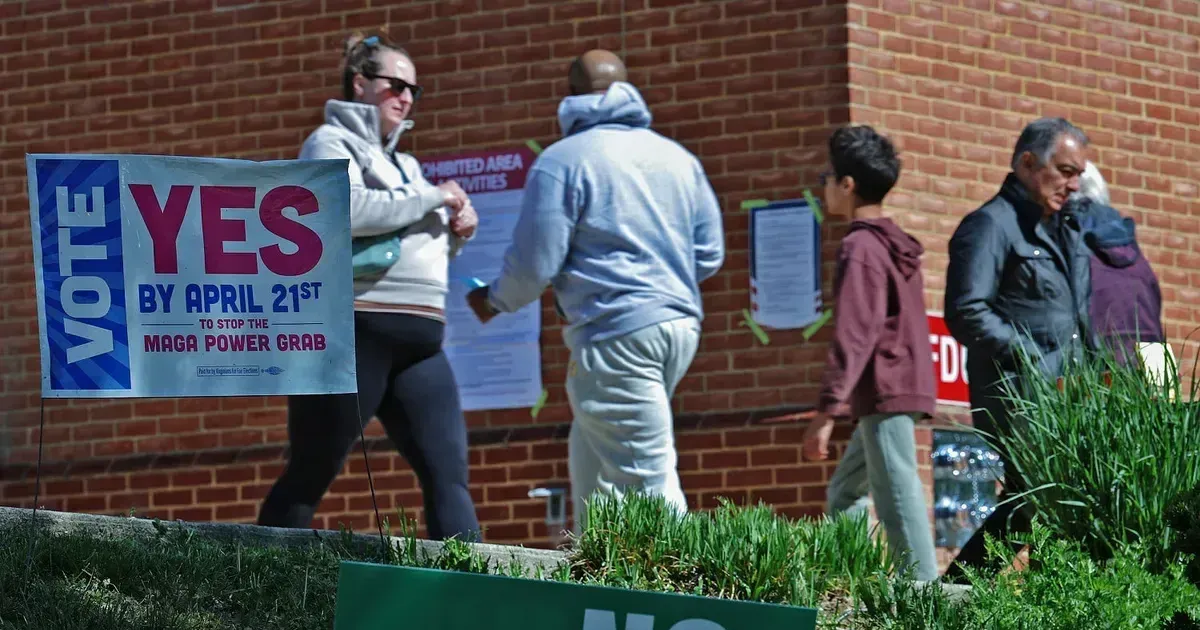
The Supreme Court has left Virginia's congressional map dispute in state hands. The order preserves the existing boundaries for the next midterm cycle while closing off a Democratic attempt to revive a voter-approved plan. On May 15, 2026, that refusal made procedure rather than popular approval the controlling issue in the redistricting fight.
State officials had requested that the justices step in to allow use of a congressional map drawn by Democrats. Voters had approved this specific configuration, but the Virginia Supreme Court previously declared the referendum null and void. That state-level ruling rested on the determination that lawmakers failed to follow proper procedures to place the redistricting issue on the ballot. Specifically, the state court found that the legislative process lacked the necessary administrative rigor required for constitutional amendments.
Procedural rigor outweighed the popular vote in the eyes of the state judiciary. According to court filings, the process leading to the referendum was flawed from its inception. Lawmakers must adhere to strict constitutional timelines and notification requirements when proposing such shifts to the state’s fundamental electoral geography. When these mandates are ignored, the legal foundation of the resulting vote dissolves, regardless of how many citizens participate or what the final tally indicates.
Virginia Redistricting Procedural Failures
Attorneys for the state argued that the public will should be respected after the successful referendum. They contended that minor administrative lapses should not invalidate the choice of millions of voters. Opposition groups, however, argued that procedural shortcuts in redistricting open the door for unchecked partisan gerrymandering. These groups maintained that following the letter of the law is the only way to prevent the legislature from bypassing constitutional safeguards in the future.
The Supreme Court did not provide a detailed explanation for its refusal to grant the stay. Such silence is common in emergency docket applications where the court is asked to act quickly on matters of immediate public interest. By stepping back, the justices allow the previous ruling from the state supreme court to stand as the final word for this election cycle. This decision reinforces the authority of state courts to interpret their own constitutional requirements for ballot access and legislative procedure.
The decision leaves in place a Virginia Supreme Court ruling that concluded the process leading up to a referendum approving a new congressional map was flawed.
Judicial scrutiny focused heavily on the mechanics of the ballot initiative. Virginia law mandates specific steps for constitutional amendments and major policy referendums, including public notice periods and specific filing windows. When those steps are bypassed, the resulting vote carries no legal weight. The state’s highest court determined that these errors were more than technical errors; they were fundamental breaches of the procedural contract between the government and the governed.
Partisan Stakes and Midterm Readiness
Democrats drew the map with the clear intent of improving their prospects in several competitive districts. Estimates suggested the new lines would have strengthened the party’s hold on the state’s congressional delegation by consolidating specific voter blocs. Losing this map forces candidates to run in districts that may be less demographically or politically advantageous. This shift forces a rapid recalibration of campaign strategies and resource allocation for parties on both sides of the aisle.
Deadlines for primary filings and ballot printing are fast approaching across the Commonwealth. Local officials expressed concern that a late-stage reversal would have created logistical chaos for registrars and clerks. The decision to maintain the current status quo provides a measure of stability for the electoral process, even if it frustrates partisan strategists. Administrative certainty often takes priority when courts evaluate election-year disputes that could disrupt the casting of ballots.
Voters now face a landscape defined by earlier court-ordered boundaries. These lines were established when the state’s independent redistricting commission reached a stalemate in 2021. Those original court-drawn maps were intended to be neutral, lacking the specific partisan tilts found in the now-rejected Democratic proposal. While the 2021 map was criticized by some for splitting communities of interest, it persists as the legal standard for the upcoming midterms.
Procedural Failure Overrides Virginia’s Referendum Result
Could a simple procedural error truly override the expressed will of the electorate? The question lies at the heart of the ongoing tension between legislative power and judicial oversight in Virginia. By upholding the state court’s decision, the Supreme Court reinforces the principle that the process of lawmaking is as essential as the laws themselves. Any deviation from established ballot protocols creates a vulnerability that no amount of voter support can easily cure. The precedent established here suggests that future redistricting efforts must prioritize administrative perfection over political speed.
Failure to do so invites a complete collapse of the resulting policy during the inevitable judicial review. While some see this as a victory for the rule of law, others view it as a triumph of technicality over democracy. Reality lies in the cold enforcement of constitutional mandates that govern how change is introduced to the voting public. Legislative bodies are now on notice that the shortcut is often the longest path to reform.