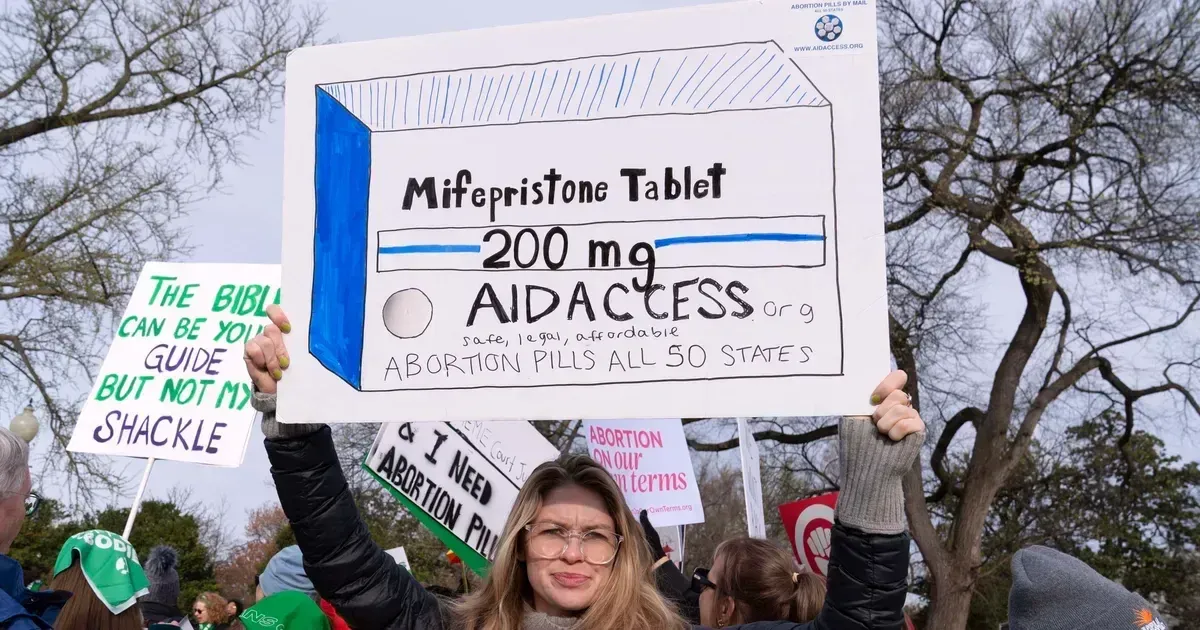
Justices at the Supreme Court moved to protect nationwide access to mifepristone late Thursday, reversing a lower court decision that would have halted mail-delivery options. The order gives providers a temporary but important operating baseline. This action, finalized on May 14, 2026, ensures the medication remains available without an in-person clinical visit while broader legal challenges continue. Medical providers and patients had faced substantial uncertainty after a previous appellate ruling threatened to roll back years of regulatory updates.
Court records indicate the order maintains current federal rules that allow the drug to be prescribed online or over the phone and sent through the mail. Mifepristone is the primary medication used in more than half of all pregnancy terminations across the United States. Federal regulators first approved the drug in 2000, but subsequent changes in 2016 and 2021 expanded how and when patients could obtain it. The latest intervention from the high court effectively freezes those expanded access points during the ongoing litigation.
Legal challenges reached a critical point after the New Orleans-based 5th U.S. Circuit Court of Appeals issued a ruling on May 1, 2026. That decision sought to reinstate older, more restrictive versions of the drug label, which would have required three in-person doctor visits and limited use to the first seven weeks of pregnancy. Current rules allow for use up to ten weeks and permit telehealth consultations. By granting the stay, the justices prevented these restrictions from taking effect immediately.
Impact on Mail and Telehealth Services
Clinicians across the country rely on the 2021 FDA policy that removed the requirement for in-person dispensing. This specific shift allowed for the growth of telehealth abortion services, which surged in popularity following the overturning of Roe v. Wade. Mail-order pharmacies have since become an essential infrastructure for reproductive healthcare in states where surgical options are limited or banned. Telehealth appointments now enable thousands of prescriptions monthly, reaching patients in remote or underserved regions.
Eliminating the mail-order option would have forced patients back into physical clinics, many of which are already operating at maximum capacity. Health organizations noted that such a change would create logistical hurdles for individuals with limited transportation or flexible work schedules. Requirements for multiple in-person visits, as proposed by the lower court, would have increased the cost and time commitment for a procedure that medical consensus describes as safe. Data from the Food and Drug Administration shows a consistently low rate of serious complications associated with the medication since its initial approval.
Providers had spent weeks preparing for a potential shutdown of their shipping operations. Pharmacy distributors faced the prospect of halting shipments to nearly every state if the appellate court order had stood. The Supreme Court ruling provides a temporary reprieve for these supply chains. For now, the existing distribution model for medication abortion remains intact across the country.
Overruling the Fifth Circuit Court
Judges on the Fifth Circuit had previously argued that the FDA overstepped its authority when it relaxed safety protocols over the last decade. Their May 1st ruling claimed the agency failed to adequately consider the health risks of allowing the drug to be sent by mail. Anti-abortion groups, led by the Alliance for Hippocratic Medicine, contended that the agency ignored data regarding emergency room visits. Government lawyers countered that the FDA relied on solid clinical trials and twenty years of real-world safety data to justify the changes.
The Supreme Court ordered that patients could receive the abortion pill mifepristone through the mail and without an in-person appointment with a clinician.
Solicitor General Elizabeth Prelogar argued in filings that the appellate court had engaged in second-guessing scientific experts. She stressed that the lower court decision ignored the statutory authority granted to the agency to regulate pharmaceuticals. Regulatory stability is a core concern for the pharmaceutical industry, which warned that allowing judges to override FDA approvals could destabilize the entire drug market. These manufacturers argued that the appellate ruling created a dangerous precedent for all types of medicine, not just those used for reproductive health.
Standard legal procedures for administrative law require a high bar to overturn agency expertise. The high court's decision suggests a lack of appetite for the immediate disruption of established federal regulations. Litigation will now return to the lower courts to determine if the plaintiffs have the legal standing to bring the case. Questions about standing have dominated the proceedings, as the government maintains that the doctors suing the FDA have not been personally harmed by the drug's availability.
Significance of Medication Abortion in US Healthcare
Statistics from the Guttmacher Institute and other tracking organizations confirm that medication-based procedures are now the most common method of abortion. The shift toward pills reflects a broader trend in medical care toward less invasive options and home-based management. The preference has only intensified as physical clinics face increasing legal and physical security threats. Access to mifepristone is often the only viable option for residents in states with strict gestational limits, as it allows for earlier intervention.
Medication abortion involves a two-drug regimen, starting with mifepristone to block progesterone followed by misoprostol to induce contractions. Misoprostol is also used for ulcer treatment and other medical conditions, making it more difficult to restrict. Mifepristone, however, is more tightly regulated under a specialized safety program known as REMS. Even with these regulations, the drug has a safety profile comparable to common over-the-counter pain relievers. The Supreme Court decision acknowledges the established role this medication plays in the current healthcare landscape.
Healthcare systems would have faced a sudden influx of patients needing surgical care if the pill had been restricted. Many smaller clinics lack the staff or equipment to handle a 50% increase in patient volume overnight. The reality informed many of the amicus briefs filed by medical associations in support of the FDA. The preservation of mail access keeps the burden on the physical healthcare infrastructure from reaching a breaking point.
The Stay Preserves Access but Leaves the FDA Fight Unresolved
Future challenges to federal drug approvals may face a more skeptical audience after this stay. While the justices did not rule on the final merits of the case, their refusal to let the 5th Circuit restrictions stand suggests a preference for administrative continuity. The primary legal battleground will likely shift toward the issue of standing, specifically whether the plaintiffs can prove they suffered a concrete injury. If the court eventually finds a lack of standing, the entire lawsuit could be dismissed without a final ruling on the FDA's regulatory choices.
State-level conflicts will persist regardless of this federal outcome. Several states have passed laws specifically targeting the delivery of abortion pills, creating a patchwork of legality that complicates the work of national mail-order pharmacies. These state bans often conflict with federal FDA labeling, setting the stage for a new wave of preemption lawsuits. The Supreme Court may eventually have to decide whether federal drug approval outweighs state-level police powers. The tension remains the most volatile element of the post-Dobbs legal environment.
The ruling maintains the status quo for 2026. Legal experts anticipate that this case will likely return to the high court for a final review on the merits by late 2027. Until that point, the FDA rules from 2016 and 2021 will govern the distribution and prescription of the country's most used abortion method. The final verdict will determine the limits of judicial power over scientific agencies and the future of reproductive autonomy in the digital age.