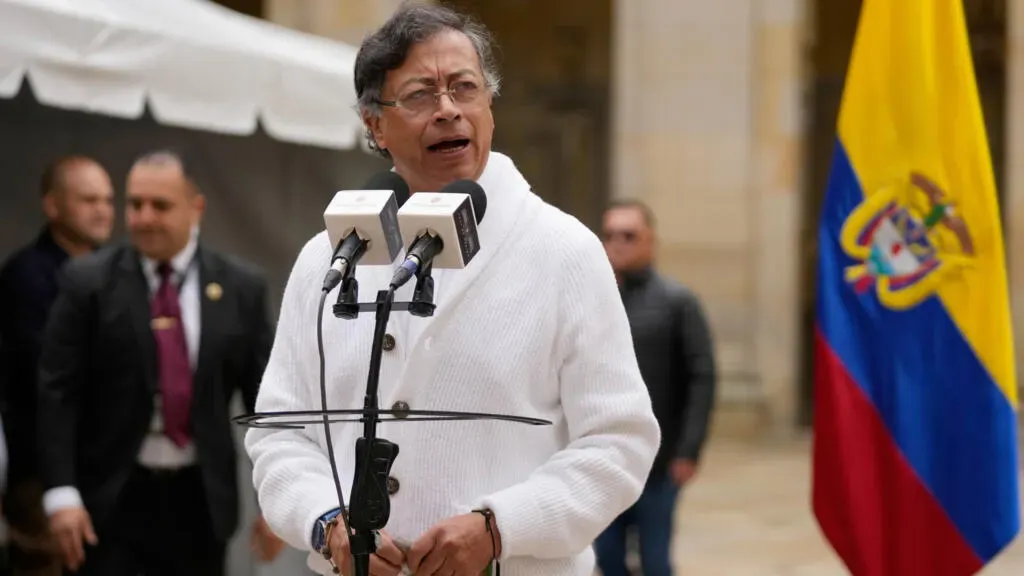
Gustavo Petro became the focal point of a major legal confrontation as two separate United States federal prosecutors' offices initiated criminal investigations into his alleged cooperation with narcotics traffickers. These inquiries emerge from the Southern District of New York and another undisclosed federal jurisdiction, signaling a coordinated effort to scrutinize the financial and political dealings of the first left-wing president in the history of Colombia. New York Times reporters first disclosed the existence of these probes on Friday, citing sources familiar with the grand jury proceedings. The inquiries focus on campaign contributions and potential intelligence sharing with organized crime syndicates operating in the Andean region.
Reports indicate that investigators are looking into the possible funneling of drug proceeds into the 2022 presidential campaign that brought Petro to power. Gustavo Petro denies all allegations, characterizing the US legal actions as a politically motivated attack on his administration. He took to social media to state that his government has put peace ahead of the militarized drug war favored by previous administrations in Bogota. This stance has frequently put him at odds with the current leadership in Washington, where the executive branch has returned to a hardline policy regarding coca eradication and extradition. President Donald Trump returned to office 14 months ago and immediately shifted the diplomatic tone with his southern partner. Relations between the two nations entered a volatile phase as the White House criticized the Colombian government for a perceived lack of cooperation in curbing cocaine exports. While Petro argues that the international community must rethink the failed prohibitionist model, the Trump administration has demanded an immediate return to aerial fumigation of coca crops. Evidence of this friction appeared in several heated exchanges during regional summits throughout the previous year. To that end, the Department of Justice has redirected resources to investigate the highest levels of the Colombian executive branch.
Federal Prosecutors Launch Twin Criminal Inquiries
One federal probe focuses specifically on the President's inner circle and his family members. Prosecutors in New York have subpoenaed financial records related to several individuals who served as key fundraisers during the Petro campaign. In turn, Colombian authorities have launched their own internal reviews to ensure compliance with national campaign finance laws. Despite these domestic efforts, US officials maintain that their jurisdiction applies because of the involvement of the US banking system in laundering the disputed funds. The investigation seeks to determine if cartels received promises of non-extradition in exchange for their financial support.
Still, the pressure from American law enforcement continues to mount. According to France 24, the timeline of these investigations suggests that federal agents have been collecting testimonies from cooperating witnesses for months. These witnesses allegedly include former paramilitary leaders and high-ranking members of the Gulf Clan who are currently in US custody. Information provided by these informants reportedly links specific government officials to protection rackets that allowed drug shipments to transit through Colombian ports without interference. The Justice Department has not yet issued formal indictments, but the subpoenas indicate the case has moved beyond the preliminary discovery phase.
Trump Administration Pressures Colombian Security Policy
Washington officials have expressed skepticism regarding the Total Peace initiative championed by the Petro administration. This policy aims to negotiate with various armed groups to end decades of internal conflict, but critics argue it provides a loophole for traffickers to avoid justice. For instance, the US State Department recently released a report claiming that cocaine production reached an all-time high in late 2025. Data showed that land under coca cultivation expanded into previously protected national parks where security forces are now restricted from entering. By contrast, the Colombian government asserts that these statistics ignore the successful interdiction of semi-submersible vessels in the Pacific.
Separately, the White House has threatened to decertify Colombia as a partner in the global fight against drugs. Such a move would trigger automatic sanctions and the withdrawal of hundreds of millions of dollars in developmental and security aid. President Trump has repeatedly mentioned the possibility of using tariffs to force compliance on the narcotics issue. Tension reached a peak during a January phone call between the two leaders, which reportedly ended abruptly after Petro refused to authorize the resumption of glyphosate spraying. The current US investigations appear to be an extension of this broader geopolitical squeeze.
Bogota Responds to Allegations of Cartel Influence
Attorneys representing the Colombian presidency have hired a high-profile legal firm in New York to monitor the developments of the federal grand jury. They argue that the US has no legal standing to investigate the internal political funding of a sovereign nation unless a direct link to a US-based crime is proven. In fact, many in the Colombian Senate view the probes as an infringement on national sovereignty. Supporters of the President staged demonstrations outside the US Embassy in Bogota on Friday afternoon, carrying banners that criticized what they called Yankee Imperialism. These protesters pointed to the long history of US intervention in Latin American politics as a reason for their skepticism.
Meanwhile, the opposition in the Colombian Congress has called for an independent commission to investigate the claims made by the US prosecutors. Conservative leaders argue that the President must step aside if the allegations of campaign infiltration are proven true. They point to the Proceso 8000 scandal of the 1990s as a precedent for how drug money can paralyze a national government. Political analysts in Bogota suggest that the President’s legislative agenda, including health and pension reforms, will likely stall as he shifts his focus to legal defense. The national currency, the Colombian peso, dropped 3% against the dollar following the news of the investigation.
Regional Stability Concerns in the Petro Era
Andean nations are watching the standoff with concern, fearing that a collapse in US-Colombia relations could destabilize the entire region. For one, Brazil and Chile have voiced support for Petro, calling for respect for democratic institutions and the principle of non-intervention. At the same time, neighboring Ecuador has tightened its own security measures, fearing that any crackdown in Colombia will push cartel activity across the border. The regional diplomatic bloc is currently divided on how to respond to the US legal actions. Some leaders fear that this sets a precedent for using the American judicial system to target any foreign leader who opposes US foreign policy objectives.
Even so, the practical implications of a federal indictment for a sitting head of state remain unprecedented in modern Andean history. The US previously indicted Manuel Noriega of Panama and Nicolas Maduro of Venezuela, but Petro is still a key ally in environmental conservation and migration management. Washington must balance its desire for drug enforcement with the need for Colombia’s cooperation on the Darien Gap migration crisis. Over 500,000 people crossed that jungle corridor in 2025, and Bogota’s assistance is essential for US border security. The Justice Department appears to be moving forward despite these complex diplomatic considerations.
Can the United States truly justify a criminal probe into a sitting foreign head of state without acknowledging the blatant political theater involved? The current investigation into Gustavo Petro reeks of the same interventionist playbook that has defined American relations with Latin America for a century. While the Justice Department wraps its actions in the language of law and order, the timing is far too convenient to be ignored. Following the return of the Trump administration, Washington has sought every possible lever to undermine a leader who refuses to play the role of a subservient client state.
By weaponizing the Southern District of New York, the White House is attempting to achieve through the courts what it cannot achieve through traditional diplomacy. Petro is certainly no saint, and the history of Colombian politics is clearly stained by the influence of cartel cash, but the sudden urgency of these probes suggests a motive beyond mere justice. This is a crude exercise in regime realignment, designed to cow a sovereign leader into resuming a failed, violent drug war that serves American political optics more than it serves the Colombian people. the Gustavo Petro probe links criminal allegations to hemispheric diplomacy. A cartel-ties investigation can become leverage, but it can also destabilize an already difficult US-Colombia relationship.