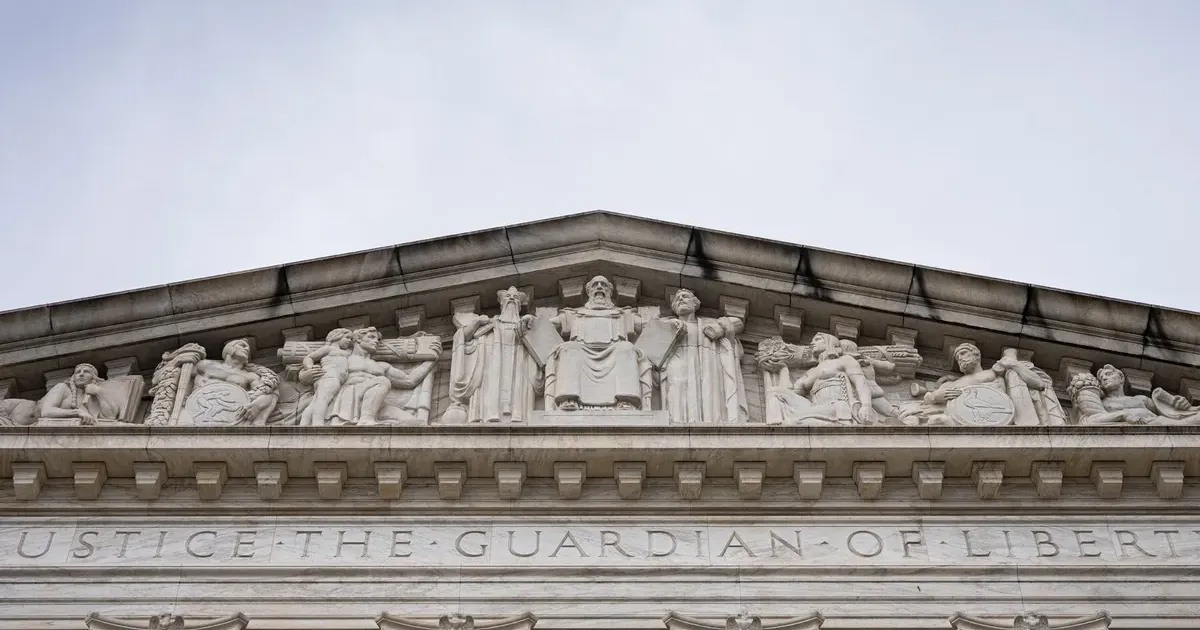
Supreme Court justices convened on March 22, 2026, to evaluate a legal challenge that could strip hundreds of thousands of Americans of their voting rights by disqualifying ballots received after polls close. Republican officials have petitioned the highest court to enforce a hard deadline on mail-in arrivals, arguing that any ballot reaching election offices after the sun sets on Election Day violates federal law. National politics reporter Nick Corasaniti notes that this ruling would fundamentally alter the logistics of American democracy by focusing on the moment of receipt rather than the date of the postmark. Records indicate that mail-in voting has become a staple of the American electoral process, particularly as delivery speeds fluctuate across different geographic regions.

Republican National Committee lawyers contend that allowing ballots to trickle in for days or weeks after an election undermines public confidence in the results. Legal briefs filed by the Republican National Committee emphasize the need for a definitive end to the tallying process to prevent what they describe as late-game shifts in vote totals. Critics of this position point to the reality of the United States Postal Service, which often struggles to meet its own delivery windows during peak periods. Disqualifying these votes would largely impact specific demographics that rely on the mail due to physical or logistical constraints.

Approximately 450,000 ballots arrived after Election Day in the previous general election cycle, though the vast majority were postmarked before the deadline.

Mail-in voting trends show a sharp partisan divide in how citizens choose to exercise their franchise. Democrats have increasingly embraced the convenience of the mailbox, while Republican voters have returned to a preference for in-person polling locations. But this disparity means any ruling that restricts the counting of late-arriving mail-in ballots will disproportionately affect Democratic candidates. Still, legal experts suggest the court may look at the wording of the U.S. Code, which establishes the Tuesday after the first Monday in November as the day for the election. This specific interpretation of the calendar could lead to the invalidation of legitimate votes that were mailed on time but delayed by mechanical or weather-related postal issues.

Republican National Committee Challenges Receipt Deadlines

Attorneys for the Republican National Committee are focused on a strict reading of the Constitution, which grants state legislatures the power to set the time, place, and manner of elections. In several states, legislatures have already tried to implement receipt-day deadlines, only to be overruled by state supreme courts citing broader state-level constitutional protections for voters. To that end, the federal case seeks to establish a uniform standard that overrides local judicial interventions. Litigation from the RNC argues that an election is a single-day event, not a season of ballot harvesting and late-stage delivery. By contrast, civil rights organizations maintain that the act of voting is completed once the ballot is placed in the hands of the postal service.

The move to toss ballots arriving after Election Day could disenfranchise thousands of citizens who followed the law but fell victim to mail delays beyond their control.

Statistical models suggest that urban areas, which tend to have more centralized but often overwhelmed processing facilities, see higher rates of late-arriving mail. In Philadelphia and Detroit, mail delivery times can stretch to five or seven days for local transit, making a receipt-deadline particularly hazardous for those who mail their ballots on the Friday or Saturday before an election. Yet, the RNC maintains that voters are responsible for their own timing and should use early voting or drop boxes if they fear a delay. Data from recent cycles shows that late ballots often favor one party by a margin of three-to-one, providing a clear political incentive for this legal push.

Separately, the court must decide if its ruling will apply retroactively or only to future contests. A retroactive decision could potentially throw current special election results into chaos or lead to a wave of lawsuits contesting previous outcomes. Judges in lower courts have expressed concern that changing the rules so close to a primary season creates unnecessary confusion among the electorate. Even so, the conservative majority on the high court has previously shown a willingness to focus on the literal text of federal statutes over the pragmatic concerns of election administrators. The case centers on whether a state can legally extend the window for receiving ballots beyond the date specified by Congress.

Impact on Rural and Military Ballot Processing

Rural voters face a different set of challenges that could make a receipt-deadline particularly punishing. In deep-country precincts, mail often travels through multiple hubs before reaching a county clerk, a process that can take much longer than in suburban neighborhoods. For instance, a ballot mailed in a rural county might travel hundreds of miles to a regional sorting center before returning to a neighboring town. If the Supreme Court sides with the RNC, these voters would effectively have a shorter window to participate in the election than their counterparts in more connected areas. Small-town post offices have already seen their operating hours reduced, further complicating the timeline for residents in those zip codes.

Military and overseas voters are another group whose participation is under threat. While the Uniformed and Overseas Citizens Absentee Voting Act provides some protections, these ballots are notoriously slow to return from installations in Europe or the Pacific. In turn, a strict receipt-day rule could see the votes of active-duty service members discarded simply because a cargo plane was delayed by a storm or logistical bottleneck. This reality complicates the RNC's argument that they are merely seeking to protect the integrity of the vote, as it would inevitably silence some of the country's most dedicated citizens. Advocates for the military have filed amicus briefs asking the court to carve out exceptions for those serving abroad.

Postal service employees have testified in related cases that they cannot guarantee delivery times during the first week of November. According to testimony from postal union leaders, the volume of political mail combined with standard holiday commerce creates a surge that the current infrastructure is not equipped to handle with 100% precision. Many ballots are sorted by hand if the machine cannot read the barcode, adding another 24 to 48 hours to the transit time. In fact, some states have already shifted toward encouraging the use of secure drop boxes to bypass the mail system entirely, though these boxes are also subject to partisan litigation and removal efforts.

Partisan Stakes of Post-Election Day Arrivals

Political analysts at Elite Tribune have observed that the timing of ballot receipt has become the new frontline in the war over election procedures. Republicans view the post-election arrival window as a loophole that allows for the discovery of new votes that can flip close races. Meanwhile, Democrats argue that these are not new votes, but existing ones that were legally cast by the deadline. This philosophical divide reflects a deeper disagreement about what constitutes a fair election in a modern, technologically advanced society. For one party, speed and finality are the primary goals, while for the other, maximum participation is the only legitimate metric of success.

Legal scholars point to the 2000 election as the genesis of this hyper-fixation on the mechanics of the count. Since then, every step of the process has been weaponized by campaign legal teams looking for an edge in swing states. If the court moves to invalidate late ballots, it will be the most significant restriction on voting access since the gutting of the Voting Rights Act a decade ago. Conservative justices have signaled that they may view the RNC's argument as a matter of federalism, where the states must follow the strict letter of the U.S.

Constitution regardless of the logistical hurdles. The perspective ignores that the mail system is a federal entity, creating a paradox where one federal branch punishes citizens for the failures of another.

Administrative burdens for county clerks would increase greatly under a receipt-deadline regime. They would need to implement precise timestamping protocols for every delivery and maintain rigorous chains of custody to prove exactly when a ballot was received. In turn, this could lead to a secondary wave of litigation regarding whether a ballot was received at 11:59 PM or 12:01 AM. Some jurisdictions have suggested that the postal service should provide a final sweep of all facilities on election night to ensure every ballot is delivered to the proper authorities. The logistical nightmare is exactly what election officials hope to avoid by maintaining the current postmark-based system.

The Elite Tribune Perspective

Why are we still debating whether a citizen who followed every rule should have their voice silenced by a slow-moving truck? The legal crusade to disqualify ballots postmarked by Election Day but delivered shortly thereafter is not about administrative efficiency or the sanctity of the calendar. It is a calculated strike against the democratic process by those who fear the composition of the modern electorate.

By treating the mail delivery speed of the federal government as a hurdle the voter must overcome, the Supreme Court is entertaining a theory that turns the right to vote into a game of logistical roulette. The idea that an election must be finalized the moment the clock strikes midnight is a relic of an era before the complexity of a 160-million-person electorate.

Should the court side with the Republican National Committee, it will effectively codify a system where your proximity to a sorting hub determines the validity of your vote. Rural Americans and military personnel will be the collateral damage in a partisan hunt for tactical advantage. We must ask if the American people are willing to accept a democracy that functions on a timer rather than on the principle of universal franchise. Finality is a comfort for politicians, but accuracy and inclusion are the only metrics that provide a government with its mandate. Any ruling that focuses on the clock over the voter is a failure of judicial imagination and a retreat from the promise of equal representation.