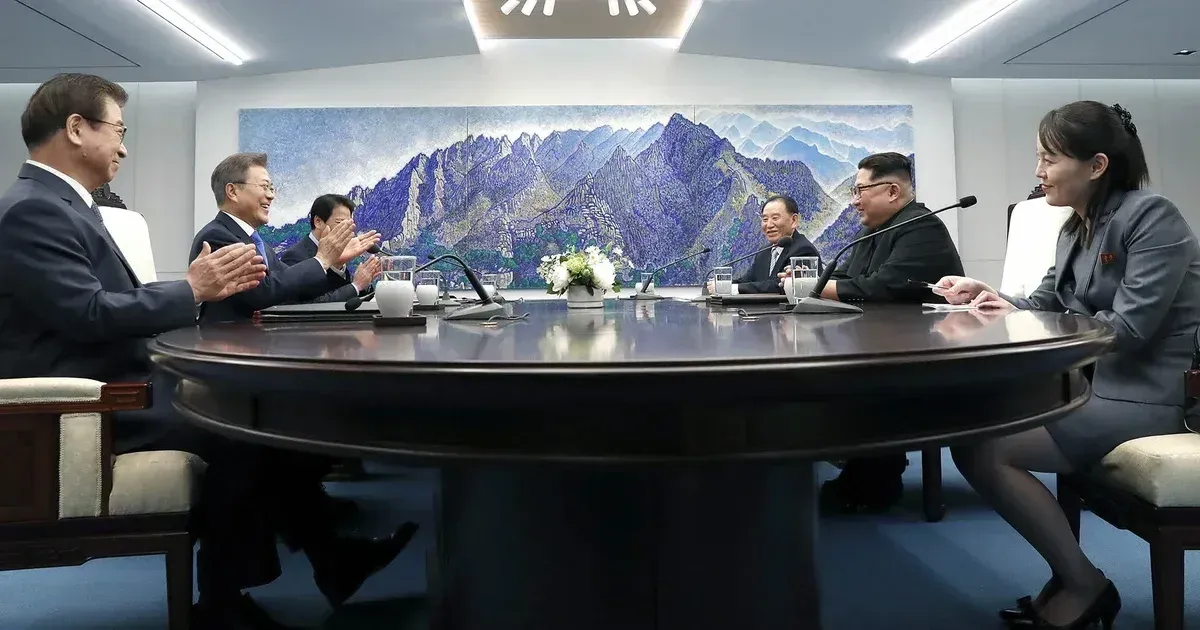
Kim Yo-jong, the influential sister of North Korean leader Kim Jong-un, issued a defiant statement regarding the permanent nature of the state's atomic weapons program. The declaration gives Pyongyang a sharper negotiating line before any future nuclear talks resume. This announcement surfaced on June 7, 2026, via state media channels and clarified that the regime no longer considers its nuclear arsenal a bargaining chip for diplomatic relief. Pyongyang now views its atomic arsenal as a non-negotiable foundation of state identity.
Leadership in the Workers' Party of Korea indicated that any outside pressure to dismantle these capabilities would be met with total resistance. Kim Yo-jong, who is the Vice Department Director of the party's Central Committee, emphasized that the country has crossed a threshold where its military status could not be undone by international treaties or sanctions. State news agency reports characterized the declaration as a final hardening of North Korean sovereignty.
Verbiage used in the official dispatch mirrors the 2022 Nuclear Forces Law, which legally codified the right to launch preemptive strikes. Pyongyang's legislative body, the Supreme People's Assembly, passed that law in September 2022 to establish a framework for the command and control of nuclear assets. Under these provisions, the leadership can authorize nuclear use if the command structure is threatened by conventional or unconventional forces. The current declaration effectively removes the possibility of returning to the 2018 or 2019 summit-style negotiations.
"Pyongyang's nuclear status is irreversible," according to the official statement released through state media.
Kim Yo-jong Hardens Pyongyang Nuclear Policy
Diplomatic efforts led by the United States and South Korea previously centered on the complete, verifiable, and irreversible dismantlement of the North's weapons. Kim Yo-jong's specific choice of the word "irreversible" directly mocks those enduring Western goals. Regional analysts in Seoul note that this rhetoric serves to discourage the Yoon Suk Yeol administration from pursuing further denuclearization-focused initiatives. Successive rounds of United Nations sanctions have failed to stop the expansion of the North's ballistic missile fleet.
Any attempt to force disarmament now carries a higher risk of military escalation.
North Korean military officials have accelerated tests of solid-fuel intercontinental ballistic missiles throughout the first half of 2026. These systems allow for more rapid deployment and are harder to detect than older liquid-fuel models. Records from previous years show that the Kim regime typically uses such high-profile statements to justify upcoming military provocations or weapons tests. The defensive posture on the Korean Peninsula remains elevated as Washington monitors satellite imagery for signs of renewed activity at the Punggye-ri nuclear test site.
Security experts at the Asan Institute for Policy Studies suggested that the timing of the statement coincides with increased joint military exercises between American and South Korean forces. Pyongyang frequently characterizes these drills as rehearsals for invasion. This latest rhetorical escalation provides a legalistic pretext for North Korea to ignore all future invitations to the negotiating table unless its nuclear status is first accepted by the global community.
Regional Impact of Irreversible Nuclear Status
South Korean defense officials responded to the dispatch by reaffirming their commitment to the extended deterrence strategy provided by the Pentagon. Officials in the Yoon Suk Yeol government stated that North Korea's claims do not change the illegal status of its weapons under international law. Analysts suggest that the declaration of irreversibility is intended to force a shift in US policy toward arms control rather than total disarmament.
International observers believe the regime is seeking to emulate the nuclear status of India or Pakistan. By declaring its status permanent, North Korea seeks to bypass the denuclearization phase of diplomacy entirely. North Korean officials have reportedly told visiting delegations in the past that they will not suffer the fate of Libya, which gave up its program in exchange for economic integration only to see the government overthrown years later. Historical parallels like these heavily influence the current mindset of the Kim family.
The powerful sister of the North Korean leader warned that any threat to the state's security would be met with an immediate response. Military analysts expect the regime to showcase new tactical nuclear warheads in an upcoming parade in Pyongyang to reinforce this message. Any miscalculation on the border could now lead to a rapid escalation involving strategic assets stationed in the Pacific theater. North Korea concluded its latest round of communications by presenting a refined nuclear force as essential to the survival of its political system.