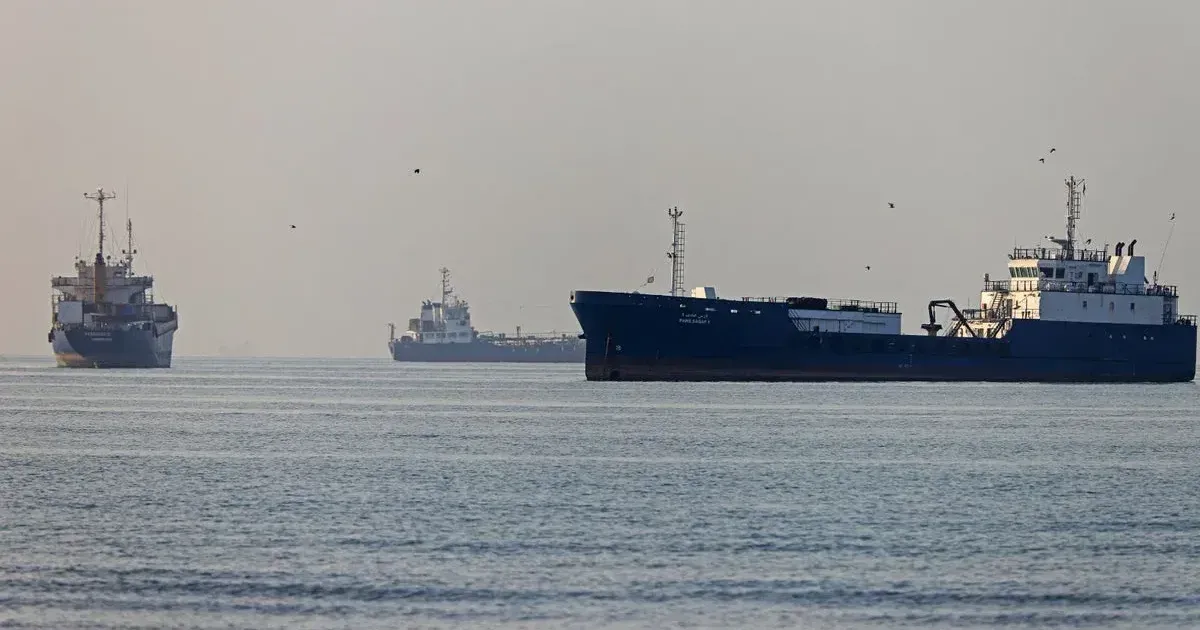
Iranian military forces launched missile strikes toward Kuwait and Bahrain after a direct confrontation with American naval assets in the Persian Gulf. The response pushed Gulf allies from warning status into active air-defense coordination. The escalation occurred on June 6, 2026, shortly after United States forces intercepted four Iranian drones bound for the Strait of Hormuz. These naval encounters shattered a fragile ceasefire that international mediators had hoped to extend into a long-term truce. Central Command confirmed that the drone swarm was neutralized before reaching its intended targets, though the subsequent missile volley from Iranian territory forced several regional allies to activate their domestic air defense systems.
United States naval vessels and aircraft responded to the drone threat with precision fire near the mouth of the Gulf. Military officials described the interception as a necessary defensive action to protect commercial shipping lanes and American personnel stationed in the region. Tensions in the Gulf reached their highest point in years.
Kuwaiti Air Defenses Engage Inbound Targets
Kuwaiti military authorities moved to a high state of alert as loud explosions echoed across the capital city during the early morning hours. Emergency sirens sounded in residential districts for the first time since the regional conflict began three months ago. The General Staff of the Army released a statement attempting to calm the public while acknowledging the active kinetic environment.
Any loud explosions heard across the country were likely the result of interception operations being carried out by air defence units, the General Staff of the Army confirmed.
Residents in Bahrain also reported hearing warning sirens and seeing flashes in the sky as defense batteries engaged incoming projectiles. Military officials in Manama confirmed the activation of their systems but provided few details regarding the origin or specific type of missiles involved in the barrage. Local security forces established cordons around suspected debris sites to enable recovery and analysis by technical teams. Preliminary assessments suggest the weapons were medium-range ballistic missiles launched from western Iran.
Regional stability appears increasingly fragile as the geographic scope of the conflict expands beyond the immediate border zones. While previous skirmishes were largely contained to maritime corridors, the targeting of Kuwaiti and Bahraini territory marks a departure from established patterns of engagement. Pentagon planners are currently assessing whether these strikes represent a deliberate attempt to broaden the war or a localized response to the drone shootdowns.
Retaliatory Strikes on Iranian Radar Installations
American forces conducted targeted strikes against Iranian coastal radar installations located along the southern coastline. These facilities provided the tracking data necessary for Iranian anti-ship missiles and drone guidance systems. Neutralizing these sites reduces the capability of the Islamic Revolutionary Guard Corps to monitor and target Kuwait or other allied assets in the waterway. The Pentagon confirmed that the strikes used precision-guided munitions to minimize collateral damage while ensuring the destruction of the radar arrays.
Defense analysts noted that the removal of these coastal sensors creates a meaningful blind spot in Iran's maritime surveillance network. This tactical setback for Tehran follows months of attrition that has depleted its stockpile of advanced unmanned systems. The three-month-old war has already claimed thousands of lives and displaced millions across the Middle East, with humanitarian agencies struggling to keep pace with the growing needs. In Lebanon, the United Nations reports that 1.4 million people require immediate aid as the violence spills over into neighboring territories.
Military movements in the Gulf continue to complicate diplomatic efforts to reach a settlement. Naval assets from the Fifth Fleet remain on high alert, with additional carrier strike group resources moving toward the region to deter further aggression. Iranian officials have not yet officially commented on the loss of their radar sites, though state media outlets have broadcast footage of the missile launches toward what they termed hostile regional bases.
Fragile Negotiations and the Search for a Truce
Diplomatic channels remain open despite the surge in military activity. Representatives from the United States and Iran have been engaged in largely indirect negotiations to secure an interim deal to halt the hostilities. These talks, hosted in neutral venues, aim to address immediate security concerns while delaying more complex issues such as Iran's nuclear development and regional proxy support. Success in these negotiations depends on the willingness of both sides to adhere to a verifiable cessation of fire.
Previous attempts to solidify a ceasefire failed when local commanders or proxy groups initiated unauthorized actions. The current round of diplomacy faces similar hurdles as hardline factions on both sides remain skeptical of an interim agreement. Negotiators are currently focusing on a phased de-escalation plan that would see a pullback of naval assets in exchange for a freeze on long-range missile testing. Progress has been slow, with both delegations frequently returning to their respective capitals for further instructions.
Financial markets have reacted to the instability with increased volatility in energy prices. Brent crude futures rose sharply following the reports of missile fire near Kuwait, reflecting fears of a prolonged disruption to the global oil supply. Shipping insurance premiums for vessels transiting the Strait of Hormuz have also spiked, prompting some maritime firms to reroute their tankers around the Cape of Good Hope. The economic cost of the conflict adds another layer of pressure on international leaders to find a diplomatic resolution.
Direct Gulf Strikes Raise the Cost of Escalation
The escalation of direct fire between Iranian forces and Gulf Cooperation Council members fundamentally alters the security calculus of the Middle East. For decades, the deterrence model relied on the assumption that Iran would refrain from direct strikes on sovereign Arab territory to avoid a wider regional war. That threshold has now been crossed, suggesting that Tehran perceives its strategic position as sufficiently threatened to warrant high-risk kinetic responses. The targeting of radar installations by the United States indicates a move toward active suppression of Iranian capabilities rather than simple interception of threats.
If the indirect negotiations for an interim deal fail to produce a signed agreement within the next few days, the window for a controlled de-escalation may close entirely. The involvement of Kuwait and Bahrain pulls more stakeholders into the combat theater, making a multilateral ceasefire harder to coordinate. Future stability hinges on whether the United States can maintain its defensive umbrella without being drawn into a protracted ground or air campaign that would further destabilize the global energy market. The current military posture suggests a strategy of containment, but the reality of missile warfare often defies such tidy strategic boundaries.