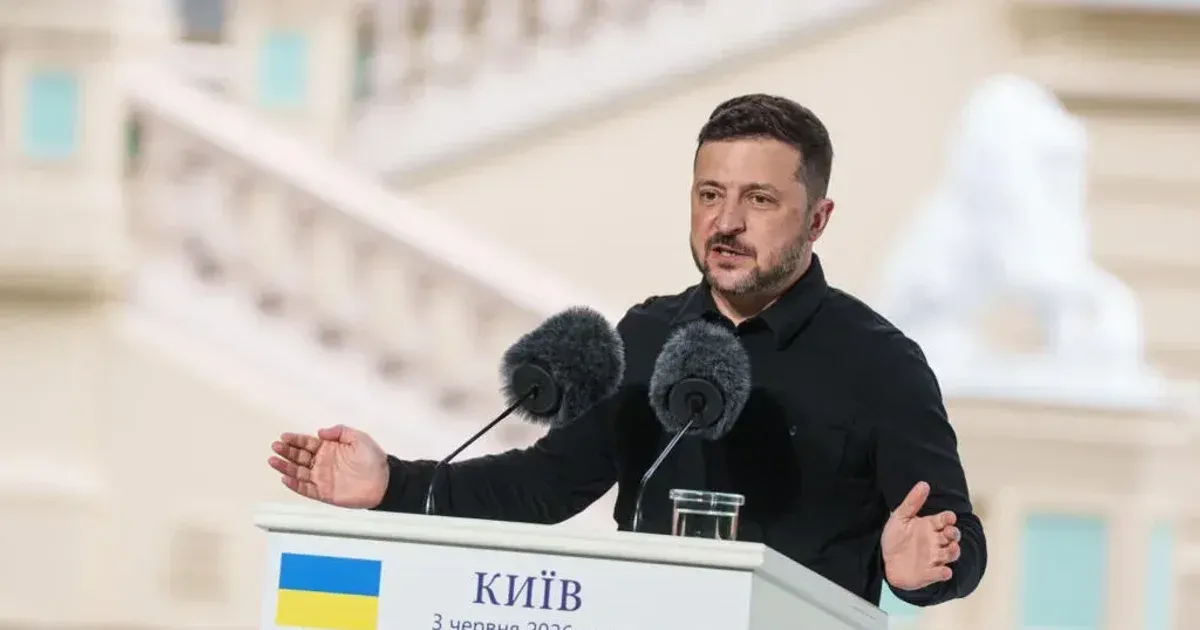
Volodymyr Zelensky issued a rare open letter to the Kremlin to demand a direct, face-to-face meeting with Vladimir Putin. The letter puts Moscow under direct public pressure while giving Ukraine a clearer diplomatic record of its ceasefire terms. The Ukrainian president announced the proposal on June 4, 2026, while offering specific terms for a full ceasefire to halt the ongoing war. This public overture marks a departure from standard diplomatic channels, which have largely remained stalled since the start of the conflict. It also gives Kyiv a public record of its terms before Moscow can define the offer through its own messaging.
Volodymyr Zelensky emphasized that a direct dialogue between the two heads of state is the only viable path toward a lasting settlement. Public documents released by the President’s Office confirm that the letter was delivered through international intermediaries. Moscow received the proposal as combat operations intensified across multiple fronts in the eastern and southern regions. That timing makes the letter both a ceasefire offer and a test of whether Russia is prepared to pause while negotiations continue.
Vladimir Putin responded by stating that Russia is willing to reach a peaceful settlement but will not do so without major conditions. Putin insisted that Kyiv must accept battlefield realities and make territorial concessions. These remarks highlight the enduring distance between the two capitals regarding the sovereignty of disputed regions.
Zelensky issued the call for a meeting while the war entered a period of intensified long-range strikes.
Zelensky Outlines Ceasefire Terms in Public Letter
Zelensky stated in his communication that he is ready for a full ceasefire to prevent further loss of life. The proposal includes a complete cessation of all hostilities, including artillery barrages and missile strikes. Public diplomacy experts suggest the use of an open letter is intended to garner international support and place the burden of refusal on the Kremlin.
A strategy of public letters allows the Ukrainian administration to communicate directly with the global community. By making the ceasefire offer transparent, Zelensky attempts to counter Russian narratives regarding the lack of a willing negotiating partner in Kyiv. Previous attempts to organize a meeting between the two leaders through backchannels have failed to produce a concrete schedule or agenda.
Putin’s camp has framed any settlement around what Moscow calls current battlefield realities, a phrase Kyiv rejects because it implies accepting Russian territorial gains.
The proposed meeting would be the first direct encounter between the two leaders since the invasion began. Zelensky has frequently maintained that no peace deal can be finalized without a personal agreement between the top decision-makers. Such a meeting would require extensive security protocols and a neutral venue, though neither side has suggested a specific location yet.
Putin Demands Territorial Concessions from Kyiv
Putin maintains that any deal must reflect the current military positions of both armies. The Russian leader claimed that Russian forces continue to gain territory in the Donbas and other key sectors. Putin also highlighted what he described as severe manpower shortages within the Ukrainian Armed Forces as a reason for Kyiv to seek a deal now. This position suggests that Moscow intends to negotiate from a place of perceived strength rather than making reciprocal gestures.
Military analysts describe the current situation as a deadlock characterized by high attrition on both sides.
Recent data indicates an escalation in long-range drone attacks by both nations. These strikes have targeted energy infrastructure and logistical hubs, causing major disruptions to civilian life and military transport. Russia has increased the frequency of its drone swarms, while Ukraine has successfully launched deep-penetration strikes against refineries and depots inside Russian territory.
Reports from the frontline suggest that the lack of a clear breakthrough on the ground has shifted the focus toward these long-distance exchanges. Putin noted that the continued gain of territory by his troops remains the primary factor in his refusal to accept a ceasefire on Zelensky’s terms. Ukraine, meanwhile, persists in its efforts to reclaim occupied land before entering any formal peace talks.
Public Diplomacy Cannot Bridge the Territorial Deadlock
The shift toward public correspondence indicates a breakdown in traditional private negotiations. By using an open letter, Zelensky is engaging in a form of direct political signaling that targets the Russian public and the international coalition supporting Ukraine. It places the Russian leadership in a position where a flat rejection of a ceasefire could be perceived as a preference for prolonged war, even as Putin claims to seek a peaceful resolution.
The insistence from the Kremlin on battlefield realities suggests that territorial acquisition is a non-negotiable component of any future Russian strategy. This creates a fundamental deadlock, as the Ukrainian government has consistently rejected any settlement that involves ceding sovereign territory. If Moscow refuses the face-to-face meeting, the cycle of long-range drone strikes and artillery duels is likely to expand in scope. Current military expenditures for both nations continue to rise as they prepare for a summer of high-intensity operations along the 1,000-kilometer front.