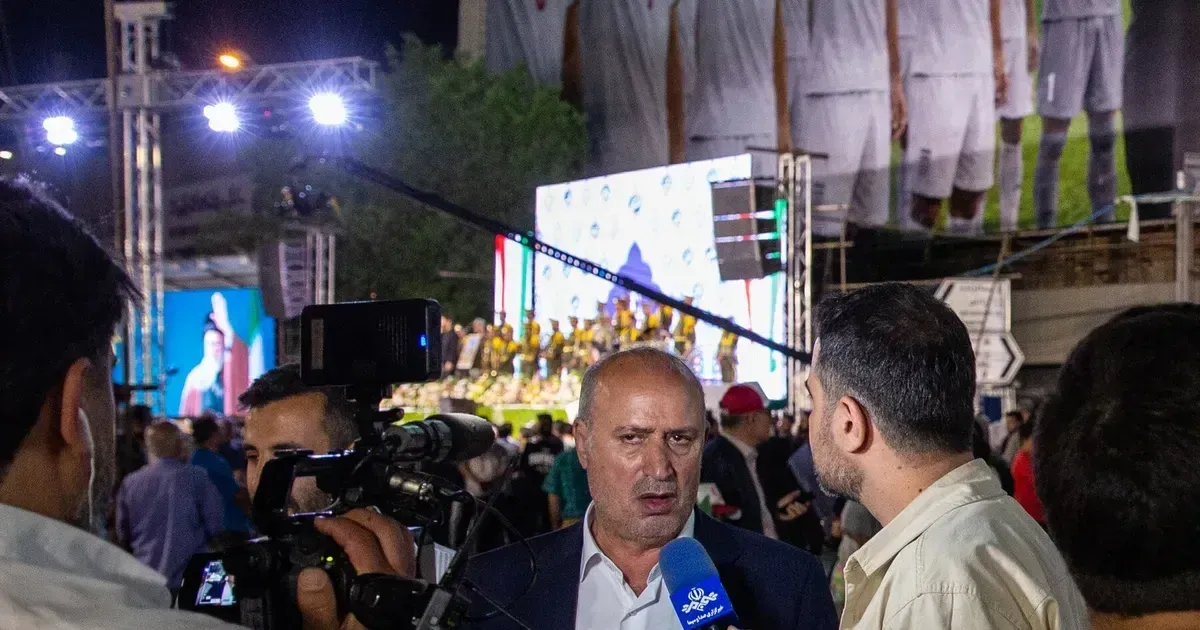
Mehdi Taj, the president of the Football Federation of the Islamic Republic of Iran, is managing a complex diplomatic dance to ensure his national squad reaches North American soil for the 2026 World Cup. The tournament, set to begin on June 11, 2026, presents a unique logistical challenge for the Iranian delegation given the absence of formal diplomatic ties between Tehran and the United States.
International protocols usually dictate that host nations coordinate directly with visiting athletic federations to enable entry requirements. Host cities across the United States, Mexico, and Canada are preparing for the arrival of 48 teams, yet the Iranian application process has deviated from standard bilateral exchanges. Participation in the tournament requires high-level security clearance and specific athletic visas that are often subject to intense scrutiny. National team leaders have spent months attempting to insulate the sporting squad from broader geopolitical tensions that frequently disrupt athletic travel.
Federation leaders in Tehran have opted to use FIFA as a primary buffer to navigate these administrative barriers. Neutrality is a core requirement of the world governing body, which mandates that host nations must grant entry to all qualifying teams. The organization is currently acting as the central hub for document verification and visa facilitation for the Iranian contingent. By routing all communication through Zürich, Taj is attempting to secure the necessary travel permits without establishing a direct line of communication with American consular officials.
Taj said his federation has been dealing with FIFA rather than the United States while trying to obtain the visas Iran needs for the tournament. Securing these documents is essential for the team to meet its scheduled training sessions in North America.
Washington maintains strict entry protocols for individuals traveling from sanctioned nations, even under the umbrella of international sporting events. While the 2026 World Cup hosting agreement includes provisions for athlete entry, the specific vetting process for the Iranian delegation remains a point of administrative friction. State Department officials have not publicly commented on the status of individual visa applications for the team. Consular officials generally handle such cases under standard national security frameworks that operate independently of sporting organizations. The complexities of the Iranian application process for 2026 World Cup entry have recently led the federation to issue a series of formal demands.
Officials in Tehran have characterized the reliance on FIFA as a necessity to ensure the team remains focused on competition rather than administrative delays. Direct engagement with Washington is viewed as a political non-starter for the federation leadership. Taj confirmed that his staff is working exclusively with the world governing body to resolve outstanding questions regarding the travel roster. This approach aims to prevent the type of last-minute denials that have hindered Iranian wrestling and volleyball teams in previous years.
Geographic logistics add another layer of complexity as the team prepares to move between the three host nations. Matches are distributed across a vast territory, requiring multiple border crossings that each carry distinct security protocols. Travel for the Iranian delegation will likely involve specialized transport arrangements to minimize contact with political demonstrators or other security risks. Security planning for the team involves coordination between FIFA and various local law enforcement agencies to ensure safe passage between venues.
Preparation for the opening match continues despite the uncertainty surrounding the final approval of the travel documents. Athletes are currently engaged in a final training camp, awaiting the green light to depart for their base of operations in North America. Final rosters must be submitted to the governing body shortly before the tournament commences. Training staff are operating under the assumption that the full squad will be available for the duration of the group stage.
Visa Logistics Become a Tournament Test
Iranian officials must navigate sports protocols, security screening and limited diplomatic channels before the squad can travel. The process will test whether World Cup organizers can keep political disputes from disrupting basic tournament access.
FIFA Must Keep Visa Politics From Blocking Tournament Access
Relying on FIFA as a diplomatic shield highlights the deep freeze in direct communications between Tehran and Washington. This strategy effectively insulates the sporting event from the broader geopolitical friction that has historically disrupted athletic exchanges. By centralizing the visa process within the world governing body, the Iranian federation attempts to bypass the standard bilateral scrutiny that often accompanies high-profile visa applications from sanctioned nations.
Success in this logistical maneuvering would establish a precedent for future international tournaments held in hostile jurisdictions. Failure, however, would likely trigger an immediate formal protest to FIFA, potentially jeopardizing the participation of a regular World Cup contender. The outcome will depend on whether the governing body can exert enough pressure on host nation authorities to honor tournament hosting agreements over national security policies. Neutrality remains the stated goal, though the execution of such promises faces a test in the coming days.