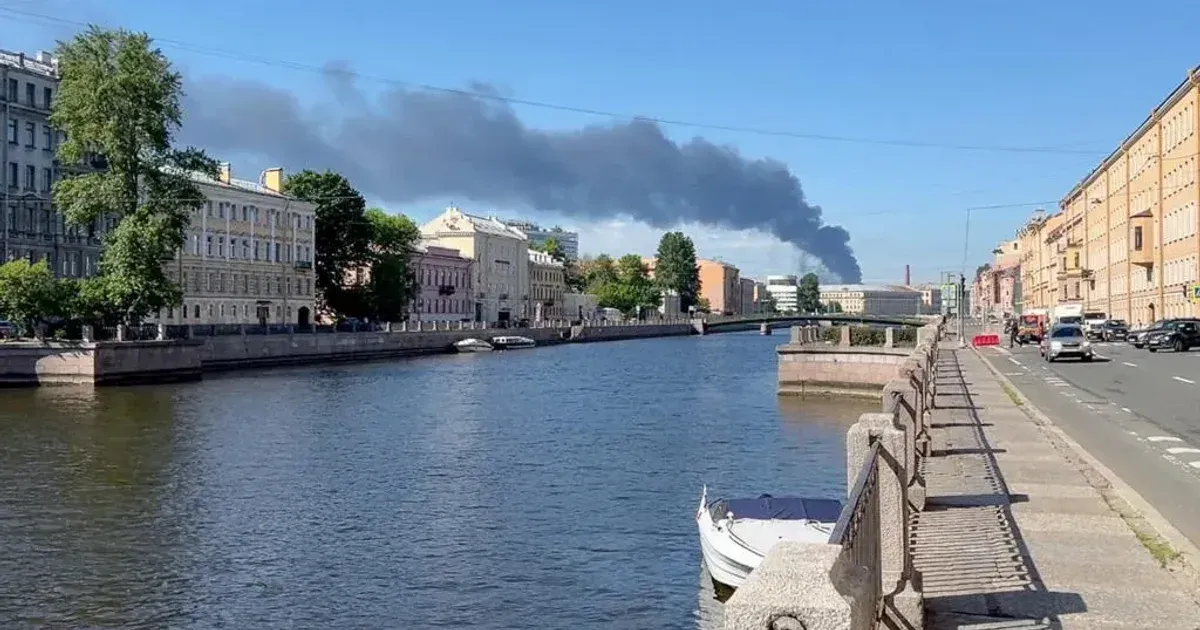
Long-range drones launched by Kyiv targeted energy infrastructure near St. Petersburg during the opening hours of a major diplomatic summit. The oil-depot strike landed near a showcase event for Russian economic confidence. The timing was deliberate. It also forced city officials to manage fire response and political optics together. Heavy plumes of black smoke became visible over the city skyline on June 3, 2026, as residents reported multiple explosions. This timing coincided with the start of the St. Petersburg International Economic Forum, an event often described as the Russian equivalent to the World Economic Forum in Davos.
Vladimir Putin is scheduled to address the forum later this week, making the choice of timing particularly notable for international observers. Security officials in the city moved to cordon off several zones near the harbor as emergency crews responded to fires at oil storage facilities. The economic forum is typically a showcase for Russian investment and stability, though the proximity of the conflict now challenges that image.
Foreign investors and high-ranking diplomats from several nations arrived in the city just as the first reports of the drone arrivals surfaced. Drones traveled hundreds of miles through Russian airspace to reach the northern capital, which is Putin's home city. Oil storage units at a major terminal sustained direct hits, leading to the ignition of fuel supplies intended for regional distribution.
The terminal is a critical node in the energy supply chain for northwestern Russia. Firefighters worked through the morning to contain the blaze, which sent a column of soot visible from the city center. Local reports indicated that specialized equipment and fuel storage infrastructure were damaged in the blast.
Kyiv issued a formal justification for the mission shortly after the smoke plumes became visible. Volodymyr Zelensky referred to the operation as a measured response to recent Russian missile barrages that struck several Ukrainian population centers. Retaliation became a central theme of his daily address, where he emphasized the necessity of targeting the Russian economic engine. Kyiv now seeks to disrupt the logistics that sustain the ongoing military operations across the border.
"It is only fair that the war is felt in the cities where these decisions are made," Ukrainian President Volodymyr Zelensky said during a press briefing following the reports of the strikes.
Air Defenses and Airport Disruptions
Russian defense systems engaged several of the incoming drones, according to the Ministry of Defense. Fragments fell into industrial zones, though officials claimed the primary forum venues remained secure and operational. St. Petersburg is located nearly 600 miles from the Ukrainian border, a distance that previously offered a sense of insulation from the daily realities of the conflict. These infrastructure attacks directly threaten the viability of long-term Russian oil exports.
Air defense batteries in the Leningrad region were placed on high alert as additional drone sightings were reported throughout the morning. The drone technology used in this mission appears to have advanced sharply, allowing for low-altitude navigation that avoids traditional radar detection. Residents shared footage of the low-flying craft humming over suburban neighborhoods before the terminal dive toward the oil depots.
War has returned to the Baltics in a way that residents had not anticipated earlier in the conflict. Kyiv is no longer fighting from a defensive posture alone. Targeted sites were selected for their symbolic and economic value, forcing the Kremlin to divert air defense resources from the front lines to protect internal industrial hubs.
The impact of the strike reaches beyond the immediate structural damage. Kremlin Press Secretary Dmitry Peskov noted that security measures would be tightened, yet he insisted the forum schedule would remain unchanged. Foreign delegates observed the smoke from their hotel windows, providing a stark contrast to the official narrative of a contained special operation.
The St. Petersburg Economic Impact
Russia faces a difficult choice regarding its energy security. Energy hubs like the one targeted today are essential for both civilian heating and military fuel logistics. Damage to these facilities creates a bottleneck that cannot be easily bypassed, especially under current international sanctions that limit the import of refinery components. The strike highlighted a vulnerability in the heart of Russia's economic showcase.
Ukraine now possesses the capability to threaten Russian infrastructure deep within the interior. Each successful mission of this nature requires Moscow to re-evaluate its resource distribution. Protecting every refinery and oil depot across the vast Russian territory would require a volume of air defense systems that the military currently lacks. Moscow maintains that its energy exports will continue, but the visible damage to its domestic processing capacity tells a different story.
Deep Strikes Erode Russia's Geographic Buffer
A state cannot maintain the illusion of absolute security when its most prestigious diplomatic event is punctuated by explosions. This question now faces the Kremlin as it attempts to court global partners. Strikes on St. Petersburg indicate that the geographic buffer Russia once enjoyed is rapidly evaporating. By targeting the hometown of the Russian president, Ukraine has bypassed conventional battlefields to strike at the symbolic core of the current administration. The shift suggests a new phase of the conflict where no Russian city can be considered truly off-limits to retaliatory strikes.
European neighbors are watching the escalation with heightened concern, as the reach of Ukrainian drone technology continues to expand. The diplomatic fallout from hitting a city during an international forum may result in increased pressure on Kyiv from Western allies, yet the internal morale boost for Ukraine remains a potent motivator. Future security protocols at Russian economic summits will likely mirror those of active war zones, fundamentally changing the character of Russia's primary investment vehicle.