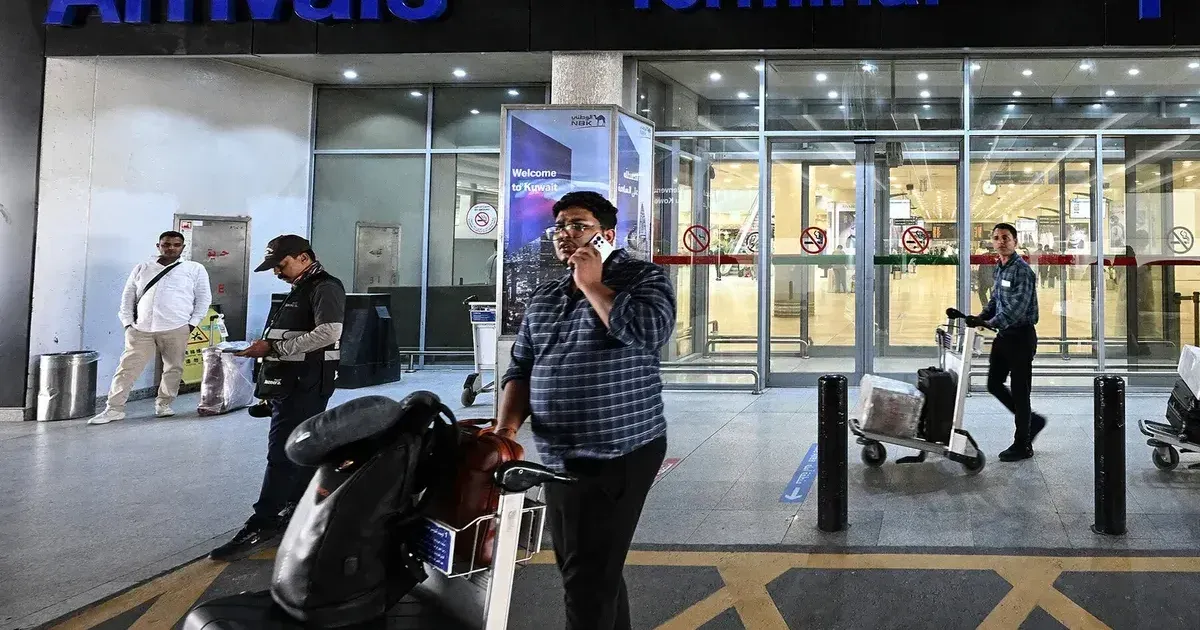
Iranian drones struck Kuwait International Airport during an early morning attack that damaged the country's primary aviation hub. The airport strike gives Kuwait a direct security problem, not just a regional diplomatic one. Civil aviation disruptions can spread quickly when drones reach transport hubs. Authorities said the attack killed one person and wounded others as flights were briefly suspended. The June 3, 2026, strike marked a violent expansion of the current conflict in the Persian Gulf.
Casualties within the civilian terminal area are still being assessed by local emergency services. One person died during the impact, while several others received treatment for injuries caused by shattered glass and falling debris. Damage to the terminal forced an immediate suspension of commercial flight operations while crews inspected the site.
Tehran officials quickly acknowledged the operation. Iranian state media described the lethal assault as a retaliatory measure for recent American military activity. Specifically, the strike followed a United States raid on an Iranian military station situated on a strategically essential island in the Strait of Hormuz. Military planners in Iran argued that the Kuwaiti facility provided logistical support to Western forces, though Kuwaiti officials have consistently maintained their neutrality in the regional dispute.
Retaliatory Fire Targets Kuwaiti Aviation Hub
Defense analysts noted the tactical significance of the operation. The drones penetrated airport defenses and damaged terminal infrastructure, according to regional officials. The attack underscored the difficulty of protecting civilian facilities from low-flying aerial threats during a fast-moving regional crisis.
Pentagon officials monitored the missile paths from sea-based platforms. Before the impact, early warning systems triggered sirens across Kuwait City, sending thousands of residents into underground shelters. The persistence of the barrage indicates a willingness from Iranian leadership to strike civilian infrastructure to degrade regional stability. Reports from Al Jazeera indicate that additional kinetic engagements occurred in Bahrain, suggesting a multi-axis campaign against Gulf partners aligned with Washington.
Kuwaiti security forces have cordoned off the facility to prevent further casualties from unexploded ordnance. Engineers are currently inspecting the structural integrity of the main terminal building. While the runway remains mostly intact, the damage to the electronic guidance systems makes immediate resumption of air traffic impossible. Logistical chains across the region face severe disruption as airlines reroute flights to Saudi Arabia and the United Arab Emirates.
Contradictory Signals From Washington Officials
Washington appears to be struggling with a bifurcated diplomatic and military strategy. Secretary of State Marco Rubio recently told lawmakers that the war against Iran was effectively over. His assessment aimed to reassure a weary public that the most intense phase of the conflict had passed. Directly contradicting this narrative, the lethal strike in Kuwait proves that kinetic activity is far from concluded.
President Donald Trump provided a different perspective during a conversation with reporters. He suggested that direct lines of communication between the White House and Tehran are currently open and productive. In a recent interview, the president expressed optimism regarding a face-to-face meeting with the supreme leader to settle the enduring maritime and territorial disputes. Negotiations, however, have not yet resulted in a ceasefire or a reduction in hostile maneuvers.
President Trump told The New York Post that the supreme leader is involved in peace talks and he hopes to meet him.
Diplomatic circles in London and Washington expressed confusion over these conflicting messages. If peace talks are indeed progressing, the decision to strike a civilian airport in a neighboring country is an escalation. Some intelligence officers suggest that hardline factions within the Iranian Revolutionary Guard may be attempting to sabotage the supreme leader's potential engagement with Western leaders. This internal friction complicates any effort to reach a lasting peace agreement.
Tactical Strikes Spread Across Persian Gulf States
Regional volatility has intensified since the US targeted the Iranian island station in the Strait of Hormuz. That facility was a primary monitoring post for international shipping lanes and a launch site for coastal defense batteries. Its destruction removed an obstacle for US Central Command but triggered the current cycle of retribution. Tehran viewed the loss of the station as a red line that required a visible and kinetic response.
Neighboring states are now bracing for secondary effects. Bahrain reported minor damage to its naval facilities, although the scale of that attack was smaller than the Kuwaiti airport strike. The targeting of multiple Gulf Cooperation Council members suggests that Iran is testing the limits of the collective security agreements currently in place. These strikes put immense pressure on local governments to either distance themselves from US military operations or seek even greater Western protection.
Military commanders at the $11 billion Al Udeid Air Base in Qatar have raised their alert status. They are coordinating with local radar sites to track further drone launches from Iranian territory. The threat of localized skirmishes turning into a broader regional war persists as both sides exchange heavy fire. Current projections show that insurance premiums for commercial shipping in the Gulf will likely double by the end of the week. This economic pressure adds another layer of complexity to an already fragile security situation.
A Civilian Airport Strike Exposes the Gap Between Talks and Combat
The strike on Kuwait International Airport demonstrates a major shift in Iranian targeting doctrine. By hitting a major civilian hub, Tehran is signaling that no infrastructure is off-limits if its own sovereign military assets are compromised. This creates an unstable environment for international investors and regional logistics firms. The risk to commercial aviation is now at its highest level in decades, as air defense systems struggle to differentiate between civilian airliners and low-flying suicide drones.
Contradictory statements from the White House and the State Department further erode the credibility of Western deterrence. When the Secretary of State declares a war over while missiles are falling on key partners, it emboldens adversaries to test red lines. Strategic ambiguity can sometimes prevent conflict, but in this scenario, it appears to be breeding miscalculation. If the supreme leader is indeed pursuing peace talks, his inability or unwillingness to restrain military commanders on the ground suggests a fractured command structure in Tehran.
Security planners must now account for a scenario where diplomatic breakthroughs at the top do not translate to safety on the front lines. The focus must shift to hardening civilian infrastructure against hybrid threats that blend conventional missiles with asymmetric drone technology. Failure to secure these hubs will result in a permanent degradation of the regional economy.