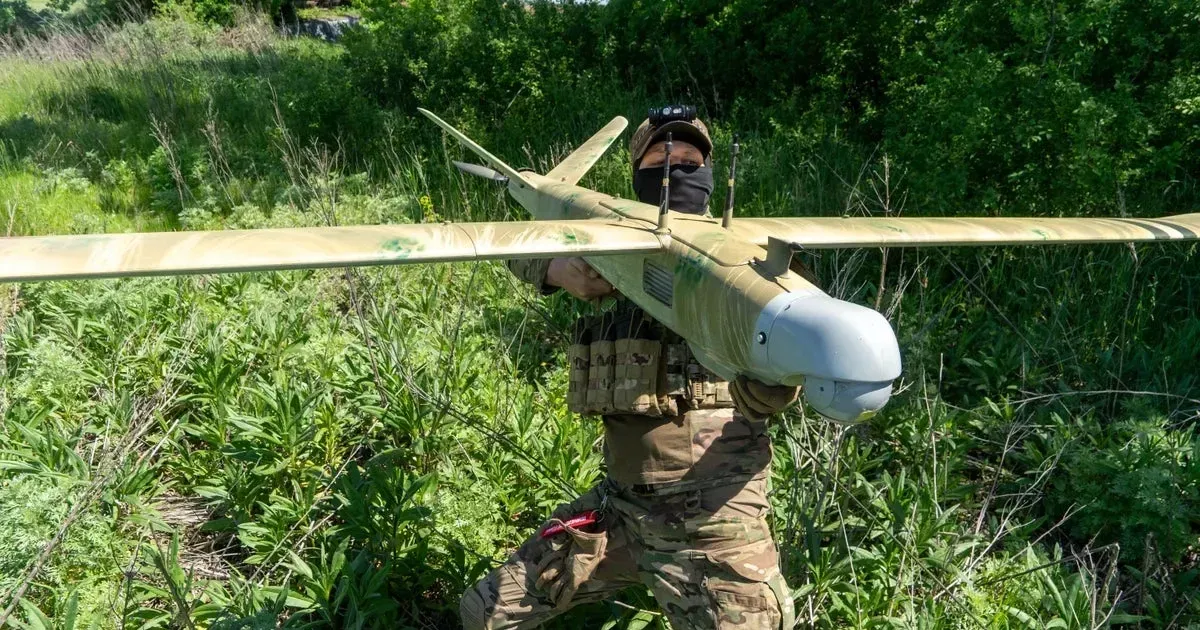
Lithuanian civilians moved to emergency shelters after Ukrainian strike drones veered off their intended flight paths and entered the airspace of a NATO capital. The jamming reports show how electronic warfare can push a regional conflict into allied airspace. NATO governments now have to separate accident risk from deliberate escalation. The incidents took place on May 21, 2026, as electronic warfare systems disrupted navigation during Kyiv's campaign against Russian energy infrastructure. Disrupted signals forced the aircraft to deviate hundreds of miles from their targets, crossing into territory belonging to the military alliance.
Vilnius reported multiple sightings of low-flying drones near residential areas, prompting local authorities to trigger air raid sirens for the first time in the current conflict. Military observers noted that the drones appeared to be wandering aimlessly rather than following a programmed flight path. This loss of control stems from sophisticated Russian jamming technology that overrides the satellite navigation systems used by Ukrainian hardware.
Residents in the Baltic state had not faced such direct proximity to the conflict until now.
NATO commanders are reviewing radar data to determine how many units crossed the border during the overnight barrage. Initial findings suggest that Russian electronic warfare units are creating a corridor of instability along the frontier to protect oil assets. Moscow uses high-powered transmitters to spoof GPS data, making drones believe they are at a different location or causing them to fly in circles until fuel exhaustion occurs.
While Ukraine has successfully hit several oil refineries in recent weeks, the collateral risk to neighboring nations has intensified. The targeting of Russian oil exports remains a priority for the military command in Kyiv, but the technical interference is turning these missions into a gamble for European security. Baltic defense ministers have expressed growing frustration with the frequency of these incursions.
The technical battle for the skies is a diplomatic problem.
Images of Lithuanians sheltering in underground car parks highlighted the physical danger posed by malfunctioning equipment in a major European capital.
Russian defense contractors have expanded the range of their signal disruptors to cover the entire western border. These systems create dead zones where civilian and military navigation becomes unreliable for hours at a time. European Union leaders are discussing the need for better electronic hardening on drones to prevent them from being hijacked by hostile signals. Poland and Estonia have also registered similar incursions in recent days, suggesting a broader pattern of navigational failure. The tactical use of Ukrainian strike drones is overseen by commanders like Robert Brovdi to disable refinery infrastructure.
Strategic planners in Kyiv argue that the destruction of Russian oil exports is essential to weakening the Kremlin's war chest. Refineries near the Baltic Sea serve as primary targets because of their economic importance to the Russian state. Success in these missions requires flying through some of the most heavily defended electronic environments on the planet. National security advisors in Lithuania are calling for a collective NATO response to the spillover to prevent civilian casualties.
Electronic Interference Diverts Long-Range Drones
Russian jamming units, particularly the Pole-21 and Krasukha-4 systems, have effectively created a wall of electromagnetic interference. These units do not destroy the drones but rather scramble their internal compasses. A drone intended for a refinery near St. Petersburg may suddenly turn south or west when its sensors are flooded with false coordinates. The result is a series of stray aircraft carrying explosive payloads drifting toward NATO member states.
Military analysts in the region believe that Russia is intentionally pushing these drones toward NATO territory to create friction between Kyiv and its allies. By forcing Lithuania to deal with stray Ukrainian weapons, Moscow hopes to dampen the appetite for continued military support. Drones often crash in rural areas once their fuel is spent, but the flight over populated centers like Vilnius presents a unique set of risks for local air defense teams.
Security Risks Intensify Along the Baltic Frontier
The presence of stray drones has forced Baltic nations to rethink their air defense postures. Authorities in Lithuania have increased the readiness of their short-range missile batteries to intercept any unidentified object entering their sovereign space. This creates a dangerous scenario where a NATO member might shoot down a weapon belonging to the partner it is trying to support. Government officials have met with Ukrainian representatives to demand more resilient fail-safe mechanisms on long-range munitions.
Economic pressure on Russia continues to drive these high-risk operations. Kyiv has intensified its focus on the energy sector because it remains the primary source of funding for the Russian military. Every refinery that goes offline reduces the fuel available for front-line operations. However, the reliance on satellite navigation makes these strikes vulnerable to the exact type of interference seen over the Baltics. Security protocols are shifting as the unintended consequences of electronic warfare become a daily reality.
Stray Drones Force NATO to Balance Support and Civilian Safety
The entry of Ukrainian drones into NATO airspace is a delicate complication for the alliance. While the stray aircraft are clearly a byproduct of Russian electronic warfare, the physical presence of explosives over a capital city like Vilnius forces a mandatory response. NATO must find a way to assist Ukraine in hardening its navigation systems without becoming direct participants in the electronic skirmish. The risk of a fatal accident involving a stray drone is high, and such an event could force an escalation that neither side desires.
Russia is weaponizing the geography of the Baltics, using the proximity of NATO members as a shield for its own infrastructure. The strategy effectively turns neutral airspace into a hazard zone. If the incursions continue, the pressure on Baltic leaders to demand a halt to certain types of Ukrainian long-range strikes will grow. Balancing the strategic necessity of degrading Russian oil production with the safety of European civilians is now the primary challenge for the alliance as the war enters this new, technologically chaotic phase.