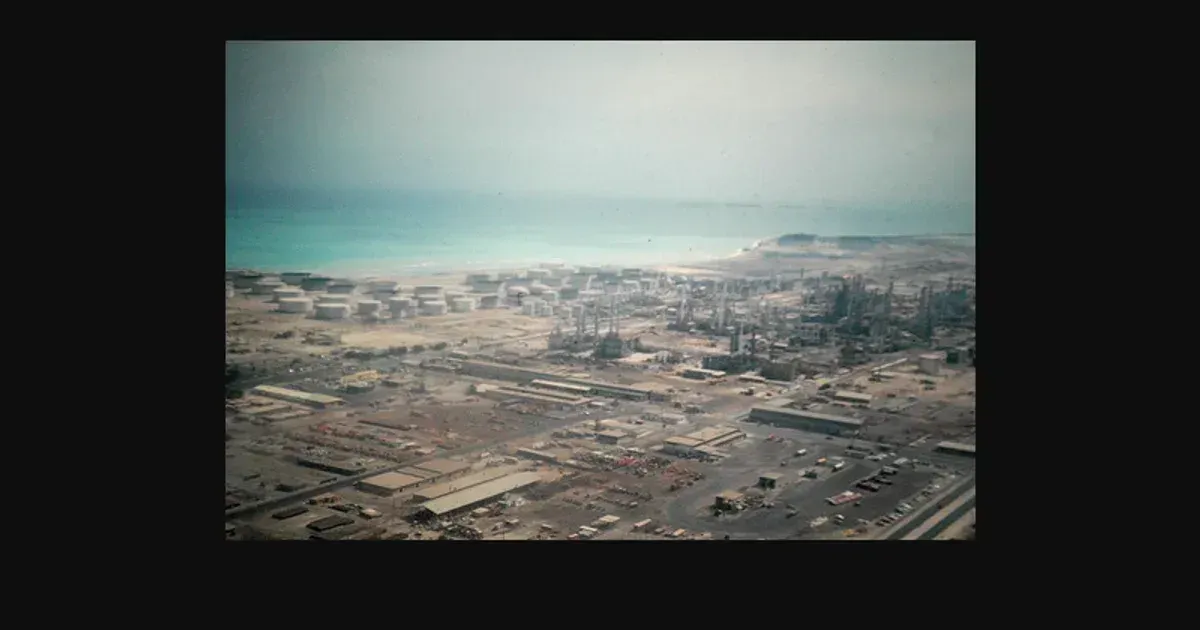
Ukraine’s drone campaign against Russian oil infrastructure has become one of Kyiv’s most effective economic pressure tools. Robert Brovdi’s units are attacking refineries and depots in ways that disrupt Moscow far from the front. The strikes force Russia to defend energy assets while still funding a long war. That pressure is changing the shape of the conflict. Robert Brovdi, the veteran commander known as Madyar, detailed his unit's expanded role in targeting Russian infrastructure on April 27, 2026. His specialized group, commonly known as Madyar's Birds, operates with a degree of autonomy that has transformed tactical reality for frontline battalions. Brovdi spoke about the evolution of these operations during a rare interview, noting that his personnel now oversee a vast network of reconnaissance and strike assets. Every sortie aims for maximum impact with minimal hardware loss.
Data from the frontlines suggests that a single unit under Brovdi’s command is responsible for destroying 33 percent of all enemy assets in its sector. Efficiency stems from a combination of customized FPV drones and advanced signal-hopping technology. Brovdi noted that his teams have moved beyond simple battlefield support to conducting deep-penetration missions. Targets are selected based on their economic and psychological value. Precision is the priority.
Economic targets have become a foundation of the 2026 strategy. By focusing on refineries located hundreds of miles from the border, Ukraine seeks to disrupt fuel supplies necessary for Russian armored columns. Energy export revenues, which provide the bulk of funding for the Russian state, face direct threats from these persistent aerial barrages. Refineries in the Samara and Volgograd regions have already reported substantial output drops. Repairs take months because of international sanctions on specialized parts.
Brovdi Unit Claims Third of Battlefield Kills
Military analysts at the Center for European Policy Analysis have noted that the cost of an FPV drone is approximately $500. A single successful strike can destroy a main battle tank worth over $4 million. Investment disparities like these create an unsustainable attrition rate for Russian forces. Brovdi has capitalized on this math. His unit operates like a corporate entity, tracking return on investment for every battery and motor used in the field. Losses are documented in high-definition video.
"Our unit is now responsible for accounting for a third of all targets destroyed on the battlefield," Brovdi told the BBC during an interview.
Night operations have increased in frequency due to the integration of thermal imaging cameras. Russian soldiers, previously safe under the cover of darkness, now find themselves hunted by silent, heat-seeking platforms. Brovdi emphasizes that the technology is maturing faster than the defensive measures designed to stop it. Electronic warfare remains a hurdle. His engineers work in underground labs to recode drone frequencies daily. Stagnation means death. Russian jamming equipment often fails to keep pace with these software updates. Some units have begun using fiber-optic cables to tether drones, making them immune to radio frequency interference. While this limits range, it ensures a 100 percent hit rate in dense urban environments. Brovdi remains a proponent of wireless mesh networks. His vision involves hundreds of interconnected devices swarming a single objective. Coordination is handled through encrypted satellite links.
Russian Oil Infrastructure Becomes Primary Target
Striking the Russian energy sector serves two purposes: reducing the Kremlin’s war chest and creating domestic fuel shortages. Long-range drones, often referred to as "flying mopeds" by local residents, have struck terminals as far as the Baltic Sea. These drones carry payloads designed to pierce the thick steel of atmospheric distillation towers. Once a tower is damaged, the entire refinery must cease operations. Black smoke from these facilities is visible on satellite imagery for days.
Intelligence reports indicate that Russian oil refining capacity has fallen by 12 percent since the beginning of the year. This reduction forces the Russian government to choose between supplying the military and maintaining civilian price caps. Domestic gasoline prices have risen in Moscow and Saint Petersburg. Public dissatisfaction is a secondary but intended consequence. The strategy is purely mathematical. No oil means no money for the front.
Logistics hubs also feature prominently on the target list. Brovdi’s units have successfully interdicted rail shipments of T-90 tanks and Grad rocket launchers. Small drones drop thermite charges on fuel tankers, causing chain-reaction explosions in railyards. These actions prevent the Russian military from concentrating its forces for new offensives. Stalling the enemy is as effective as defeating them in an open field. Combat is now a series of expensive delays.
Tactical Shifts in Madyar Drone Operations
Artificial intelligence now assists in target recognition, allowing drones to identify camouflaged vehicles without human intervention. This technology reduces the mental strain on pilots who must operate for 12 hours at a time. Brovdi has implemented a rotation system to keep his operators fresh. Fatigue leads to missed targets. High-resolution sensors can now spot a tripwire from 50 feet in the air. Safety for ground troops has improved as a result.
Russian forces have responded by installing "cope cages" and net shielding over their equipment. These physical barriers provide only limited protection against shaped-charge warheads. Brovdi’s pilots have learned to fly under the skirts of these cages to strike the engine compartments directly. Adaptation is the only way to survive. Every new Russian defense is met with a Ukrainian technical workaround. The cycle of innovation moves in weeks, not years. Standardized manufacturing has allowed the $11 billion Ukrainian drone industry to scale rapidly. Brovdi’s unit receives components from hundreds of small-scale workshops across Europe and North America. Assembly happens in decentralized locations to avoid Russian missile strikes. Components arrive as harmless electronics and leave as lethal munitions. The supply chain is invisible. Distribution is global.
Psychological Impact of Aerial Surveillance on Morale
Constant surveillance creates a state of perpetual anxiety for Russian infantry. Soldiers know that any movement in the open can result in a precision strike within minutes. This psychological pressure degrades the will to fight. Brovdi’s unit often posts footage of these strikes on social media to reinforce the sense of vulnerability. It is a digital war of nerves. Terror is a cheap weapon. Desertion rates in sectors patrolled by Madyar’s Birds are reportedly higher than the frontline average. Soldiers often abandon their posts when they hear the high-pitched whine of an approaching quadcopter. The sound has become synonymous with imminent death in the trenches. Brovdi views this as a force multiplier. A soldier who runs is a soldier who does not fire back. Panic spreads faster than any virus.
Future operations will likely involve even greater distances and larger payloads. Brovdi indicated that his unit is testing drones capable of carrying 50-kilogram warheads over 1,000 kilometers. These weapons would put every large industrial center in western Russia within reach. The era of the frontline being a static line on a map is over. Every factory is now the frontline. Every refinery is a target.
Brovdi’s Drone Doctrine Makes Every Russian Refinery a Front Line
Does the decentralization of lethality signal the end of the traditional nation-state monopoly on violence? Robert Brovdi is not just a commander; he is the designer of a new, low-cost doctrine that renders billion-dollar defense systems obsolete. The reliance on FPV drones and commercial technology exposes the lumbering inefficiency of Western and Russian military-industrial complexes. We are observing the democratization of precision destruction, where a $500 toy can dictate the movement of a global superpower's army.
Strategic focus on oil refineries is a cold, calculated move to bankrupt the Russian Federation from within. It avoids the messiness of trench warfare in favor of surgical economic decapitation. However, this strategy carries the inherent risk of escalation. If the Russian state feels its very survival is threatened by a swarm of plastic drones, its response may shift from conventional to existential. The West is currently enamored with the David vs. Goliath narrative, but they forget that Goliath’s fall usually brings the whole temple down with him. Ukrainian ingenuity has created a blueprint for every insurgent group on the planet. The development is as terrifying as it is brilliant. Victory is no longer measured in kilometers gained, but in the barrels of oil that never reach the market.