Donald Trump asserted that a diplomatic opening has emerged in the escalating conflict between Israel and Hezbollah. The announcement landed before the military facts fully matched the diplomatic language. Israeli politics and Hezbollah command discipline both remain unresolved. The White House described the current status as a mutual agreement to dial back hostilities after several days of surging violence across the border. The US president announced the development on June 1, 2026, after a series of urgent communications aimed at preventing a full-scale ground invasion of Lebanon. Internal friction within the Israeli government and firm demands from Tehran still suggest the path to a sustained ceasefire is volatile.
White House officials confirmed the president held extensive discussions with Benjamin Netanyahu to outline the parameters of a de-escalation phase. Trump also engaged in indirect communication with Hezbollah leadership, a move that indicates a departure from standard diplomatic channels. These efforts are part of a broader attempt to stabilize the northern border where rocket fire and airstrikes have displaced tens of thousands of civilians on both sides. The president stated during a press briefing that both parties have reached an initial understanding to reduce the intensity of their military operations while negotiators work on a long-term framework for peace.
Israeli National Security Minister Itamar Ben-Gvir immediately challenged the reported breakthrough, framing any cessation of military activity as a strategic error. He argued that Israel should reject the American proposal and continue its offensive until Hezbollah is dismantled. His public defiance highlights a growing rift within the Israeli security cabinet regarding the limits of US influence over sovereign military decisions. Ben-Gvir issued a statement declaring that now is the time to say no to the United States and prioritize the complete neutralization of the threat in southern Lebanon.
Negotiations took a more complex turn as Iran suspended its participation in broader regional talks. Tehran maintains that no diplomatic progress can occur if Lebanon is excluded from the security guarantees currently being discussed. This insistence on an exhaustive regional deal has stalled efforts to separate the different theaters of conflict. Iranian officials signaled they will not enable a de-escalation between Israel and Hezbollah unless their own strategic interests are reflected in the final agreement. The suspension of these talks adds a layer of uncertainty to the Trump administration's timeline for a peaceful resolution.
Internal Israeli Division and Security Cabinet Friction
Coalition dynamics in Jerusalem have become tense as ministers debate the merits of the American proposal. While Benjamin Netanyahu has not publicly contradicted the White House, his government faces immense pressure from right-wing members who view a ceasefire as a victory for Hezbollah. Military officials have reported that recent strikes have degraded the group's infrastructure, yet the threat of an enormous retaliatory barrage remains a central concern for the Israel Defense Forces. The cabinet is currently split between those who favor a diplomatic pause to replenish resources and those who believe a decisive blow must be delivered now.
Military intelligence reports suggest that Hezbollah has retained substantial long-range capabilities despite the recent surge in Israeli airstrikes. Israel has conducted hundreds of sorties targeting launch sites and command centers, but the group continues to fire into northern Israeli communities. Analysts note that a temporary halt in fighting could allow Hezbollah to reorganize its frontline units. This tactical concern drives much of the opposition from figures like Ben-Gvir, who maintains that any pause allows the adversary to recover from recent losses. Previous attempts to establish a long-term framework for peace resulted in a 45-day extension of hostilities.
Israeli National Security Minister Itamar Ben-Gvir said that it is time to say no to Trump and continue striking Hezbollah in Lebanon to ensure the security of the northern border.
Public sentiment in Israel is similarly divided as the cost of the conflict mounts. Families displaced from northern towns have demanded a permanent solution that prevents Hezbollah from returning to the border fence. The Trump administration has offered a package of increased military aid and regional normalization incentives to encourage Netanyahu to accept the de-escalation plan. These incentives are designed to provide the Israeli government with a political victory that can be presented to a skeptical public. The success of this strategy depends on whether the prime minister can manage his internal opposition without collapsing the coalition.
The Iranian Link and Regional Linkage Strategy
Tehran's decision to pause negotiations has effectively linked the fate of the Lebanon conflict to its own nuclear and economic discussions with the West. By demanding that Lebanon be a central element of any peace deal, Iran is asserting its role as a regional power broker that cannot be bypassed. The Trump administration previously sought to handle the Hezbollah issue as a localized border dispute, but Iranian officials have made it clear that they view the group as an essential extension of their own defensive posture. The linkage complicates the diplomatic landscape by requiring a much larger agreement than initially envisioned by the White House.
Foreign policy experts suggest that Iran is using the Lebanon crisis to gain leverage in other areas of negotiation. If Trump wants a quick end to the fighting before the upcoming US election cycle, he may be forced to offer concessions to Iran that were previously off the table. The suspension of talks by Tehran is a reminder that the influence of Hezbollah is deeply intertwined with Iranian state policy. The reality forces Washington to choose between a narrow border deal that might fail and a broad regional pact that carries political risk.
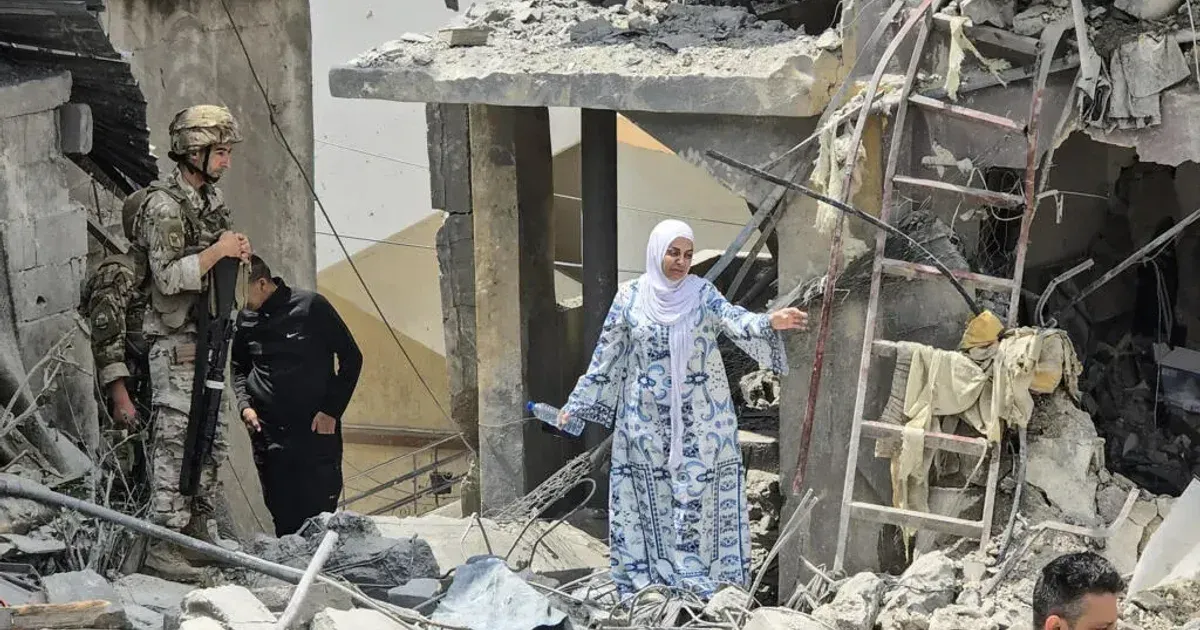
Violence on the ground, meanwhile, has not yet reflected the rhetoric of de-escalation. Field reports from southern Lebanon indicate that artillery exchanges continued late into the night despite the statements from Washington. Israel maintains its policy of responding to every launch with heavy force, while Hezbollah has not officially confirmed its intent to dial back operations. The disconnect between diplomatic announcements and military reality creates an unstable environment for any peace initiative. Peace relies on both sides adhering to a set of unwritten rules that have been repeatedly broken over the last month.
A Claimed Breakthrough Still Lacks Military Enforcement
The White House's push for a Lebanon breakthrough reveals a shift toward direct, high-risk mediation that ignores traditional multilateral frameworks. By engaging in indirect talks with Hezbollah, the Trump administration is acknowledging the group's status as a de facto state actor in Lebanon. The move likely alienates traditional allies who favor isolation over engagement, but it highlights a pragmatic urgency to avoid a larger regional war. The primary risk of this approach is that it validates the tactics of non-state actors while potentially undermining the official Lebanese government.
Regional stakeholders are watching closely to see if Israel will actually halt its operations despite domestic dissent. If Netanyahu yields to Ben-Gvir and continues the offensive, the Trump administration's credibility as a mediator will be severely tested. By contrast, if a pause is achieved, Iran may interpret this as a sign that the United States is unwilling to sustain a high-intensity conflict in the Middle East. The perception could embolden other proxies across the region to test American red lines. The outcome of this week's diplomatic maneuvering will likely define the regional security architecture for the next several years.
Stabilization remains elusive as long as the underlying causes of the border tension are left unaddressed. Israel requires a buffer zone that Hezbollah refuses to grant, and Lebanon lacks the internal political strength to enforce a neutral border. The current US plan offers a temporary reprieve but does not provide a mechanism for the long-term disarmament of the militias in the south. Without a clear enforcement strategy, the agreement claimed by Trump may serve only as a brief interlude before an even more destructive phase of the war. A single miscalculation on either side could trigger the very invasion the White House is working to prevent.