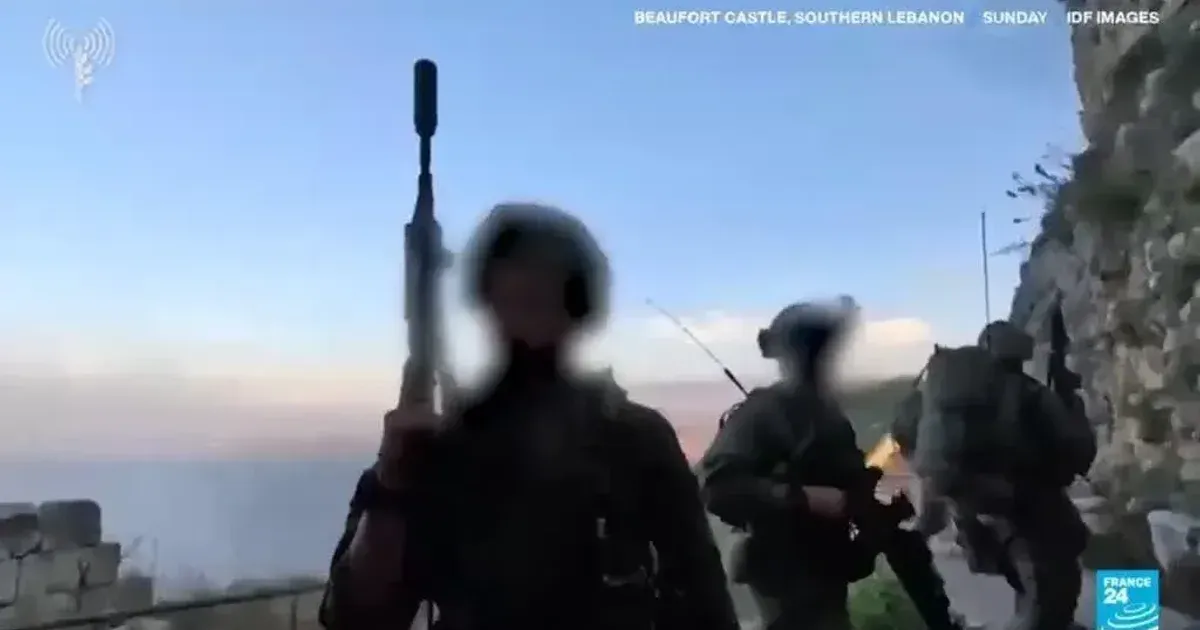
Israeli forces seized additional territory across southern Lebanon while renewing air operations against the capital. The advance shifts the Lebanon conflict from border pressure to territorial control. That makes any diplomatic pause harder to verify on the ground. Command units moved beyond previous boundary lines to secure strategic heights, effectively expanding the zone of active occupation along the border. The June 1, 2026, shift is the deepest military incursion into the country in two decades. Field reports indicate that several hilltop positions were consolidated during the overnight advance.
Zeina Khodr of Al Jazeera reported that the military push continues to capture land in the south, displacing thousands of local residents. Field observers noted that the speed of the advance has outpaced earlier phases of the conflict. Military vehicles reached the outskirts of several strategic villages by midday. Tactics shifted from targeted raids to sustained territorial control across multiple sectors south of the Litani River.
Recent movements have fundamentally altered the security map of the border region.
Ground operations coincided with a directive from the Israeli military for residents of Beirut's southern suburbs to evacuate. Video footage captured thousands of vehicles attempting to flee the Dahiyeh district, creating large bottlenecks on primary exit routes. Families packed belongings into small cars as smoke from previous strikes hung over the horizon. Emergency officials reported that the main arterial roads leading out of the city remained at a total standstill for over an hour.
Israel said it would resume strikes on Beirut's southern suburbs as it carries out the deepest incursion into Lebanese territory in two decades, according to a statement tracked by international monitors.
Beirut's southern districts face renewed pressure as strike orders are issued through social media and leaflets. Local residents, however, reported that the time provided for evacuation was insufficient to clear the densely populated neighborhoods. Gridlock effectively trapped thousands of families within the potential strike zone. Security sources confirmed that air assets are loitering above the capital to monitor the movement of high-value targets. Most civilians moved toward the northern districts or the mountains to avoid the expected barrage.
Tactical units have now pushed beyond the previous 20-mile buffer zone.
United Nations Security Council members expect to hold an emergency meeting Monday afternoon to address the rapidly deteriorating situation. Diplomats from several member states called for the session after reports confirmed the depth of the Israeli advance into Lebanon. France and other permanent members expressed concern regarding the breach of previous security protocols. The meeting will likely focus on the failure of existing peacekeeping frameworks to prevent the expansion of the combat theater. The military's expansion south of the Litani River mirrors recent strategic shifts documented in earlier reports.
Member states will weigh the possibility of a ceasefire resolution or an increased monitoring presence. Proponents of the meeting argue that the lack of international intervention has allowed the conflict to surpass the parameters of the 2006 war. Diplomacy stays focused on preventing a total collapse of Lebanese state institutions. Current projections suggest the Council will struggle to reach a consensus on enforcement mechanisms before the next phase of ground operations begins.
Expansion of Southern Occupation
Military officials confirmed the capture of several key supply routes connecting the border to the interior. These gains allow for a more solid logistical tail to support armored divisions moving further north. Units are establishing fortified outposts in areas previously considered neutral or under international monitoring. Satellite imagery shows new trench lines and vehicle pits being dug into the rocky terrain. The objective appears to be the creation of a permanent security zone that prevents any return to the status quo.
High-resolution images confirm the presence of heavy artillery batteries within the newly occupied zones. These batteries now have the range to reach deeper into the Bekaa Valley and the central mountain range. Civilian infrastructure in the path of the advance has sustained extensive damage, with several bridges destroyed to prevent counter-offensives. Control of the high ground allows the military to direct fire with precision across the southern valleys.
International Diplomatic Intervention
Resolution talks at the United Nations have intensified as the humanitarian crisis worsens in Beirut. Delegates from the European Union joined the call for an immediate cessation of hostilities to allow for the safe evacuation of non-combatants. The urgency of Monday's session reflects a growing consensus that the regional conflict is no longer contained. Previous agreements, including Resolution 1701, are being reassessed as the physical realities on the ground change. International monitors have reported that their freedom of movement is now severely restricted by the ongoing combat.
Procedural hurdles in the Security Council continue to delay a unified response. Several member states maintain that the incursion is a necessary defensive measure, while others classify it as a violation of sovereignty. This division prevents the immediate deployment of additional peacekeeping assets to the region. Meanwhile, the number of internally displaced persons has reached a new peak for the calendar year.
A Permanent Buffer Zone Would Redraw the Conflict
The current incursion could permanently redraw the Middle Eastern security map. The speed at which Israeli forces have surpassed the 2006 threshold suggests a departure from traditional border management. By moving deeper into Lebanese territory and threatening the capital’s southern suburbs, the military has forced a choice upon regional actors who previously relied on the threat of escalation to maintain a fragile peace. The buffer zone is no longer a theoretical line on a map but a physical occupation that threatens to dismantle the existing power balance.
Stability in the Levant now depends on whether diplomatic pressure can outpace the operational momentum of the ground advance. If the United Nations fails to establish a credible enforcement mechanism during Monday's emergency session, the conflict could evolve into a long-term war of attrition. Such a scenario would likely draw in neighboring states, transforming a border dispute into a broader regional fire. The primary question is whether the current military objectives are limited to tactical gains or if they signal a broader intent to reorganize the regional order by force.