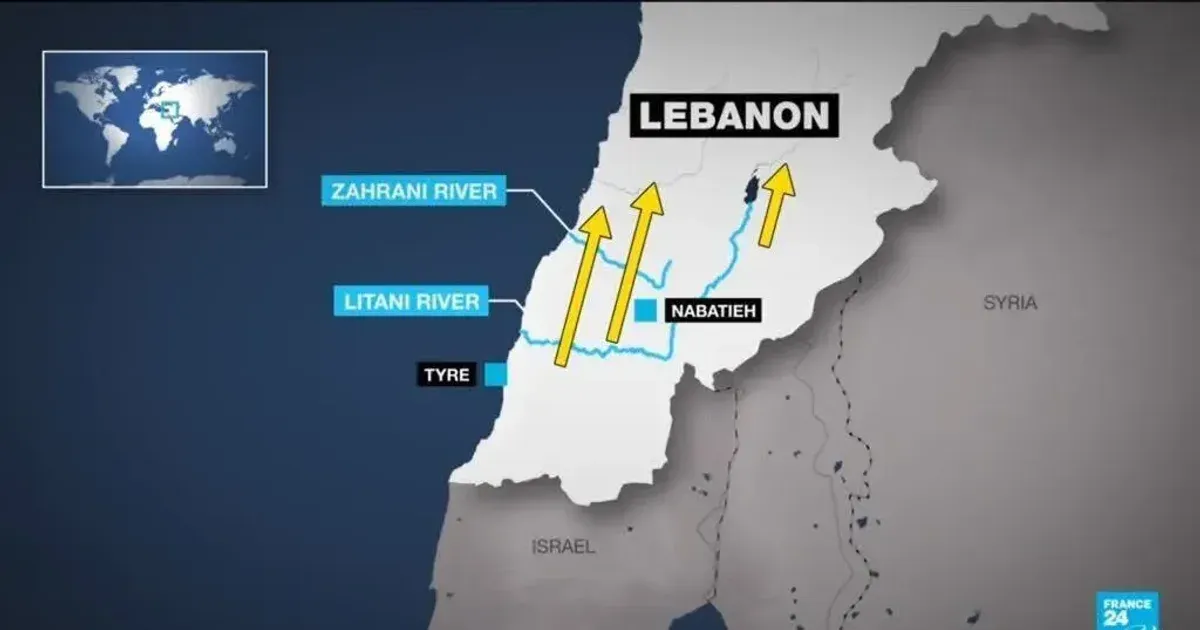
Israeli forces moved beyond the Litani River as Prime Minister Benjamin Netanyahu described an expanded campaign against Hezbollah in Lebanon. The Litani crossing marks a sharper phase in Israel's Lebanon campaign and a direct challenge to ceasefire diplomacy. For Lebanese civilians, the movement of ground forces matters more than the language used by officials. The announcement, reported on May 30, 2026, placed Israeli troops north of a waterway long treated as a strategic boundary in the conflict. The move came despite a fragile ceasefire arrangement and while diplomatic contacts involving Israeli and Lebanese representatives continued in Washington.
The Litani River is roughly 30 kilometers from the Israel-Lebanon border and has often been used as a reference point for security arrangements in southern Lebanon. Netanyahu said Israeli forces had crossed the river and were operating in areas beyond the security zone that Israel has controlled during the current conflict. That statement marked a significant escalation because it signaled deeper ground activity rather than limited border raids.
Reports from the region described Israeli operations around villages near Nabatieh, including areas where Hezbollah fighters were said to be present. Israeli strikes also hit targets in southern Lebanon, with local and regional outlets reporting civilian casualties during the latest phase of the offensive. The exact operational picture remained fluid, but the central development was clear: Israel had moved its ground campaign past a line that has carried heavy military and diplomatic meaning since the 2006 war.
Litani Crossing Raises Ceasefire Pressure
The crossing adds new pressure to an already strained ceasefire framework. That arrangement was meant to reduce the intensity of fighting and open space for negotiations, yet both sides have continued to trade fire across the northern front. Israeli officials argue that deeper operations are necessary to weaken Hezbollah positions, drone units, and rocket launch sites. Lebanese officials and international observers are likely to treat the movement beyond the river as a serious test of any remaining diplomatic track.
Hezbollah responded to Israel's expanded ground activity with rocket and drone attacks toward northern Israel. Israeli air defenses intercepted incoming threats, while alerts sounded across border communities. Damage from fragments and projectiles was reported in several locations, though Israeli authorities did not frame the attacks as a decisive breakthrough for Hezbollah. The exchange reinforced a familiar pattern: Israeli ground and air pressure triggers heavier Hezbollah fire, and that fire then becomes the basis for additional Israeli operations.
"Our forces have crossed the Litani," Netanyahu said during a visit to troops near the northern front.
For Israel, the military rationale centers on distance. Hezbollah's short-range weapons and drones have made the northern border difficult to stabilize, and Israeli commanders want to push launch teams farther from civilian communities. For Lebanon, the same movement reads as a deeper violation of sovereign territory and a threat to towns already damaged by months of fighting. Those two interpretations leave very little room for a shared definition of de-escalation.
Diplomacy Continues Under Military Strain
The timing is important because Israeli and Lebanese defense representatives have been involved in U.S.-hosted discussions aimed at reducing the conflict and addressing Hezbollah's armed presence. A broader security understanding would require credible limits on military movements, verifiable steps by Hezbollah, and assurances that Lebanese territory will not remain under foreign control. The Litani development complicates that agenda by changing the facts on the ground while negotiators are still trying to define the terms of a settlement.
United Nations officials have repeatedly treated the area between the Blue Line and the Litani as central to post-2006 security arrangements. UNIFIL's mandate depends on monitoring that space and supporting conditions that keep armed groups away from the border. When Israeli forces operate beyond the river, the question is no longer only whether Hezbollah is violating those arrangements. It also becomes whether Israel's response is creating a new military footprint that diplomacy will struggle to reverse.
Humanitarian concerns are rising alongside the strategic questions. Southern Lebanese towns have faced repeated evacuation orders, damaged infrastructure, and interrupted access to basic services. In northern Israel, residents remain under the pressure of alerts, shelter orders, and the risk of rocket or drone impacts. The conflict is therefore producing two parallel security crises, with civilians on both sides bearing the daily cost of military decisions made at the national level.
Regional Risk Widens
The immediate risk is not only a larger Israel-Hezbollah confrontation. A deeper Israeli position in Lebanon could draw stronger reactions from Hezbollah's regional backers and increase pressure on the Lebanese government, which has limited ability to control the armed group directly. It may also harden Israeli public expectations that troops should remain in forward positions until the northern threat is reduced. Once those expectations settle, withdrawals become politically harder even when diplomats find a workable formula.
The most important test now is whether the Litani crossing becomes a temporary operation or the basis for a longer security zone. A short campaign followed by negotiated limits would still leave room for diplomacy, even after a dangerous escalation. A sustained presence north of the river would point toward a more difficult phase, one in which ceasefire language remains in place but battlefield logic drives decisions. That distinction will determine whether the current operation becomes another pressure tactic or the start of a broader redrawing of the conflict's military boundaries. Aid groups will also track whether the expanded offensive blocks roads that civilians need for evacuation.