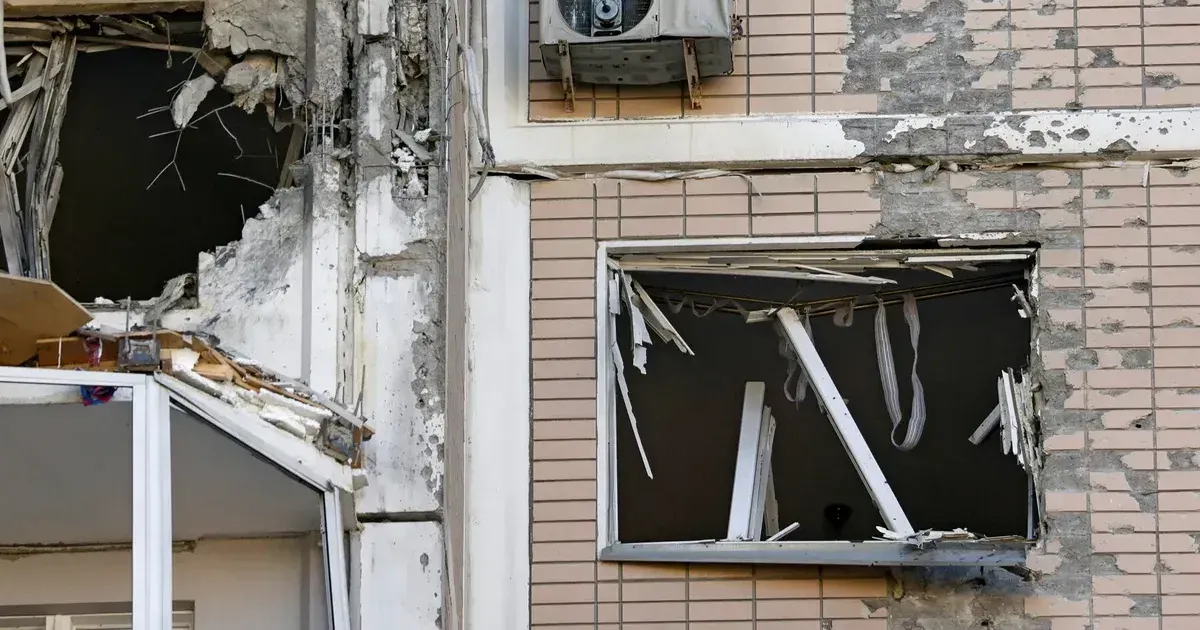
Ukraine launched a coordinated fleet of hundreds of unmanned aircraft toward the Russian capital and several surrounding provinces in an overnight operation. The overnight barrage widened the geography of the war before residents had clear damage totals. It also showed how drone volume can turn interception success into a civil-defense problem. Defense officials in Moscow said the barrage unfolded during the early hours of May 17, 2026, marking one of the largest aerial incursions since the invasion began four years ago. Reports indicate that the offensive spanned more than a dozen administrative districts, forcing local authorities to activate widespread air defense protocols. Early assessments suggest a sophisticated level of planning behind the multi-pronged flight paths.
Approximately 600 drones were detected entering Russian airspace during the early morning hours. Russian state media outlets, citing military records, initially reported intercepting or shooting down 550 units, though regional updates eventually pushed that number higher. Shrapnel from destroyed drones fell across residential sectors and industrial zones, causing varied degrees of structural damage. Military analysts observed that the sheer volume of the swarm was designed to saturate defensive batteries. This tactic created major challenges for local interceptor units tasked with tracking hundreds of simultaneous low-altitude signatures.
Casualties from the falling debris and direct impacts have reached at least four people. Local emergency services confirmed that three individuals died in the Moscow region after wreckage struck a residential building. Another fatality was recorded in the Belgorod region, where a drone impacted a civilian structure. Medical teams treated several others for injuries related to shattered glass and falling masonry. Officials in Belgorod confirmed the single fatality occurred during the early hours of the morning.
Interception Totals and Regional Impact
Defense ministries across the border tracked the trajectory of the unmanned vehicles as they moved deep into Russian territory. While some early reports cited 550 interceptions, data tracked by external observers suggested the total figure neared 600 individual units. This surge in volume is a sharp escalation from previous monthly averages. Multiple regions including Moscow and Belgorod faced sustained alerts as sirens persisted for several hours. The synchronization of the launches suggests a high degree of technical mastery by Ukrainian forces. Debris fell across residential areas in the Moscow suburbs.
Intercepted wreckage also caused disruptions at major transportation hubs. Flight operations at several international airports near the capital faced temporary suspensions while the airspace was cleared of active threats. Authorities directed incoming civilian aircraft to secondary landing sites hundreds of miles away to avoid potential collisions with slow-moving drones. Similar restrictions were applied to rail corridors where track inspections became necessary following reported impacts near transit lines. Regional governors reported that ground crews spent the morning hours clearing twisted metal from public roadways.
Russian defense officials said more than 550 drones were intercepted or shot down across more than a dozen regions.
Security perimeters around sensitive government buildings in Moscow were tightened immediately following the first reported sirens. Patrols increased in central districts where residents reported hearing loud explosions as anti-aircraft systems engaged targets. Evidence from the ground showed that the drones used a mix of fixed-wing designs and smaller quadcopters intended for different altitudes. The presence of these varying models indicates a diverse procurement strategy within the Ukrainian military. Air sirens in the Moscow region persisted for nearly six hours.
Casualties and Infrastructure Damage in Moscow
Infrastructure across the Belgorod region also suffered under the weight of the large overnight barrage. Local power grids faced intermittent outages as downed drones tangled with electrical transmission lines. Emergency repair crews deployed shortly after the all-clear signal was given, working to restore connectivity to thousands of households. Despite the volume of the attack, major industrial facilities reportedly avoided catastrophic failure, though minor fires were extinguished at three separate sites. Local officials confirmed the fire was extinguished by dawn.
Kyiv has remained relatively silent regarding the specific operational details, though government officials have previously asserted their right to target military-related sites. These strikes demonstrate an increasing ability to project power far beyond the immediate front lines of the conflict. Military observers noted that the range of the drones used on May 17 reached targets hundreds of miles inside the border. The persistence in long-range strike capability suggests that the technological gap in unmanned systems is narrowing rapidly. Debris recovery teams are currently analyzing the components found at the crash sites.
Mass Drone Swarms Force Moscow to Redistribute Air Defenses
Rising pressure on Russian air defense networks highlights a shift in the conflict geography as the capital region becomes a recurring focal point for Ukrainian strategy. Moving the theater of engagement toward the Russian heartland forces a difficult redistribution of defensive assets away from the southern and eastern trenches. It creates a strategic dilemma for Moscow, which must now balance the protection of its civilian population centers with the logistical needs of its frontline divisions. The human cost in the Moscow region also complicates the domestic narrative regarding the security of the capital.
If these large-scale swarms become a weekly occurrence, the psychological impact on the metropolitan population will likely outweigh the physical damage to infrastructure. Tactical successes in air defense, while numerically impressive, do not fully reduce the risk posed by falling shrapnel in densely populated urban centers. Success in future engagements will depend on whether Russia can modernize its electronic warfare capabilities to disable swarms before they reach the suburban perimeter. Moscow’s response will show whether the Kremlin treats the barrage as a military-defense failure, a domestic-security problem or a reason to widen retaliation against Ukrainian cities.