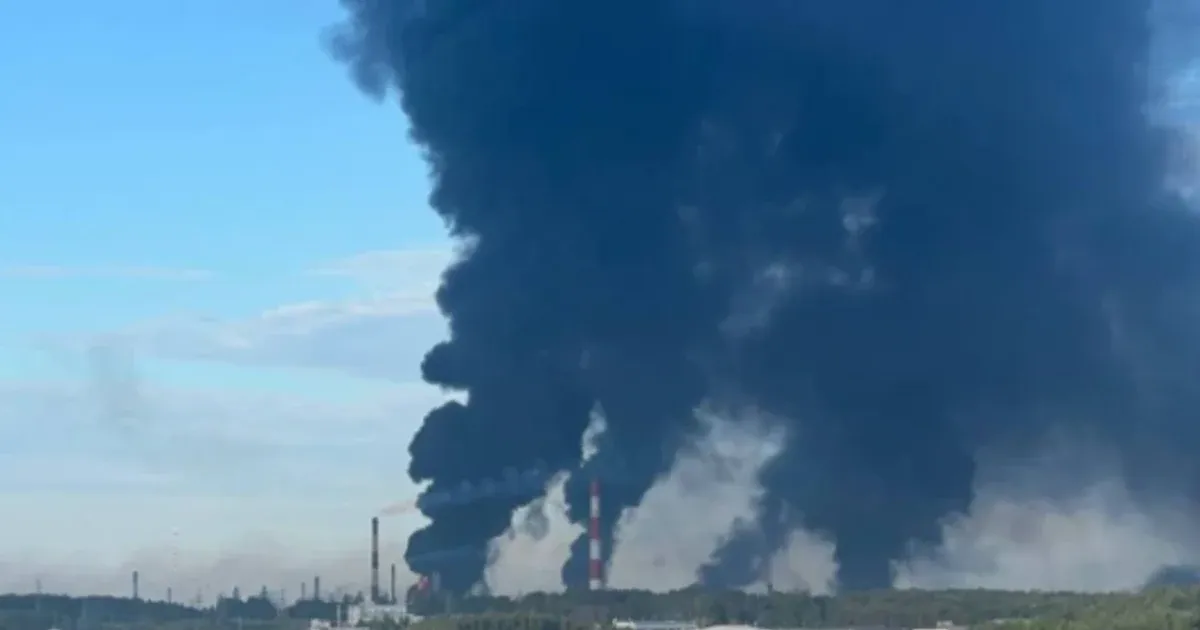
Ukraine says it struck two oil refineries deep inside Russia in an operation aimed at limiting the revenue Moscow uses to fund its war. The reported targets were in Bashkortostan and the Yaroslavl region, hundreds of kilometres from Ukraine's border. Russian authorities described a separate overnight wave of Ukrainian drones, while Kyiv also reported deadly Russian strikes at home.
President Volodymyr Zelensky gave the account on Thursday, 6 August 2026, identifying the Bashneft-Novoil and Slavneft-Yanos facilities. The BBC said the first was about 1,300km from the Ukrainian border and the second almost 700km away. Those distances make the refinery claims more than a local border incident, but they do not by themselves show how much oil processing was disrupted.
Two Refineries Were Reported Hit at Different Distances
Kyiv presented the refinery operation as a way to squeeze income supporting Moscow's war effort. The Bashneft-Novoil refinery is in the Bashkortostan republic, while Slavneft-Yanos is near Yaroslavl. No estimate of lost output, repair timetable or shutdown was provided for either facility.
Mikhail Evraev, who governs Yaroslavl, reported flames at Slavneft-Yanos and four injuries. He described the preceding drone assault as unusually large. His account put the number of drones shot down over the region at 93 and said falling fragments reached the plant's storage tanks.
The BBC noted that Bashkortostan officials had offered no public account of the reported Bashneft-Novoil incident by publication time. That leaves the two incidents at different levels of confirmation: a Ukrainian statement naming both refineries, a Russian regional statement describing a fire at one, and no public comment from the other region at that point.
The two locations also give the claim a different operational meaning from a strike near the border. Yaroslavl lies well inside Russia, while Bashkortostan is farther east and closer to the distance Zelensky highlighted. The geography shows the reach Kyiv says it can achieve, but it cannot establish which equipment was damaged or whether either plant lost a sustained amount of capacity.
Images Confirmed Smoke, but Not the Economic Damage
BBC Verify checked multiple videos and images shared online and confirmed that they showed large smoke plumes rising from the refinery site. The verification found what appeared to be at least four fires. It established visible damage indicators, not the duration of the fire, the condition of processing units or the volume of fuel affected.
The distance of the facilities is part of the operational story. A strike reaching those sites would show that the campaign can threaten energy infrastructure well beyond the immediate front, but the BBC did not identify the aircraft or method used. Nor did it establish whether the attacks would force a sustained reduction in Russian refining capacity.
Earlier attacks on Yaroslavl's energy-generating infrastructure had already been noted by the BBC. That history gives the refinery fire a local context, but it does not prove that repeated attacks have changed production or supply. The account identifies the pattern without assigning a cumulative economic cost.
Zelensky separately said two military patrol boats and vessels from Russia's so-called shadow fleet were hit in the Black Sea. Zelensky characterized those ships as part of a shadow-fleet network moving sanctioned Russian oil. That claim links the refinery attacks to a broader effort against energy revenue and maritime logistics, although no independent damage assessment for the vessels was included.
The maritime claim matters because it connects inland refining sites with a route used to move oil. It remains a statement from the Ukrainian president, however, and the account does not supply a separate assessment of the vessels or their cargo. The established part of the episode is the combination of named targets, a reported refinery fire and verified images of smoke.
“Russia must choose peace,” Zelensky said.
Russian Strikes Brought a Separate Toll in Ukraine
The same account records a parallel set of Russian attacks inside Ukraine. Ukraine's emergency agency put the overnight Balakliya death toll at three in the Kharkiv region. Houses were hit and two buildings caught fire, according to the account.
Synehubov added that a drone strike on Lozova's railway station killed two more people and wounded eight. Officials in Dnipropetrovsk later reported five further fatalities from Russian strikes.
Prokudin said the hit on critical infrastructure left all of Kherson without power. Russia's military, meanwhile, said it had intercepted or shot down 605 Ukrainian drones over several regions. Russian officials described their operation as an effort against fuel, energy and transport infrastructure. The BBC records these as the parties' statements, not as a single independently verified count.
Reach Is Clearer Than the Lasting Refinery Effect
The BBC placed the refinery episode within a broader escalation against urban, energy and warehouse targets, even as the land front changed little. The refinery strikes therefore add a measurable geographic dimension to the energy fight: one named facility was nearly 700km from Ukraine and the other about 1,300km away.
The episode still leaves the economic result open. There is evidence of fire, injuries and smoke, but no confirmed production-loss figure or timeline for restoring either refinery. The immediate conclusion is narrower and firmer: Ukraine has claimed attacks on distant Russian energy sites, one regional governor has acknowledged a refinery fire, and the effect on Russia's oil revenue remains to be established.