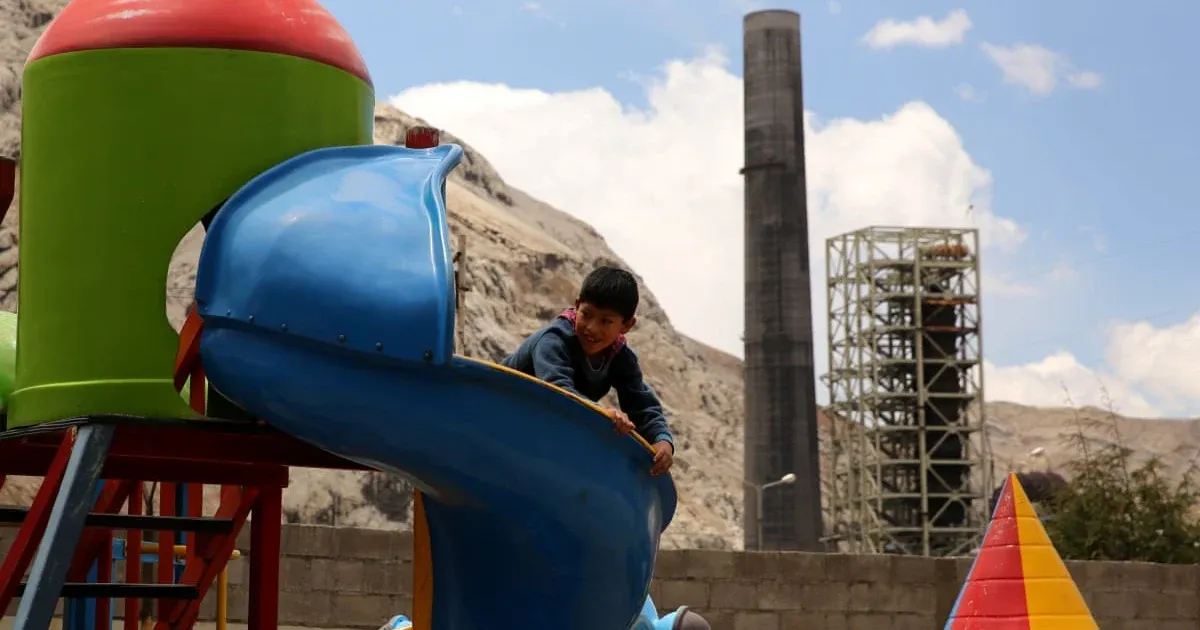
A $150 million settlement has ended a 19-year U.S. court fight brought by 1,373 Peruvians who alleged that emissions from a metal smelter in La Oroya harmed them as children. The deal was completed before proceedings were due to start in the first of four Missouri trials. The Guardian reported the settlement on August 5, 2026, after lawyers and Cardinal Pedro Barreto had spent years pressing the claims across borders.
The payment resolves the civil litigation without deciding every dispute behind it. The plaintiffs' complaint, advanced by St Louis firm Schlichter Bogard, said smelter operator Doe Run had not brought lead releases down after acquiring the Peruvian complex. Doe Run, a subsidiary of Renco Group, did not admit wrongdoing when it agreed to settle. That distinction keeps the result precise: the plaintiffs secured compensation, but the agreement is not a court finding that the company caused each reported injury.
A Seventeen-Child Filing Grew Into a Federal Test
Seventeen Peruvian children were named when lawyers opened the Missouri state action in 2007. It later moved into the federal system and expanded to 1,373 plaintiffs, many of whom are now young adults. Barreto was visiting the Vatican for meetings with Pope Leo XIV and fellow cardinals when word reached him in June. He had been preparing to travel to the United States to testify when the settlement removed the immediate need for a trial.
Jurisdiction was one of the case's decisive battles. The U.S. Justice Department joined the defendants in seeking to move the litigation to Peru, while plaintiffs' lawyer Jerry Schlichter argued that such a transfer would leave the children without a practical remedy. Schlichter said the litigation consumed tens of thousands of attorney hours and drew five national law firms on the defense side. That resource imbalance made the forum decision as consequential as the eventual trial schedule. Keeping the case in Missouri allowed claims against U.S.-based corporate defendants to proceed where Doe Run Resources is headquartered. The result turns a cross-border toxic-exposure claim into a concrete payout rather than an unresolved argument over where it belonged.
The Guardian described the agreement as the close of one of the longest-running civil suits against a multinational over pollution in another country. That cross-border feature distinguishes the litigation from a local cleanup dispute: plaintiffs in Peru maintained their claims against corporate defendants in Missouri.
The Guardian reported that each plaintiff could receive at least $100,000. Barreto welcomed the recognition while separating money from medical repair. He had campaigned on the issue for nearly two decades and said the neurological effects reported by families could not be reversed by a financial agreement. The plaintiffs' lawyer called the agreement life-changing because most claimants entered the case as children and waited into adulthood for a resolution.
“The money will not compensate for the harm they have suffered, but it is a sign that justice has been served.”
Blood Tests Linked the Court Record to La Oroya
The lawsuit rested on more than a dispute between a multinational company and local activists. Barreto asked a Saint Louis University public-health team to examine the community. A 2005 visit produced blood tests showing extreme lead exposure in the children the university team examined. Their findings showed that four measured pollutants had risen following the operator change in 1997: sulphur dioxide, cadmium, arsenic and lead.
Peru's environmental health office measured local children a year earlier. Its 2004 study placed almost every La Oroya resident under six above a blood-lead threshold of 10 micrograms per deciliter. The research associated higher exposure with impaired growth and lower IQ in children. Those findings supplied a measurable health record for a community already identified in 2007 by the Blacksmith Institute, now called Pure Earth, among a 10-place list of the planet's worst pollution sites.
The campaign also exposed the town's economic dependence on the plant. Threats and harassment followed Barreto's decision to campaign in 2004, and some of the hostility came from workers who feared losing their smelter jobs. The conflict placed two immediate risks in the same streets: families feared continued exposure, while employees feared that environmental enforcement could erase their livelihoods. Barreto credited residents, rather than himself, with carrying the larger burden.
Doe Run's settlement position avoids a concession of liability. Chief executive Matt Wohl said the company chose to end the dispute so it could concentrate on operations, customers and new technology. Renco founder Ira Rennert built a wider group of mining, smelting and industrial companies; Forbes estimated his fortune at $3.8 billion in 2024. That corporate scale and the plaintiffs' medical evidence now sit side by side: the payment is substantial and the litigation is over, yet there remains no admission of wrongdoing for the conduct alleged in court.
The Payout Closes a Case, Not La Oroya's Exposure Record
The agreement resolves compensation for a defined group, but it does not clean the town, restore lost health or establish a trial-tested account of corporate responsibility. Its durable consequence lies in the legal route: foreign residents kept a long-running claim against U.S.-based corporate defendants in an American court until settlement became preferable to trial. Future communities facing pollution from multinational operations will still need jurisdiction, medical evidence and years of financing to follow that path. La Oroya's plaintiffs reached a payout; the environmental and health record that produced the case remains a separate public obligation.