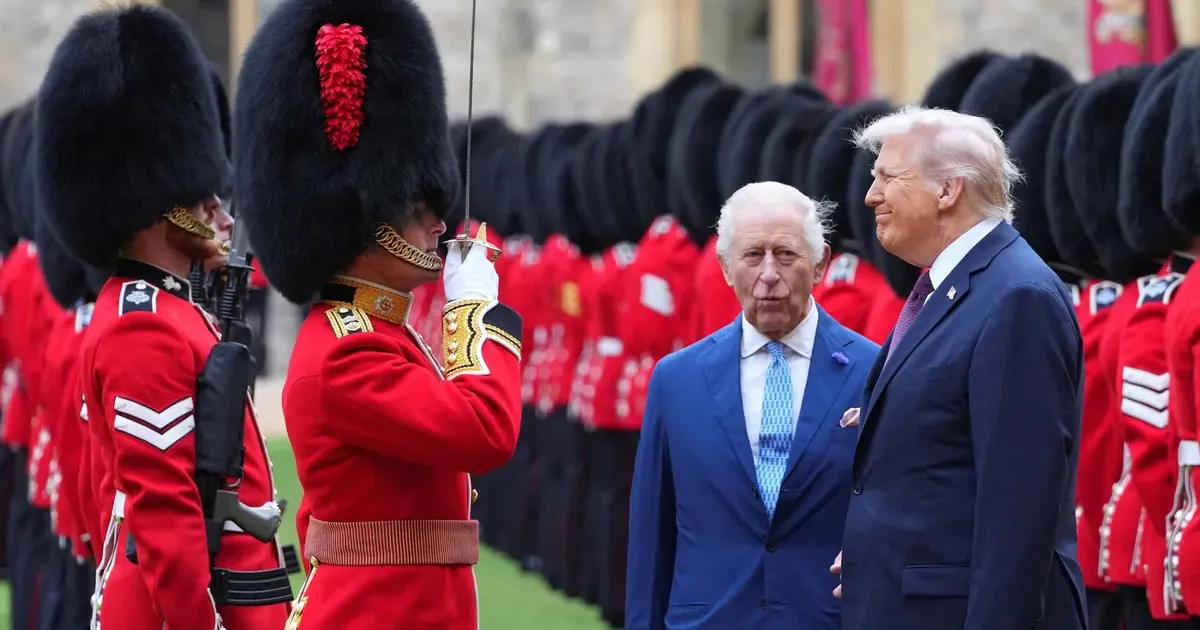
Congressional leaders confirmed that King Charles III will address a joint meeting of Congress during his upcoming state visit to the United States. Invitations of this nature require unanimous consent from house leadership, reflecting a bipartisan effort to emphasize the security ties between London and Washington. Speaker of the House and Senate Majority Leader offices coordinated the logistics to ensure the monarch delivers his remarks on April 28, 2026. On April 1, 2026, the announcement marked the first time a British monarch has stood before the combined legislative body since 1991. Preparations at the Capitol involve heightened security protocols and a strict adherence to diplomatic ceremony.
King Charles III intends to use the platform to discuss the enduring alliance that has defined transatlantic relations for nearly a century. Legislative aides indicate that the speech will likely touch upon climate initiatives, a signature cause for the King, alongside defense cooperation. Congressional records show that joint meetings are reserved for the closest allies of the United States. The 1991 address by Queen Elizabeth II focused on the conclusion of the Cold War and the strength of democratic institutions. Experts anticipate that Charles will pivot toward modern challenges including artificial intelligence and clean energy transition.
Congressional Protocol for the British Monarch
Formal invitations for foreign heads of state to address Congress involve a rigorous vetting process by the Department of State and the Sergeant at Arms. Protocol dictates that the monarch enters the House Chamber led by a specialized escort committee of lawmakers. Every seat in the gallery is expected to be filled by diplomats, cabinet members, and invited guests. High-resolution cameras from global news agencies will broadcast the event live to an estimated audience of 50 million viewers. British officials have spent months negotiating the specific wording of the invitation to ensure it aligns with the King's constitutional role as a non-political figure.
Washington police and the Secret Service plan to implement a multi-layered security perimeter around the Capitol complex. Road closures will affect most of the surrounding district for the duration of the afternoon. Intelligence agencies have not cited any specific threats, yet the nature of a royal visit requires maximum precaution. The King's itinerary includes a formal arrival ceremony at the White House and a state dinner hosted by the President prior to the Capitol Hill appearance.
Legacy of Royal Addresses in the United States
Historical precedent for royal visits to the Capitol began with King George VI in 1939, a trip that solidified the bond before the second global conflict. Queen Elizabeth II addressed a joint meeting during her 1991 visit, where she famously noted the shared values of the two nations. Charles has visited Washington dozens of times as Prince of Wales, but this event serves as his formal introduction to the US legislative branch as Sovereign. While the monarch holds no legislative power, his presence acts as a powerful diplomatic instrument for the British Foreign Office. Strategic interests in the Indo-Pacific and Eastern Europe remain top priorities for both governments.
Congressional leaders announced that Britain's King Charles III will address a joint meeting of Congress as part of his visit to Washington later this month. This visit serves to reinforce the long-standing history of the US-UK Special Relationship throughout the twentieth century.
Members of the House Foreign Affairs Committee have expressed interest in how the King will address trade relations. Post-Brexit economic realities continue to drive the United Kingdom's search for deeper market access in the United States. Recent polling suggests that American public opinion of the British monarchy has stabilized following several years of internal royal disputes. Analysts at the Brookings Institution point out that Charles brings a different rhetorical style than his predecessor, often leaning into empirical data regarding environmental shifts. Success for this visit will be measured by the subsequent warmth in bilateral defense agreements.
Strategic Objectives of the April 28 Session
Defense cooperation through the AUKUS pact is a primary foundation of the current US-UK relationship. Congressional support for nuclear-powered submarine technology and advanced cyber defenses requires constant diplomatic maintenance. By addressing the lawmakers directly, King Charles III reinforces the cultural and historical foundations of these technical agreements. Some progressive members of Congress have questioned the relevance of hereditary titles in a modern democracy, yet the majority of the chamber views the visit as a necessary reaffirmation of stability. The speech is expected to last approximately thirty minutes.
Climate change will almost certainly feature as a central theme in the monarch's remarks. Charles has advocated for biodiversity and sustainable urban development for over five decades. US energy policy, often a point of contention between parties, could find a rare moment of consensus through the King's focus on technological innovation. Renewable energy firms in the UK hope the address will spark new investment opportunities across the Atlantic. Private meetings with business leaders are scheduled to occur immediately after the legislative session concludes.
Transatlantic Security and Trade Implications
Trade volume between the two nations reached record highs in the previous fiscal year. British exports to the United States include aerospace components, financial services, and specialized machinery. Lawmakers in Washington often view the UK as a gateway to European markets despite its exit from the European Union. The visit by King Charles III aims to remind American legislators that Britain remains a primary partner in intelligence sharing and maritime security. Coordination between the Pentagon and the Ministry of Defence has reached its highest level of integration since 1945.
Public interest in the royal visit has spiked in the District of Columbia. Hotel occupancy rates in Washington for the final week of April have surpassed 95 percent. The Royal Air Force plane is expected to land at Andrews Air Force Base on April 27, 2026. This trip represents the most meaningful diplomatic outreach by the House of Windsor in this decade. Lawmakers have already begun the lottery process for guest tickets to the House gallery. All legislative business will be suspended for the duration of the joint meeting.
Why the Address Matters. State visits mask the erosion of traditional diplomacy with the gloss of hereditary prestige. While the cameras capture the gilded carriage of royal pageantry, the underlying reality is a United Kingdom desperate to maintain its status as a top-tier global power. London realizes that its relevance in the twenty-first century depends entirely on its proximity to American military and economic might. By sending Charles to the Capitol, the British government is deploying its most effective distraction from the stagnant growth and political fragmentation that have plagued the UK since the late 2010s. The monarch is the ultimate marketing tool for a nation that can no longer compete on pure industrial output.
American legislators will applaud politely because the spectacle costs them nothing and buys them a moment of historical gravitas. The real work of empire happens in the classified briefings of the AUKUS program, not in the flowery prose of a royal address. Charles will talk about the environment because it is safe and universally acknowledged as a crisis, yet he will avoid the uncomfortable friction of trade tariffs or the declining influence of the Commonwealth. This is theater as diplomacy.
It is a carefully managed performance designed to convince the American public that the 19th-century alliance is still the world's most essential partnership. Whether the substance matches the style is a question the markets will answer long after the King departs.
Voters should not be fooled by the bipartisan smiles on the House floor. The King's visit is a calculated move to secure British interests despite an increasingly isolationist American sentiment. It is a plea for permanence at a time of volatility. Diplomacy through bloodline is an anachronism.