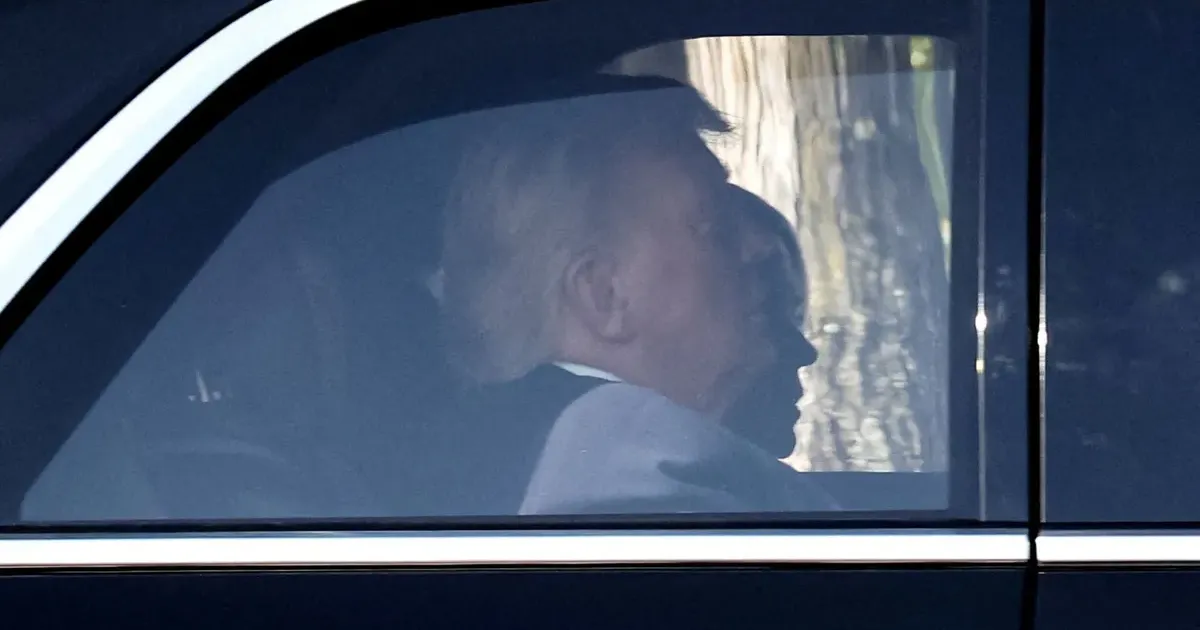
Donald Trump entered the Supreme Court to witness the first legal arguments regarding his controversial executive order on birthright citizenship. On April 1, 2026, his presence inside the chamber turned a complex constitutional debate into a meaningful political event. Attorneys for the Department of Justice argued that the Fourteenth Amendment has been misinterpreted for decades. Legal scholars watched from the gallery as the administration sought to redefine who qualifies as a citizen at birth. This initiative targets children born on U.S. soil to parents who lack legal residency status.
Security measures around the building reached a fever pitch before the 10:00 a.m. session. Lawyers representing civil rights groups stood ready to defend a century of legal precedent. Historically, the United States has granted citizenship to almost everyone born within its borders. Changes to this practice would require an enormous shift in administrative operations and social policy.
Executive Order Challenges Fourteenth Amendment Precedent
Constitutional experts point to the 1898 case of United States v. Wong Kim Ark as the primary obstacle for the administration. That ruling established that children born in the United States to resident aliens are citizens by birth. Lawyers for the government now contend that the original intent of the 1868 amendment did not include those who entered the country without authorization. They focus specifically on the phrase "subject to the jurisdiction thereof" as a limiting factor. Opposing counsel argues that jurisdiction simply means being subject to U.S. laws.
Birthright citizenship has long been a magnet for critics of current immigration levels. Data from various federal agencies show that thousands of children are born annually to non-citizen parents. Proponents of the executive order claim these births create an undue burden on the taxpayer. Critics, however, believe the order is a direct violation of the plain text of the Constitution. Arguments centered on whether the executive branch possesses the authority to narrow constitutional language through an order.
Supreme Court justices asked sharp questions about the separation of powers.
Justice Sonia Sotomayor questioned the Solicitor General on the risks of creating a class of stateless individuals. Such a move would deviate from international norms regarding nationality and human rights. Records from the 39th Congress, which drafted the amendment, were cited by both sides to support their conflicting interpretations. Many historians argue the framers intended to ensure citizenship was not dependent on the whims of political leaders. This debate now rests with the nine justices who must decide if the president has overstepped his bounds.
Historic Presence of Sitting President in High Court
Donald Trump became the first sitting president in modern history to attend oral arguments at the high court. His decision to sit through the entire proceeding signaled the importance his administration places on this specific policy. While presidents often comment on court cases from the White House, physical attendance is an act of executive pressure. Observers in the room noted that Donald Trump remained attentive throughout the technical exchanges. His silence in the courtroom did not diminish the weight of his office on the atmosphere of the hearing.
Secret Service agents occupied several rows of the public gallery to ensure the safety of the executive. Routine court operations were paused to accommodate the presidential motorcade. Journalists from across the globe filled the press section to document the intersection of executive and judicial power. Jan Crawford of CBS News noted that this attendance was a historic first for any American president. The visual of the president facing the justices across the bench highlighted the tension between the two branches of government. Protesters on both sides of the issue gathered on the plaza outside the building.
Signs reading "Protect the 14th" clashed with banners supporting the executive order. Despite the noise outside, the proceedings within remained focused on the details of constitutional law. Lawyers for the challengers argued that the president could not unilaterally change the definition of citizenship. They noted that such a change would likely require a constitutional amendment rather than a simple executive directive. The legal team for the administration countered that the president is simply clarifying an existing legal ambiguity.
Legal Arguments Over Jurisdictional Language
Legal debate focused heavily on the Civil Rights Act of 1866, which was the precursor to the 14th Amendment. That act stated that all persons born in the United States and not subject to any foreign power are citizens. Government lawyers argued that children of foreign nationals are subject to the power of their parents' home countries. So, they claim these children are not fully subject to U.S. jurisdiction in the way the framers intended. This interpretation would exclude a significant part of the population from automatic citizenship.
The administration maintains that birthright citizenship is an outdated interpretation of the Fourteenth Amendment that encourages illegal immigration.
Legal teams for the opposition pointed out that the amendment was specifically designed to be inclusive. Its primary goal was to ensure that former slaves and their descendants were recognized as full citizens. Expanding this protection to all born on U.S. soil was a deliberate choice by the 1868 legislature. Records show that even then, some politicians worried about the children of Chinese immigrants. The court eventually ruled in favor of those children, cementing the *jus soli* principle in American law.
Judicial history suggests that the court is often hesitant to overturn such enduring precedents. $11 billion in social services and administrative costs is often cited by the administration as the price of maintaining the status quo. These figures are disputed by economists who point to the long-term tax contributions of native-born citizens. Arguments regarding the economic impact of the policy were largely secondary to the constitutional questions at hand. Justices seemed more interested in the limits of executive authority than in budget projections.
Administrative Efforts to Reshape American Demographics
Presidential aides have worked for years to find a legal path toward ending birthright citizenship. The case is the culmination of multiple attempts to test the boundaries of the 14th Amendment. Previous efforts were stymied by lower courts that found no basis for a presidential reinterpretation. By bringing the case to the Supreme Court, the administration hopes for a definitive ruling that will change the national landscape. Such a ruling would have immediate effects on hospital procedures and passport applications across the country. Federal agencies have already drafted contingency plans for a potential victory in court. These plans include new forms for birth certificates that would require proof of parental citizenship. Hospitals would be tasked with collecting more detailed information from new mothers. Critics argue this would turn medical professionals into immigration enforcement agents. The administrative burden of such a change would be felt in every state and territory. Regardless of the outcome, the case has already forced a national conversation on the meaning of belonging.
Lower courts have historically upheld the broadest interpretation of birthright citizenship.
International observers are closely watching the case as well. Most Western nations have moved away from *jus soli* in favor of *jus sanguinis*, or citizenship by blood. The United States stays one of the few major nations to maintain the birthright standard. A change in this policy would align the country more closely with European and Asian models. Legal experts suggest the court will likely announce its decision by the end of the term in June.