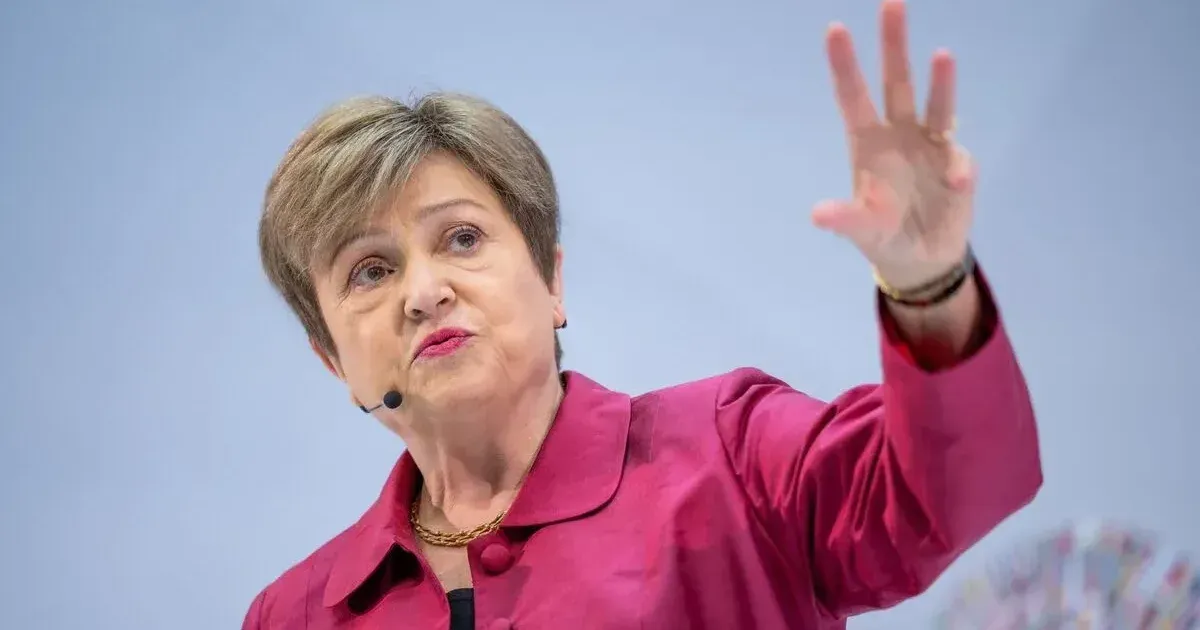
Kristalina Georgieva warned that global prices will remain elevated for years following the U.S.-Israeli war with Iran. By April 15, 2026, energy markets and food distribution systems had suffered disruptions requiring extensive reinvestment before efficiency could return. Projections from the IMF suggest that even an immediate end to hostilities would not quickly restore 2024 price levels. Georgieva delivered the remarks during an economic briefing focused on the stubborn nature of current inflationary pressure.
Consumer markets typically experience a lag between the cessation of conflict and the normalization of retail costs. While wholesale energy prices might stabilize upon news of a ceasefire, the secondary effects on manufacturing and transport persist. Logistics companies have already adjusted long-term contracts to account for higher risk premiums and rerouted lanes. Shipping through the Persian Gulf remains a primary concern for insurers who have quadrupled rates over the last fiscal year.
Energy producers in the United States and elsewhere cannot immediately offset the loss of regional output. Repairing damaged oil terminals and processing plants takes months or years rather than weeks. This reality ensures that energy-dense industries continue to face high overhead. Chemical production and heavy manufacturing have scaled back operations to preserve margins. Global supply chains now prioritize resilience over the just-in-time models that dominated the previous decade.
Persistent Inflationary Pressure in Global Markets
Price stickiness often defines the period following a major regional war. Retailers rarely lower prices as quickly as they raise them, a phenomenon economists call downward nominal rigidity. Labor costs have also risen as workers demand higher wages to keep pace with the increased cost of living. These wage-price spirals are difficult to break without significant monetary intervention. The IMF managing director noted that the cost of services continues to climb across developed economies. Food security has become a central focus for the IMF as agricultural exports from the Middle East and surrounding regions dwindle. Fertilizer production, which relies heavily on natural gas, has slowed sharply. Higher fertilizer costs translate directly to more expensive crops in the next harvest cycle. Developing nations feel this impact most sharply because food is a larger share of their total consumption. Poverty rates have ticked upward in eighteen different countries since the start of the conflict.
“Global prices will take time to come down to levels seen before the U.S.-Israeli war with Iran even if a ceasefire holds,” Kristalina Georgieva said.
Central banks now face a difficult choice between fighting inflation and supporting growth. Raising interest rates further risks a deep recession, while cutting them could let inflation run out of control. The biggest economies have maintained high rates for longer than initially expected. Financial markets have priced in these extended timelines, leading to higher borrowing costs for businesses. Investment in new technology has slowed as capital becomes more expensive to secure.
Energy Infrastructure Damage and Supply Chains
Infrastructure repairs in the Israel and Iran corridor will cost billions of dollars. Pipelines that once moved millions of barrels of oil daily are currently offline or operating at reduced capacity. International consortia have expressed hesitation regarding the safety of repair crews in active zones. Rebuilding these facilities requires specialized equipment that is currently in short supply globally. Lead times for heavy industrial turbines have tripled since the war began. The International Monetary Fund continues to play a critical role in addressing the destabilizing global oil price crisis.
Supply chains for critical minerals have also suffered from the regional instability. Manufacturers of electronics and renewable energy components rely on stable transit through Suez and neighboring waterways. Rerouting ships around the Cape of Good Hope adds twelve days to the average journey. This extra time requires more fuel and ties up vessels that could be used elsewhere. Port congestion in Europe and North America has reached levels not seen since the pandemic era. A spokesperson for the IMF stated that global trade volume fell by 4 percent in the last six months. This decline reduces the tax revenue available to governments for social programs. Debt-to-GDP ratios are rising as states borrow to subsidize energy for their citizens. Fiscal stability is becoming harder to maintain for nations with existing debt burdens. High interest rates make servicing this debt a primary budgetary concern for many finance ministries.
Monetary Policy Constraints for Central Banks
Central banks in the United States and Europe are monitoring these developments with concern. Inflation targets of 2 percent seem increasingly out of reach for the 2026-2027 window. The resilience of consumer spending has kept prices high despite aggressive rate hikes. Families are dipping into savings to maintain their standard of living. The depletion of household wealth could lead to a sharp drop in demand later in the year. Currency volatility has added another layer of complexity to the global economic outlook. The dollar has strengthened against the biggest currencies, making imports cheaper for Americans but more expensive for everyone else. The divergence creates friction in international trade negotiations. Smaller economies struggle to protect their currencies from rapid devaluation. The IMF has provided emergency liquidity to five nations experiencing balance-of-payments crises.
Commercial banks have tightened lending standards in response to the uncertain economic climate. Small and medium enterprises find it increasingly difficult to obtain revolving credit lines. Without access to credit, these businesses cannot expand or hire new staff. Unemployment rates have begun to creep up in the manufacturing sectors of Germany and Japan. Economic data suggests that the peak of the labor market has passed.
International Monetary Fund Recovery Projections
Recovery will likely be uneven across different geographic regions. Nations with significant domestic energy resources are faring better than those reliant on imports. The IMF anticipates that the global economy will grow by only 2.1 percent this year. It is a significant downgrade from pre-war estimates. Growth in emerging markets is expected to stall entirely in some sectors. Foreign direct investment has shifted toward perceived safe havens.
Geopolitical risk is now a permanent fixture in corporate decision-making. Companies are diversifying their supplier bases to avoid over-reliance on any single region. The diversification increases costs but provides a buffer against future shocks. Transitioning to green energy has accelerated in some areas as a matter of national security. Dependency on foreign fossil fuels is now viewed as a strategic vulnerability. Solar and wind installations reached a new record in the first quarter.
Inflation After the Shooting Stops
Economic stability is rarely a byproduct of peace treaties. While politicians often present ceasefires as a cure-all for market volatility, the reality of the 2026 landscape is far more grim. The assumption that global prices will simply reset to a pre-war baseline ignores the permanent destruction of physical capital and the death of cheap logistics. We are entering an era where the peace dividend has been spent and the bill is finally coming due. The IMF is effectively managing a controlled decline instead of a sound recovery.
Investors who believe the end of the U.S.-Israeli conflict with Iran marks a return to low-interest rates are delusional. Central banks cannot pivot while energy infrastructure is in ruins and shipping lanes are priced as war zones. The IMF chief is being diplomatic when she says prices will take time to recede. What she really means is that the floor for inflation has moved permanently higher. The cost of geopolitical friction is no longer a theoretical risk but a line item on every balance sheet.
The current global financial architecture was not designed to withstand a multipolar conflict of this scale. Attempts to stabilize the situation through traditional lending and interest rate adjustments are akin to using a bandage on a gunshot wound. Wealth will continue to migrate toward those who control real assets and energy production. The era of the consumer is ending. Inflation is permanent.