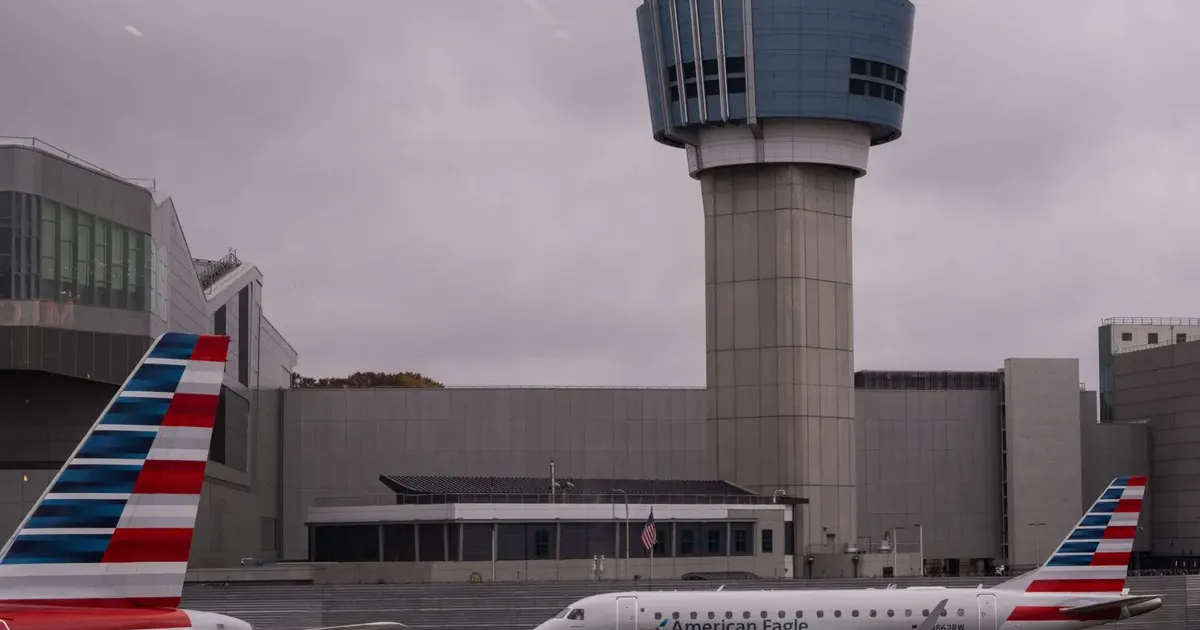
LaGuardia's runway collision has turned overnight staffing into a federal safety question. Investigators are now looking at whether low-traffic hours still need more redundancy. March 30, 2026, marks the beginning of an intensive federal inquiry into airport safety protocols after a runway collision at LaGuardia exposed potential staffing vulnerabilities. Investigators from the National Transportation Safety Board arrived at the Queens facility shortly after sunrise to secure communication logs and surveillance footage. Preliminary reports suggest that a late-night runway incursion occurred while only two controllers were active in the tower. Air traffic management experts now question if enduring staffing minimums account for the modern complexity of overnight logistical operations. Safety regulators traditionally maintained that two-person teams provided sufficient redundancy for the lower traffic volumes seen between midnight and 6:00 a.m. This standard persists despite a 15% increase in nocturnal cargo flights over the last decade. Fatigue remains a central concern for the FAA as investigators analyze the reaction times of the personnel on duty. Controllers working the graveyard shift often battle circadian rhythm disruptions that can lead to microsleep or reduced situational awareness. Recent data from the FAA shows that technical errors increase by nearly 20% during the final two hours of an overnight shift. LaGuardia Safety Protocols Under Federal Scrutiny Operational demands at LaGuardia present unique challenges due to the airport's intersecting runways and constrained geographic footprint. Unlike larger hubs with sprawling layouts, this facility requires precise timing to manage ground movements and arrivals simultaneously. Safety experts argue that the current two-controller requirement fails to provide a dedicated observer for ground traffic when one controller focuses on an approaching aircraft. The FAA currently mandates a minimum of two people, but local managers often have the discretion to increase that number based on expected weather or scheduled maintenance. Aviation safety relies on the principle of the sterile cockpit, and a similar discipline is required in the tower. Distractions or administrative tasks can pull one controller away from the glass, leaving a single person to monitor the entire airfield. The NATCA union has long argued that a third person acts as a safety buffer.
This extra set of eyes could prevent the type of coordination failure reported during the recent accident.
The current staffing model operates on the edge of safety margins, leaving no room for human error during the most biologically taxing hours of the day.
Federal records indicate that LaGuardia handled 42 overnight operations on the night of the incident. While this volume is lower than peak afternoon traffic, the complexity of runway construction added another layer of risk. Maintenance crews occupied two taxiways, requiring the controllers to reroute arriving aircraft through non-standard paths.
Such conditions demand heightened vigilance that two people may struggle to maintain over an eight-hour period. Investigators found that one controller was coordinating with ground crews while the other handled a regional jet on short final approach. Federal investigators are currently conducting a deep dive into the specific causes of the LaGuardia crash.
Federal Aviation Administration Staffing Fatigue Analysis
Scientific studies on shift work suggest that human performance peaks during daylight hours and troughs in the pre-dawn window. Federal safety boards have issued numerous recommendations regarding sleep hygiene and mandatory rest periods for controllers. Despite these warnings, many facilities still use the rattler schedule where controllers rotate through different shifts in a single week. This practice makes it nearly impossible for the body to adjust to a consistent sleep-wake cycle. The FAA recently updated its rest requirements, yet the impact on overnight safety remains a subject of intense debate.
Staffing levels across the national airspace system have struggled to keep pace with a wave of retirements. The FAA reported a shortfall of 3,000 certified professional controllers last year. The deficit forces existing staff to work six-day weeks and ten-hour shifts, further worsening the fatigue crisis. New trainees require years of supervision before they can work the overnight shift independently. So, the burden of night operations falls on a shrinking pool of veteran controllers who are already working at capacity.
National Air Traffic Controllers Association Policy Shifts
Union officials have intensified their lobbying efforts in Washington to secure funding for increased staffing levels. NATCA leadership believes that every major terminal radar approach control facility should have at least three people on duty at all times. They point to international standards in Europe where busier hubs often staff four or five people overnight. The cost of adding one additional person to every overnight shift across the country is estimated at $4.2 billion over five years. Budget hawks in Congress have questioned the necessity of such an investment during a period of fiscal restraint.
Critics of the three-person proposal suggest that automation and new ground-tracking technology should offset the need for more personnel. The Airport Surface Detection Equipment, Model X, provides controllers with high-resolution maps of all moving parts on the airfield. The system includes audio and visual alarms to warn of potential collisions. However, the LaGuardia incident occurred despite these technological safeguards. Technology is a tool for the human operator, but it cannot replace the executive decision-making of a trained controller. The alarm sounded only four seconds before the impact occurred.
Economic Constraints on Terminal Radar Approach Control
Airlines depend on the efficiency of air traffic control to maintain tight schedules and minimize fuel burn. Any changes to staffing rules that result in capacity caps or delayed arrivals would have a serious economic impact. Cargo carriers like FedEx and UPS rely heavily on the overnight window to meet delivery guarantees. If the FAA mandates higher staffing that leads to service restrictions, the shipping industry could see increased costs. These companies argue that safety should be managed through better technology rather than just adding more bodies to the tower.
Insurance premiums for major airports are also tied to their safety records and staffing adequacy. A major accident can trigger a re-evaluation of risk that leads to millions of dollars in additional costs for airport authorities. LaGuardia management is currently reviewing its liability coverage after the collision. Legal experts expect a series of lawsuits from the involved airlines seeking damages for aircraft repairs and lost revenue. The financial stakes of the staffing debate extend far beyond the federal budget.
Research into cognitive load suggests that a third controller provides the mental bandwidth necessary to catch subtle errors. When a two-person team is busy, they often revert to heuristic processing, which can overlook atypical hazards. The third person typically is a supervisor or a flier who can jump in where the workload is highest. The structural redundancy is standard in nuclear power plants and surgical suites. The aviation industry is now being forced to decide if the same standard must apply to the midnight shift in a control tower.
Tower Staffing Risk
Aviation safety exists as a delicate mathematical equation where human lives are traded for operational efficiency. The federal government has gambled for decades that a two-person minimum is a safe bet for the quiet hours of the morning. The gamble failed at LaGuardia, and the industry is now scrambling to find a scapegoat that doesn't involve a major increase in the $4.2 billion payroll. The FAA finds itself trapped between the union's demand for more staff and the taxpayer's refusal to fund a gold-plated safety net.
We must acknowledge the uncomfortable truth that technology has not simplified the controller's job but has instead increased the volume of data they must process. A controller in 1990 looked out the window; a controller in 2026 looks at three different screens while monitoring a digital ground-loop. Adding a third person is not a luxury; it is the necessary cost of an airspace that never sleeps. The current resistance to staffing increases is a classic example of bureaucratic inertia prioritizing the balance sheet over the runway. Until the FAA prioritizes human biology over budgetary constraints, we are simply waiting for the next midnight collision.
The question is no longer whether we can afford the third controller. The LaGuardia debris field proves we can no longer afford the status quo. Change must be swift.