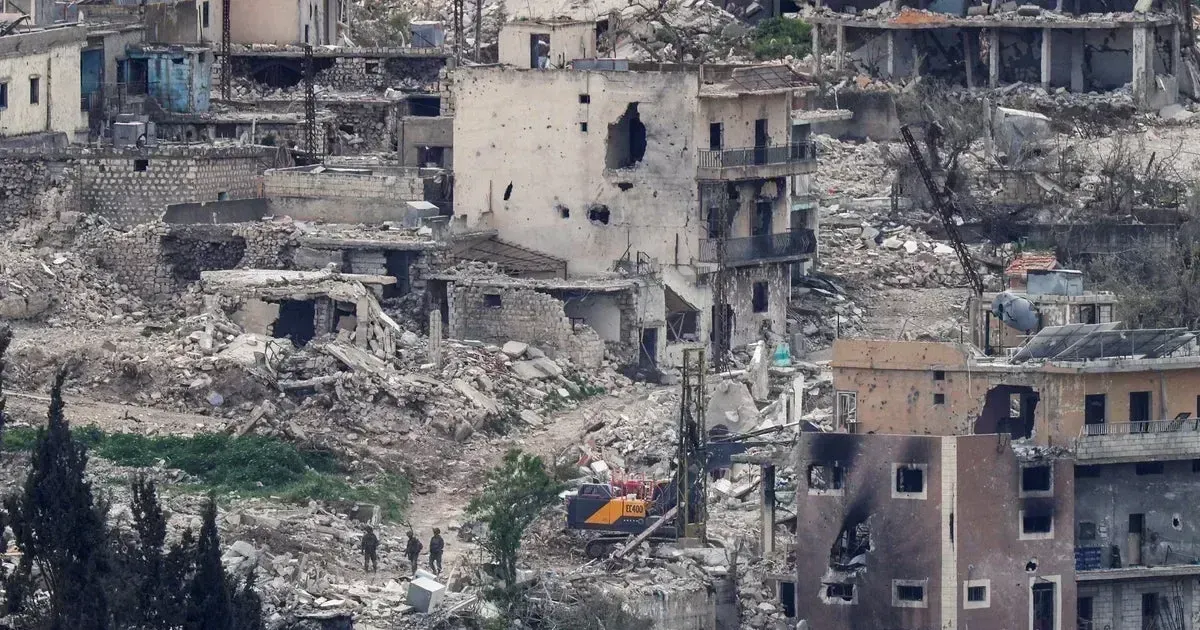
Lebanon’s military warning showed how quickly a new truce can meet facts on the ground. The issue is not only whether fire stops, but whether displaced families can safely return. Beirut residents woke to celebratory gunfire on April 17, 2026, marking the start of a 10-day ceasefire between Israel and Lebanon. Despite the festive atmosphere in the capital, reports of military friction began to surface within hours of the official start time. Military command centers in Beirut monitored multiple incidents along the southern border that threatened to derail the fragile diplomatic pause before it could take root. Gunfire echoed through the streets of the capital as citizens expressed relief at the cessation of major aerial bombardments. Residents waved national flags from apartment balconies, signaling a temporary reprieve from months of intensifying cross-border conflict. Local media outlets captured scenes of motorists honking horns and cheering in areas that had previously been cleared due to strike risks. Peace felt real for a brief moment in the urban centers of the north. Reports from the Lebanese Armed Forces soon cast a shadow over these public displays of optimism. Field officers documented several instances where Israeli units allegedly breached the terms of the agreement. These violations occurred in sensitive sectors of the southern frontier where tensions have historically remained high. Observation posts recorded specific movements that contradicted the withdrawal protocols established in the preliminary truce framework.
Youssef Rajji, the Lebanese Foreign Minister, confirmed that his government maintains communication with international mediators to address these early setbacks. Rajji indicated that the success of this 10-day window depends entirely on the adherence of both parties to the strict limitations on troop movements. Diplomatic channels in Paris and Washington remain active as officials attempt to verify the scale of the reported violations. Evidence from the ground suggests a complex environment where local commanders may be acting outside of central directives.
Lebanese Military Warns of Border Zone Hazards
Commanders from the Lebanese Armed Forces issued a stern warning to civilians on April 17, 2026, regarding the safety of southern territories. Thousands of displaced families began packing vehicles in Beirut with the intention of returning to their ancestral homes in the border villages. Army leadership, however, categorized these areas as active danger zones due to the presence of unexploded ordnance and the proximity of Israeli military positions. Security cordons were established on major highways to prevent a premature influx of people into the volatile southern districts.
Soldiers stationed at checkpoints reported that the risk of renewed hostilities stays high despite the diplomatic breakthrough. The military warned that any meaningful civilian movement toward the border could be misinterpreted as a tactical maneuver, potentially triggering a lethal response. Projections show that a full return of the population will require weeks of clearing operations and a more permanent security guarantee. Stability in the south remains an elusive goal for the central government.
Israeli military activity in the contested Shebaa Farms region reportedly continued after the ceasefire deadline passed. TASS sources highlighted that these localized skirmishes involve light infantry and surveillance drones. While Al Jazeera reported celebratory scenes, the reality on the front lines involved soldiers remaining in full combat readiness. Neither side appears willing to be the first to lower its guard during this introductory phase of the truce.
Diplomatic Negotiations Face Immediate Pressure
Government officials in Lebanon expressed a mixture of caution and determination during a series of press briefings throughout the afternoon. Prime Minister Najib Mikati congratulated the citizenry on the arrival of the truce but stressed the importance of national unity. His administration views this period as an essential testing ground for future, more thorough peace talks. Success in these 10 days could provide the necessary political capital to pursue a permanent resolution to the border dispute.
Lebanon maintains high hopes for the upcoming negotiations with the Israeli government to secure a lasting peace.
Foreign Minister Youssef Rajji emphasized that Lebanon seeks a full implementation of previous international resolutions. He pointed to the need for a sovereign presence in the south that does not rely on irregular militias. Negotiations will likely focus on the precise demarcation of the land border and the withdrawal of heavy weaponry from the immediate vicinity of the Blue Line. International monitors have expressed concern that 10 days is insufficient to resolve decades of territorial grievances.
Historical precedents suggest that short-term ceasefires often serve as logistical reloading periods for both combatants. Investigative analysts at Reuters and Bloomberg have noted that previous pauses in 2006 followed a similar pattern of early violations. If the Lebanese Armed Forces cannot secure the border effectively, the likelihood of a return to full-scale war increases dramatically. Regional powers continue to watch the situation with extreme skepticism.
Security Concerns Block Displaced Family Returns
Families waiting at the outskirts of Sidon expressed frustration with the military restrictions preventing their northward and southward travel. Many have spent months in cramped shelters and were eager to assess the damage to their properties. Reports of Israeli violations made the military even more reluctant to open the roads. Army spokesmen stated that the safety of the citizens outweighs the desire for a quick return to normalcy.
Financial markets in the region reacted with guarded optimism to the news of the 10-day pause. The Lebanese pound showed a slight stabilization against the U.S. dollar in the informal markets of Beirut. Economic recovery remains tied to the duration of the peace, as the tourism and agriculture sectors have been decimated by the recent violence. Farmers in the south lose millions of dollars every week they are denied access to their olive groves and tobacco fields.
Israel has not yet released a detailed public response to the specific allegations of ceasefire breaches. Previous statements from Jerusalem emphasized the right to self-defense if any perceived threats emerged near their northern settlements. This posture creates a hair-trigger environment where a single misinterpreted movement could end the truce. Monitoring teams from the United Nations are currently attempting to verify the coordinates of the reported strikes.
Stability depends on the restraint of field commanders.
Lebanon Truce Faces Immediate Stress
Historical cycles of violence in the Levant demonstrate that a 10-day ceasefire is rarely a precursor to peace. It is more accurately described as a strategic breathing spell for exhausted infantries. By agreeing to such a brief window, both Israel and Lebanon are signaling that they are not yet ready for the structural concessions required for a permanent settlement. This pause provides just enough time to replenish munitions and rotate weary battalions while the diplomats perform for the international gallery.
Foreign Minister Youssef Rajji talks of high hopes, but his words lack the backing of a unified national military force capable of policing the southern border. The Lebanese Armed Forces are currently caught in an impossible vice between Israeli aggression and internal paramilitary interests. Without a radical shift in the internal Lebanese power structure, any truce signed in Beirut is only a temporary postponement of the inevitable next round of destruction. The international community is once again subsidizing a stalemate rather than brokering a solution.
Expect the violations to increase in frequency as the 10-day deadline approaches. Each side will attempt to seize a final tactical advantage before the clock runs out or the next phase of escalation begins. This is not the beginning of the end. It is a cynical intermission. Peace is a fantasy in a region where the architecture of war remains perfectly intact.