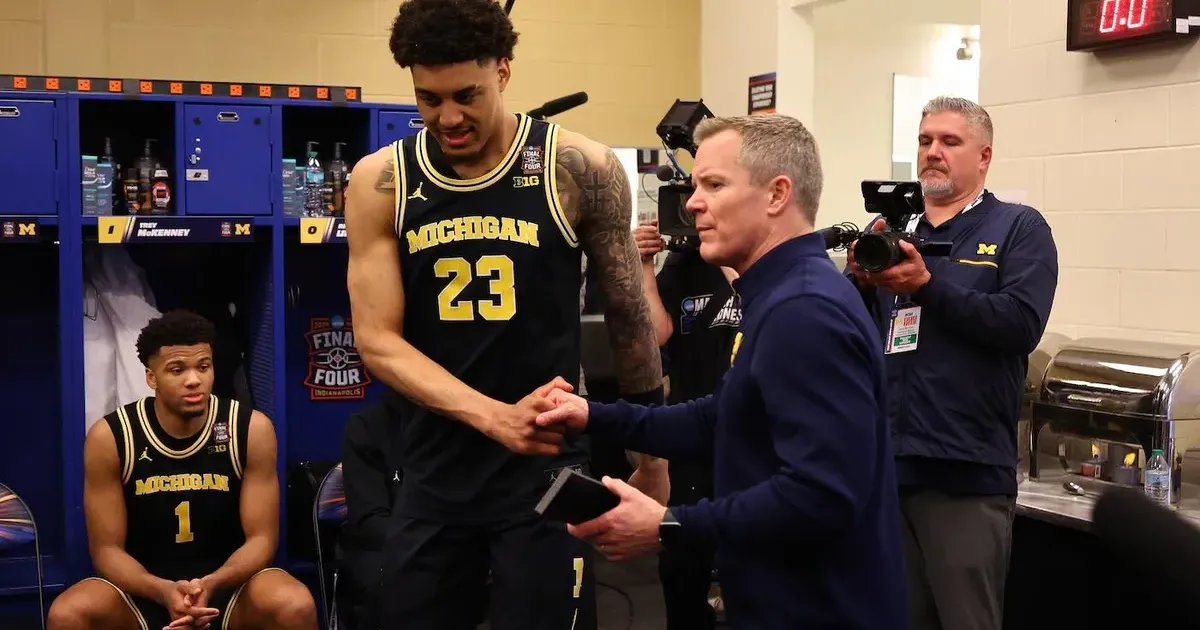
Yaxel Lendeborg said he intends to play for Michigan in the national championship game despite a knee sprain and lingering ankle pain. The decision is not only emotional; it changes how both benches prepare. Michigan needs clarity before tipoff. The update, issued on April 5, 2026, immediately changed the tactical conversation around the title matchup with UConn. Lendeborg was injured during Michigan's Final Four win over Arizona, when his ankle rolled and his knee bent awkwardly on a drive. The diagnosis reportedly included an MCL sprain, a serious concern for a player whose value depends on mobility, balance and defensive range. The question is not only whether Lendeborg can appear in the game. It is whether he can move well enough to help without making the injury worse. Championship pressure can push players toward heroic choices that medical staffs have to evaluate carefully. Michigan needs his length, rebounding and scoring. UConn will test every limitation by forcing him to defend in space, absorb contact and make repeated cuts. A compromised Lendeborg changes matchups even if he starts.
UConn Can Stress the Injury
Opponents often test injured stars early. UConn can involve Lendeborg in screening actions, make him change direction and see whether he can close out without hesitation. If he cannot, Michigan may need quicker substitutions or more zone looks. There is also a psychological layer. Teammates may rally around his willingness to play, but they may also hesitate if they see him laboring. Coaches have to balance emotion against efficiency.
Lendeborg said he planned to play despite the lower-body injuries, according to postgame reporting.
Title Game Minutes Matter
The most realistic plan may be managed minutes. Michigan can use Lendeborg in stretches, protect him from unnecessary transition burden and adjust based on how the knee responds after warmups.
That approach is not simple. Short rotations can disrupt rhythm, and UConn is strong enough to punish any lineup that loses size or defensive communication. Michigan has to prepare both for Lendeborg playing and for the possibility that he cannot finish.
The injury update therefore becomes the first strategic variable of the championship game. Lendeborg's determination is clear, but the title may depend on whether his body can support the role Michigan needs from him.
Medical staff will have to watch how the knee responds after activity, not only how it feels at rest. An MCL sprain can tighten, swell or reduce lateral confidence once the game begins. That makes pregame warmups and early defensive possessions especially important.
Lendeborg's own confidence matters, but it cannot be the only input. Players often want to compete through pain in championship settings, and that competitiveness is part of what makes them valuable. Coaches still have to decide whether the team is better with a limited star or a healthier replacement in certain matchups.
The title game may therefore become a rolling medical decision. If Lendeborg moves well, Michigan gains its normal versatility. If he labors, UConn will keep pulling him into actions until the limitation becomes impossible to hide. The injury update is only the beginning of the strategic problem.
Michigan also has to consider how the officials call contact. If the title game becomes physical, Lendeborg may have to absorb bumps on drives, box out through pain and land in traffic. If the game is cleaner and more perimeter-oriented, he may be able to contribute in shorter bursts without constant stress. That uncertainty makes contingency planning essential. Michigan needs lineups ready for three scenarios: Lendeborg close to normal, Lendeborg limited but useful, or Lendeborg unable to continue. The public statement says he plans to play; the bench plan has to assume the situation can change quickly.
UConn will not need to announce that strategy. The test can happen naturally through ball screens, post switches and transition chances. If Lendeborg moves freely, Michigan keeps one of its most important two-way pieces. If he hesitates, the Huskies will find the weak point quickly. The injury report therefore matters even before tipoff. It changes how both coaching staffs prepare, how teammates cover for mistakes and how much risk Michigan can tolerate in pursuit of a championship.