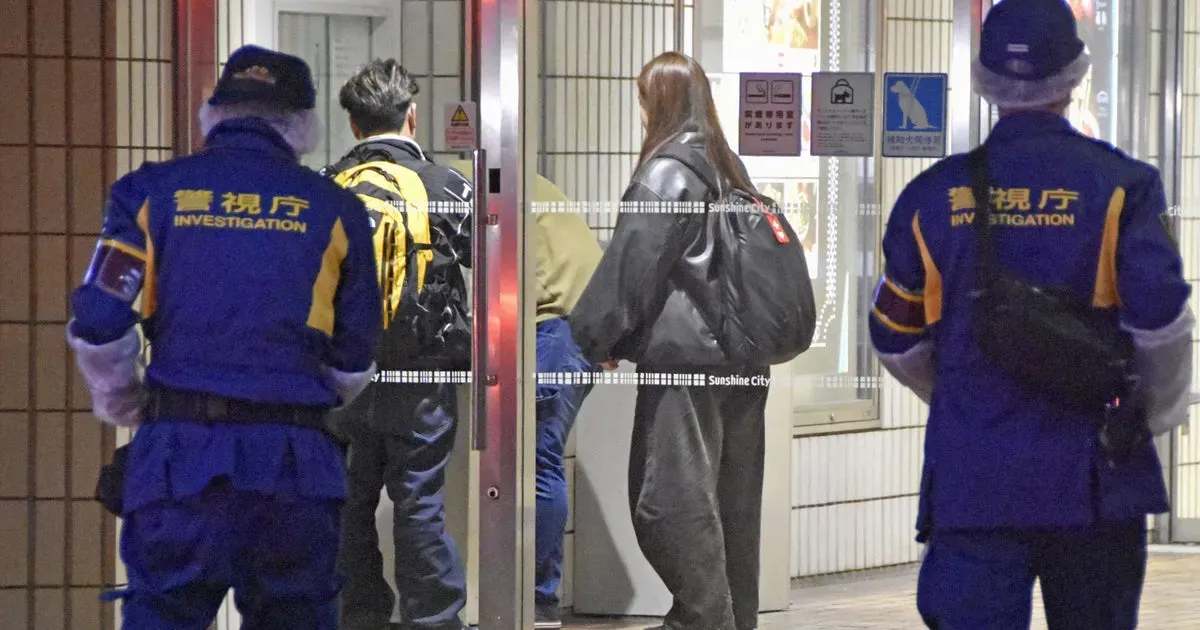
Tokyo Metropolitan Police investigators converged on the Sunshine City shopping complex on March 26, 2026, finding a female employee and her assailant dead inside the city flagship retail outlet. Initial reports from emergency responders indicated that a man armed with a knife attacked the worker during peak shopping hours. Panic swept through the Ikebukuro district as hundreds of customers, including families and international tourists, fled the store. Officials confirmed the deaths within an hour of the incident, effectively shuttering one of the most popular commercial destinations in Japan.
Witnesses described a scene of confusion that quickly turned to terror. Shoppers at the Pokémon Center reported hearing screams near the back of the store before seeing a man wielding a large blade. But security personnel were unable to reach the victim before the fatal blows were struck. Once the woman fell, the attacker immediately turned the weapon on himself. Medical teams arrived shortly after, yet neither individual could be revived. In fact, both were pronounced dead on the floor of the retail space, surrounded by colorful merchandise and plush toys.
Sunshine City security protocols are now under intense review. This shopping hub typically maintains a high presence of floor marshals, but the speed of the attack bypassed standard response times. Retail employees in nearby shops were instructed to lower their shutters and remain inside until the building was secured. Many stayed locked in backrooms for hours as forensic teams began their work. Meanwhile, the surrounding streets of Ikebukuro remained paralyzed by police cordons and news crews.
Tokyo Metropolitan Police Secure Ikebukuro Crime Scene
Forensic teams spent much of the evening documenting the interior of the Pokémon Center to reconstruct the timeline of the violence. Investigators are focusing on surveillance footage to determine how the assailant entered the building with a weapon undetected. For one, the perpetrator appeared to move with a specific purpose, bypassing other shoppers to reach the female staff member. According to police records, there is currently no evidence of a broader threat to the public, though the investigation into a possible personal motive continues.
This was a sudden and violent act that occurred in a space usually reserved for families and joy, said a spokesperson for the Tokyo Metropolitan Police during a press briefing held outside the store entrance.
Evidence collected at the scene suggests the knife was brought specifically for this encounter. Detectives are cross-referencing the identities of the deceased against domestic disturbance reports and employment records. Yet, the motive remains unclear as officers sift through digital communications found on devices at the scene. By contrast, the physical evidence is conclusive, showing a clear sequence of a targeted attack followed by a self-inflicted wound. Officers recovered the weapon near the body of the male suspect.
Knife Crime Statistics Challenge Japan Safety Story
Japan maintains a global reputation for low violent crime rates, specifically regarding firearms. Still, the country has experienced several high-profile knife attacks in urban centers over the last decade. Statistics from the National Police Agency show that while overall crime is declining, incidents involving blades in public spaces remain a persistent concern for urban planners. These events often involve solitary actors targeting victims in high-traffic retail or transit environments. Tokyo is still a focus for these anxieties due to its extreme population density.
Public safety experts often point to the Akihabara stabbing of 2008 as a historical reference for this type of retail-based violence. That event led to sizable changes in how public squares are monitored and how police patrol commercial zones. And yet, the enclosed nature of shopping malls like Sunshine City presents unique challenges for rapid intervention. Security cameras are widespread, but they serve as tools for post-incident analysis rather than prevention. Retailers now face mounting pressure to install metal detectors or implement bag checks, measures that are largely foreign to the Japanese shopping experience. Broader regional concerns regarding Japanese defense policy are often evaluated alongside the nation's internal security landscape.
Social analysts suggest that the rigid structure of Japanese society can sometimes produce individuals who feel marginalized or cornered. Knife attacks are frequently the manifestation of this internal pressure, directed at symbols of normalcy or commercial success. In particular, the choice of a high-profile location like a Pokémon Center ensures that the act receives maximum domestic and international attention. Such locations represent the heart of Japan's soft power and cultural export. While Japan manages its own internal threats, international counterparts continue to analyze rising hate crime statistics and religious community security.
Pokémon Center Security Protocols Face International Scrutiny
The Pokémon Company, which manages the retail outlets, issued a brief statement expressing condolences to the victim's family. Analysts estimate the brand is worth over $92 billion, making its physical locations serious assets that require stringent protection. Following the attack, the company announced that all Tokyo-area stores would remain closed indefinitely for security audits. Investors reacted quickly, with shares in related entities seeing a minor dip in morning trading on the Tokyo Stock Exchange.
Retail security in Tokyo has traditionally relied on the concept of social trust rather than physical barriers. Most stores do not employ armed guards, and security staff are often elderly men whose primary role is directing traffic or assisting customers. Separately, the Pokémon Center has been a target of crowd control issues in the past due to limited edition product releases. This history of managing large volumes of people did not translate into an effective defense against a determined, violent individual. Security consultants now argue that the hands-off approach to retail safety must be abandoned in favor of more proactive screening.
Acting on that logic, the management of Sunshine City is considering a permanent increase in private security contractors. Changes may include the introduction of rapid-response teams stationed within the mall's corridors. Staff training for emergency evacuations and active-threat scenarios will also be revamped across the complex. So, the once-relaxed atmosphere of Ikebukuro's shopping district is likely to be replaced by a more visible and restrictive security presence.
Mental Health and Solitary Violence in Urban Centers
Isolation is still a major social factor in many of Tokyo's violent incidents. While Japan has expanded its mental health resources, a stigma persists that prevents many from seeking help before their distress turns outward. Many attackers in these scenarios are described as hikikomori, or social recluses, who have lost touch with traditional community support systems. This specific incident fits a pattern of behavior where the perpetrator seeks a public stage for a final, desperate act. Such behavior is a recurring theme in urban Japanese crime reports.
Local government officials have promised to increase funding for community outreach programs in the Ikebukuro area. These initiatives aim to identify at-risk individuals before they resort to violence. But critics argue that these programs are often too little, too late for those already in crisis. The speed with which these attacks occur leaves little room for societal intervention at the moment of impact. Public debate is now shifting toward the necessity of earlier, more aggressive mental health screening.
Future safety in Tokyo's commercial hubs depends on a combination of technological surveillance and social awareness. Retailers cannot simply rely on the reputation of Japan as a safe country to protect their staff and customers. Police will continue to patrol the area around Sunshine City in increased numbers for the foreseeable future. Each new incident chip away at the sense of security that has long defined the Japanese urban experience.
The Elite Tribune Perspective
Western observers often fetishize Japan as a crime-free utopia where children roam unsupervised and social harmony reigns supreme. The convenient story ignores the boiling pressure cooker of a society that demands absolute conformity while offering dwindling avenues for personal expression. The tragedy in Ikebukuro is not an anomaly but a predictable eruption from a system that prizes the appearance of order over the reality of human well-being. When a man enters a space of childhood wonder like a Pokémon store to commit murder and suicide, he is making a grotesque statement about the failure of the Japanese social contract.
The Pokémon Company and its multi-billion-dollar empire can hire all the security guards they want, but no amount of surveillance can fix a culture that produces such deep alienation. We should stop being surprised when the mask of civility slips to reveal the raw violence underneath. Retail safety is a technical problem, but the motive is a structural one that the Japanese government continues to ignore at its own peril. Japan's safety is a fragile illusion maintained by a population that is increasingly reaching its breaking point.
If the state continues to focus on corporate image over mental health infrastructure, these blood-stained plush toys will become the new face of Tokyo retail.