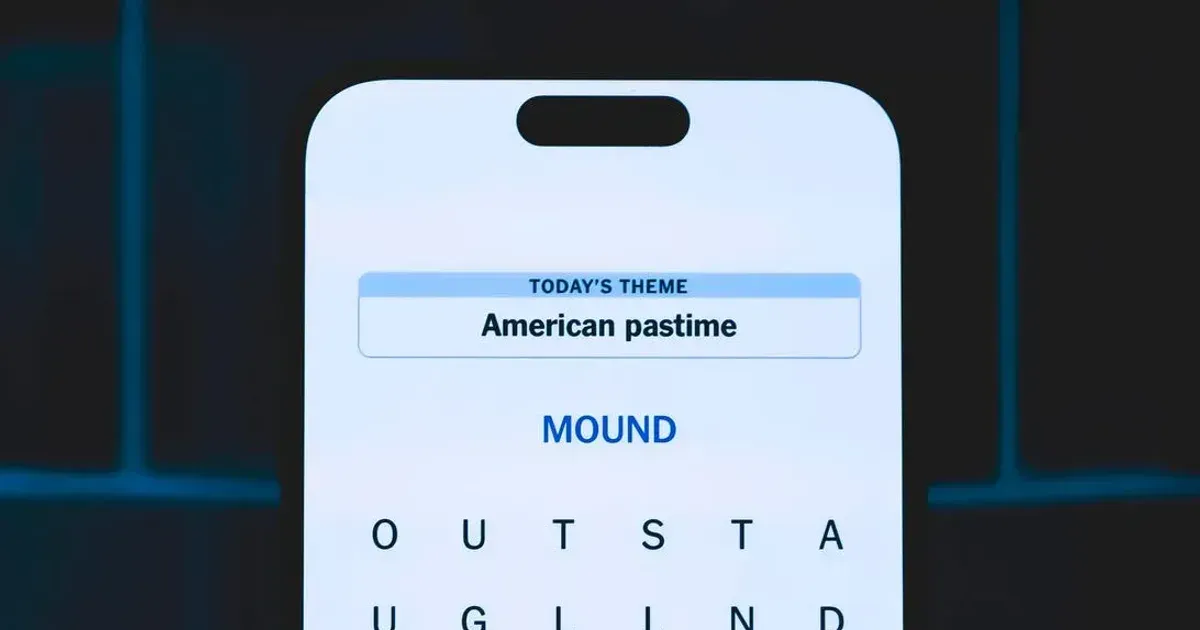
March 16 arrives with a fresh set of digital hurdles for millions of daily players who start their mornings with intellectual labor. The New York Times puzzle suite, including Wordle and Connections, continues to dominate the morning routines of English speakers globally by offering a standardized challenge that transcends geographical boundaries. While Wordle #1731 relies on a narrow five-letter vocabulary, Connections #1009 tests lateral thinking through four distinct categories. But the expansion of these games suggests a deeper shift in how digital media captures attention through habitual engagement. CNET reported the solutions for the March 16 games, noting that the difficulty curve for the 1,731st Wordle puzzle prompted broad discussion among enthusiasts on social media. Players must handle phonetic traps and vowel-heavy structures to maintain their streaks. Wordle remains a binary success or failure system that resets every twenty-four hours. For instance, the game Wordle limits users to six attempts, creating a high-stakes environment for those who pride themselves on efficiency. According to CNET, the hints for today emphasize the importance of vowel placement and common consonant blends.
NYT Puzzle Difficulty Draws Debate
Wordle functions as a gateway for the broader Games subscription model that the company has leaned into since 2022. The game Connections #1009 focuses on word associations that often include slang, homophones, or niche cultural references. This puzzle on March 16 required players to identify themes ranging from simple objects to complex abstract concepts. Even the frustration levels among players often rise when categories overlap or use red herrings to trigger incorrect guesses. The data shows that Wordle players are strikingly loyal to their starting routines regardless of the word of the day. Logic dictates that the statistical probability of a three-try win remains the standard for elite performance. The New York Times has integrated these games into a unified application to maximize the time spent on their platform. Routine behavior dictates the commercial success of the entire operation. The New York Times has successfully gamified the morning ritual, turning simple word games into a daily digital appointment for millions of subscribers. The publication reported that games were played over 8 billion times in the previous year, highlighting the scale of this digital habit. Connections has quickly risen to become the second most popular game in the portfolio. The design of Connections is often viewed as more subjective than the mathematical certainty of Wordle or a traditional crossword. The New York Times editors frequently balance the difficulty levels to ensure a mix of easy and challenging days throughout the week. Connections challenges the brain to look past the primary definition of a word. The game is about categorization and the exclusion of outliers.
Engagement metrics for the Mini Crossword show that it is often the first game players open in the morning. The editors ensure the clues are snappy and relatively straightforward. The March 16 Mini avoided the obscure trivia that often plagues the Friday or Saturday full-sized crosswords. Most users report that the satisfaction of a quick win helps them transition into their workday. The New York Times has found a lucrative niche in these micro-challenges.
Every game in the suite, from Wordle to Strands, serves a clear psychological need for order and accomplishment. Even the cumulative time spent on these puzzles adds up to a substantial portion of the user's digital life. CNET continues to document these solutions daily because the demand for help remains high among players who refuse to break their streaks. The New York Times maintains its position as the premier destination for digital wordplay through constant iteration and data-driven design.
New York Times executives have stated that the games division is a critical part of their goal to reach 15 million subscribers by 2027. The puzzle answers for March 16 are just one small part of a larger corporate machine. Wordle and Connections have proven that simple mechanics, when paired with a prestige brand, can create lasting cultural relevance. The daily puzzle ritual shows no signs of slowing down.
Daily Games Thrive on Friction
Why are we so obsessed with five-letter grids and color-coded categories? The reality is that the New York Times has weaponized the human desire for closure to build a subscription moat that has nothing to do with journalism. By turning the morning routine into a series of micro-tasks, the publication has effectively replaced the coffee break with a data-harvesting exercise. It is a brilliant, if cynical, move that exploits the sunk-cost fallacy.
Once a player reaches a 100-day streak in Wordle, they are no longer playing for fun; they are playing to avoid the psychological pain of losing a digit on a screen. This is not intellectual stimulation; it is a complex loyalty program disguised as a crossword. We should be skeptical of any media entity that prioritizes the dopamine hits of a solved puzzle over the delivery of hard news.
While the March 16 answers might satisfy the immediate craving for a win, they contribute to a broader trend of digital infantilization where the challenge is always manageable and the reward is always a shareable square. The intellectual elite of the US and UK are being lulled into a false sense of cognitive fitness by games designed for the attention span of a goldfish.