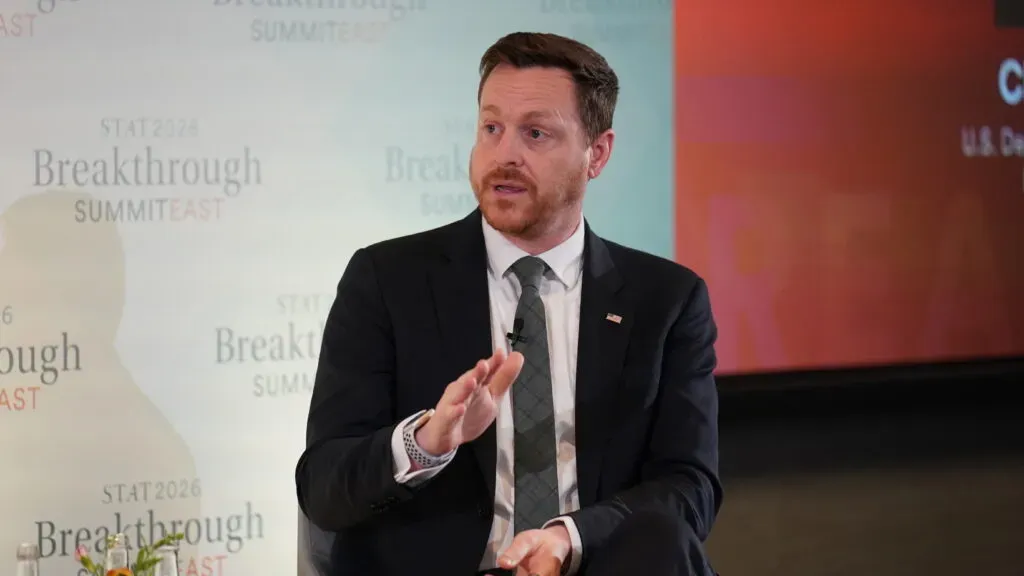
Chris Klomp arrived at the STAT Breakthrough East event in New York on Thursday with a specific mandate to dismantle the hyperbole surrounding the drug platform of the White House. Chris Klomp, who is the director of the federal agency overseeing Medicare, told an audience of healthcare executives that the flagship pharmaceutical initiative serves a much narrower slice of the American public than presidential rhetoric suggests. While President Trump has described the system in grandiose terms, Klomp described it as a niche tool for a specific demographic.

Efforts to market the program as a universal solution to rising costs met a firm institutional correction during the director’s public appearance. High-level health officials rarely break so cleanly from executive messaging on a signature policy.

According to Klomp, the technical structure of TrumpRx was never intended to replace or even supplement the coverage of the vast majority of citizens. Most Americans interact with the pharmaceutical market through complex layers of negotiated rebates and employer-sponsored plans. Klomp highlighted that 170 million individuals carry commercial insurance and another 68 million rely on government-managed senior care. These populations are effectively locked out of the new platform by design. Policy designers built the system for the cash-pay market, which is a fraction of the total prescription volume in the United States. Many analysts now view the program as a digital coupon book rather than a structural reform of the healthcare industry.

TrumpRx Discount Limits and Market Reality

In fact, the reliance on cash-pay transactions limits the utility of the program to people who are uninsured or those whose high-deductible plans make out-of-pocket costs prohibitive. Most retail pharmacies already participate in various discount programs like GoodRx or internal membership clubs. Adding a federal version to this mix does not necessarily lower the base price of the medications themselves. Instead, it aggregates existing discounts into a branded interface. Manufacturers frequently offer these lower rates for older, generic drugs while maintaining high prices for protected, brand-name biologics. This reality contradicts the narrative of a sweeping price reduction that would affect every household across the nation.

Yet, the political branding of the platform continues to outpace its functional capacity. Administration officials have spent months promising a seismic shift in how families afford life-saving treatments. Klomp effectively grounded those expectations by noting that the reach of the program is mathematically limited by the existing insurance infrastructure. If a patient is one of the 238 million people covered by private or public plans, the new platform offers little to no benefit. The federal government lacks the statutory authority to force insurance companies to adopt the specific discount rates found on the app. Insurance providers use their own pharmacy benefit managers to set rates that are often lower than cash prices anyway.

The goal was not actually some massive reach. 170 million Americans are commercially insured, 68 million Americans are on Medicare, the balance are on Medicaid and CHIP largely. TrumpRx is not for most of them, it’s cash pay.

Separately, the distinction between price caps and discount platforms is still a point of contention within the Department of Health and Human Services. Klomp rejected the suggestion that the administration is pursuing the type of price controls often championed by progressive lawmakers. Direct government price setting is still a taboo subject in this administration, which prefers market-based interventions. By focusing on a cash-pay platform, the White House avoids a direct confrontation with the pharmaceutical lobby over profit margins. This approach maintains the status quo for the largest players in the industry while providing a visible, if limited, victory for the executive branch.

Chris Klomp Clarifies Cash Pay Restrictions

But the administrative data reveals a serious picture of who actually pays the full cash price at the pharmacy counter. Only about 10% of total prescription spending in the United States falls into the out-of-pocket, non-insurance category. This segment includes people who are between jobs, undocumented immigrants, or those purchasing medications not covered by their specific formularies. For these individuals, the platform might provide relief on generic heart medication or basic antibiotics. It does nothing to address the $100,000-a-year oncology drugs that drive the majority of national healthcare spending growth. Klomp admitted that the reach was never meant to be massive.

Even so, the discrepancy between the sales pitch and the implementation risks alienating the voter base that expected a total overhaul. Pharmaceutical companies have cautiously welcomed the limited nature of the platform because it does not threaten their primary revenue streams from Medicare and private insurers. By keeping the program focused on the cash market, the administration ensures that pharmacy benefit managers keep their role as the primary gatekeepers of drug pricing. These entities negotiate the complex web of rebates that determine the final cost for the majority of citizens. TrumpRx exists entirely outside that negotiation loop, which explains its inability to lower prices for the insured.

For instance, a patient with a standard employer plan who tries to use the federal discount might find that their insurance copay is actually lower than the TrumpRx cash price. It occurs because insurance companies leverage the buying power of millions of members to secure deep discounts that individuals cannot access. The federal platform acts as a secondary negotiator for the unorganized, but it lacks the scale of a nationalized health system. Klomp noted that the balance of the population is covered by Medicaid and CHIP, programs that already have some of the lowest drug costs in the world. Those programs are legally prohibited from being superseded by a voluntary discount card.

Medicare Enrollment and Private Insurance Dynamics

At the same time, the timing of these remarks suggests a strategic pivot to manage the political fallout of a limited rollout. Health officials often use industry events to transmit signals to the market that would be too controversial for a general audience. By telling the STAT audience that the program is for the cash-pay market, Klomp is reassuring investors that the pharmaceutical industry’s bottom line is safe. The duality allows the president to claim a victory on the campaign trail while his deputies ensure that the actual policy remains non-disruptive. Markets responded favorably to the comments, with pharmaceutical stocks showing a slight upward trend following the panel discussion.

In turn, the technical hurdles of the platform have slowed its adoption even among the target demographic. Users must handle a digital interface that requires consistent internet access and some degree of technological literacy. Many seniors who might benefit from cash discounts for non-covered items often struggle with app-based healthcare management. Federal agencies have not yet released data on how many people have successfully used the platform since its quiet launch last month. Without a massive marketing budget or direct integration into pharmacy software, the program is still a secondary option for most shoppers. The administration has relied on earned media and presidential mentions to drive traffic.

For one, the legal challenges to more aggressive drug pricing reforms have made the administration cautious. Recent court rulings have limited the ability of the executive branch to unilaterally set prices without specific congressional authorization. By framing TrumpRx as a voluntary discount aggregator, the White House avoids the lawsuits that have bogged down previous attempts at reform. The legal safety, however, comes at the cost of actual impact. A voluntary program cannot compel a manufacturer to lower its prices. It only asks them to share existing discounts with a wider audience in exchange for more volume. Most manufacturers only agree to this for older drugs facing stiff competition.

Pharmaceutical Pricing Policy and Administrative Friction

In particular, the internal friction between the White House communications team and the health department is becoming more visible. Press secretaries continue to use words like sweeping while directors like Klomp use words like measured. The tension highlights the difficulty of addressing the most significant concern of American voters within the constraints of a pro-market ideology. The high cost of medicine is still a primary driver of household debt and medical bankruptcies. Providing a discount card to 10% of the population does little to change the broader economic path of the healthcare system. Klomp remained focused on the logistical reality of the 68 million seniors currently on Medicare.

Still, the existence of the platform creates a psychological shift in the market. It marks the first time a federal administration has directly competed with private discount apps like GoodRx. The move signals that the government sees a role for itself in the retail pharmacy space, even if that role is currently minimized. If the administration eventually seeks to expand the program, the infrastructure will already be in place. Expanding it would require a fundamental change in how the government interacts with private insurance contracts. Such a move would trigger a massive legal battle with the insurance industry. Klomp chose to avoid that topic entirely during his remarks.

By contrast, the rhetoric coming from the Oval Office suggests that the battle for lower prices has already been won. The president frequently cites the platform as the primary reason for a cooling in pharmaceutical inflation. While drug price growth has slowed in certain sectors, economists attribute this to a wave of patent expirations rather than a federal app. The disconnect between policy and propaganda is a recurring theme in modern administrative governance. Klomp provided the necessary data to show that the system is a surgical tool, not a blunt instrument for market reform. His presentation concluded with a focus on the upcoming open enrollment period for federal programs.

The Elite Tribune Perspective

Questions regarding the administrative competence of the health team often center on the gap between press releases and policy manuals. The TrumpRx initiative is an exercise in the populist art of providing a small, visible benefit while leaving the massive, invisible structures of corporate profit untouched. By focusing exclusively on the cash-pay market, the administration has in effect built a boutique service for the uninsured and then marketed it as a national cure. It is a strategic retreat disguised as a revolutionary advance.

We are watching a government attempt to solve a systemic crisis with the healthcare equivalent of a loyalty rewards card. The refusal to engage with the 170 million commercially insured Americans proves that the White House is more interested in avoiding a fight with the insurance lobby than it is in lowering prices for the middle class. If the director of Medicare feels the need to publicly reel in expectations, it is because the internal data shows a platform that is failing to reach the people it was promised to help.

Genuine pharmaceutical reform requires the courage to mandate prices and break patents, not the technical skill to build a better coupon app. The program is a distraction from the uncomfortable reality that drug prices remain high because the system is designed to ensure that even under the most disruptive presidents.