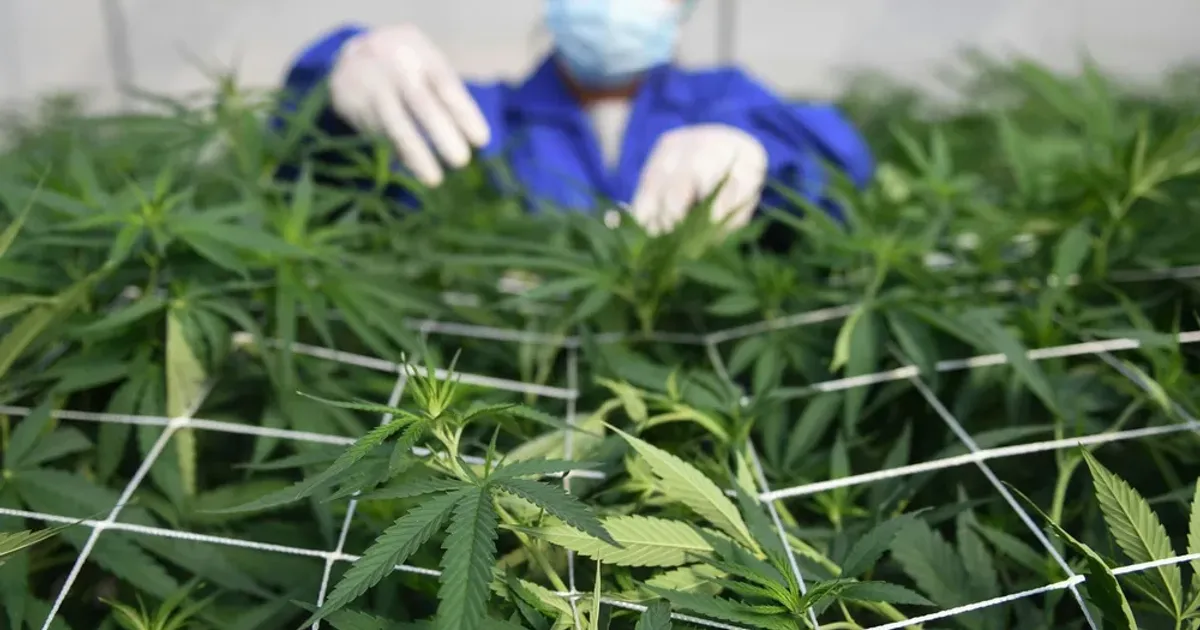
A large systematic review found that the randomised-trial evidence does not support routine use of cannabinoids for most mental health and substance-use disorders. That conclusion is narrower than saying cannabis has been proved ineffective for every psychiatric condition, product or patient.
The distinction matters because the review reached different answers for different diagnoses. Some pooled outcomes showed no statistically significant benefit. Some conditions had too little data to combine. For depression, the researchers found no eligible randomised controlled trial at all. Those are three different evidence states, and a clinically responsible headline must not collapse them into one verdict.
What the Review Actually Tested
Researchers searched five major databases for randomised controlled trials published from 1980 to May 2025. Eligible studies had to test a plant-derived or pharmaceutical cannabinoid as a treatment for a mental disorder or substance-use disorder that was the trial's primary indication. Observational studies and trials in which psychiatric symptoms were secondary to another condition were not included.
The final review covered 54 trials and 2,477 participants. Sixty-nine percent of participants were male, the median age was 33.3 years, and the included reports did not provide ethnicity data. Twenty-four trials, or 44%, were judged to have a high risk of bias. The certainty of evidence was low for most outcomes.
The interventions were not one uniform product. Trials assessed cannabidiol, delta-9-tetrahydrocannabinol and combinations of the two, using different doses, routes and treatment periods. The authors warned that only a small number of products and dose forms had been tested. Results from those controlled formulations cannot automatically be transferred to every prescribed, dispensary or self-sourced cannabis product.
Where Benefits Were and Were Not Detected
For anxiety disorders, anorexia nervosa, psychotic disorders, post-traumatic stress disorder and opioid use disorder, pooled or qualitative analyses did not find statistically significant improvement in the primary clinical outcomes. Data were insufficient to meta-analyse attention-deficit hyperactivity disorder, bipolar disorder, obsessive-compulsive disorder and tobacco use disorder.
Depression requires especially careful wording. The review did not find a failed body of depression trials; it found no eligible randomised trial testing cannabinoids as the primary treatment for depression. The correct conclusion is that randomised efficacy evidence was absent within the review's criteria, not that a trial has demonstrated zero effect.
There were signals of benefit elsewhere. A combined CBD and THC treatment reduced withdrawal symptoms and weekly cannabis use among people with cannabis use disorder. Cannabinoids increased measured and diary-reported sleep time in insomnia trials, reduced tic severity in tic or Tourette's syndrome, and reduced measured autistic traits. The authors described the evidence for these findings as generally low quality; the one outcome they rated with moderate certainty was device-measured sleep time in insomnia.
The review also found an unfavourable result: cannabinoids increased cocaine craving among people with cocaine use disorder. That reinforces why a single label such as medicinal cannabis cannot substitute for diagnosis-specific evidence.
The Safety Result Is a Signal, Not a Complete Risk Map
Across the trials that reported safety outcomes, all-cause adverse events were more frequent with cannabinoids than with control treatment. The pooled odds ratio was 1.75, with a 95% confidence interval from 1.25 to 2.46, and the calculated number needed to treat to harm was seven. The trials did not show significantly higher overall odds of serious adverse events or withdrawal from a study.
That safety analysis has limits. Adverse events were recorded according to each trial's own categories rather than recoded under one common system. Many efficacy analyses depended on small samples, subgroup comparisons by cannabinoid type were limited, and most studies did not supply the data needed to examine sex or gender differences. The review also prioritised the longest follow-up reported by each trial, so it did not pool every time point.
The findings therefore do not establish the full long-term risk of every cannabinoid product. They do show that an efficacy claim cannot be evaluated without the matching formulation, dose, diagnosis and comparator, and that even non-serious adverse events matter when the evidence of benefit is weak.
The Evidence Gap Is the Central Finding
The review's hardest conclusion is not that one side of the cannabis debate has won. It is that routine clinical use has advanced across conditions for which the randomised evidence is sparse, low-certainty or missing. That gap cannot be repaired with patient testimonials, but it also cannot be described honestly as a trial-proven absence of all benefit.
A defensible policy response starts with indication-specific standards. Anxiety with no significant pooled effect, depression with no eligible RCT, and insomnia with a limited positive signal should not carry the same claim. Nor should a CBD-only trial be treated as evidence for a high-THC retail product. The review's demand for larger, more representative trials is not a ceremonial call for more research; it identifies the evidence needed before routine treatment claims can be made.
The commercial and clinical stakes are clear. When the treatment label is broader than the tested evidence, patients bear the uncertainty while sellers and prescribers retain the benefit of ambiguity. Regulators do not need to declare every cannabinoid useless to close that gap. They need to require that each mental-health claim name the condition, product, dose and quality of evidence behind it. Anything less turns an absence of proof into a marketable promise.