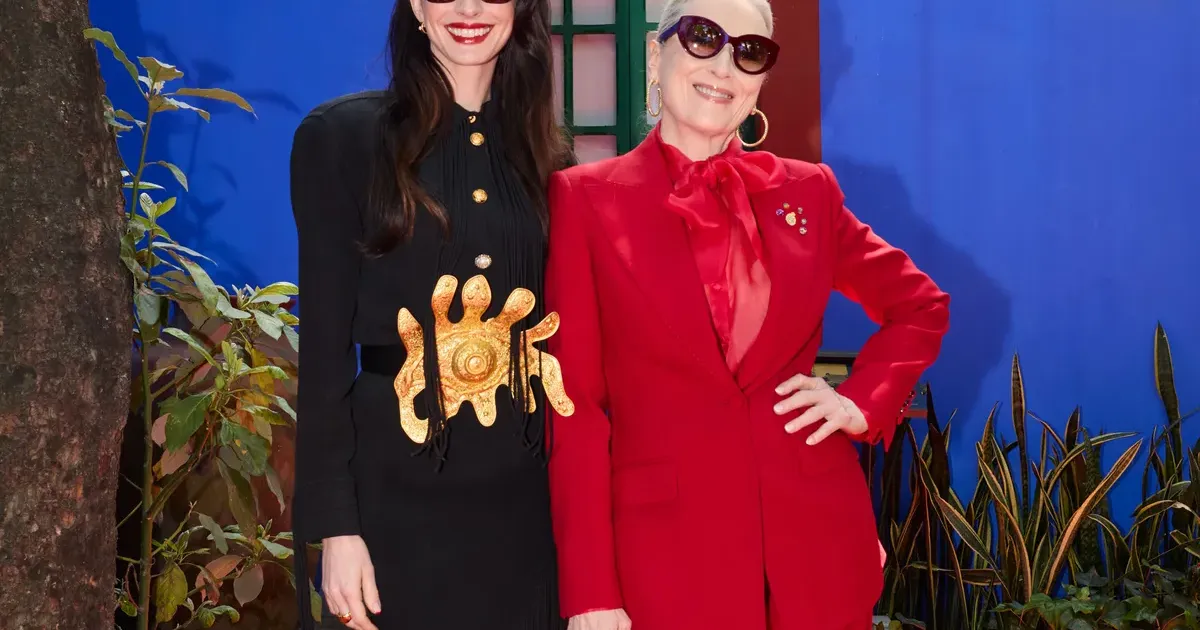
Meryl Streep and Anne Hathaway arrived in London to launch the international press tour for the highly anticipated sequel to The Devil Wears Prada. Photographers swarmed the red carpet as the duo reemerged in a coordinated display of high-fashion branding that dominated global social media feeds within minutes. On March 31, 2026, the London premiere turned the sequel’s wardrobe strategy into the main promotional signal. Industry observers noted that the production aimed to recreate the cultural impact of the 2006 original while adapting to the digital-first media environment of the current decade. Critics immediately compared the new aesthetic to the legacy of Miranda Priestly.
Micaela Erlanger, the longtime stylist for Streep, described the wardrobe strategy as a careful effort to blend character heritage with modern runway trends. Every look is a direct reference to the power dressing that defined the first film, but with updated silhouettes from contemporary designers. Fashion houses like Valentino and Prada provided custom pieces for the global events. Streep maintains a rigorous schedule of appearances spanning three continents over 20 years after the franchise first debuted.
Micaela Erlanger Details Streep Wardrobe Strategy
Preparation for this press tour began eighteen months ago to ensure every garment reflected a specific narrative arc. Erlanger focused on creating a visual language that felt both authentic and elevated for the aging but still powerful character of Miranda Priestly. Luxury brands competed for placement on the star during the London, Paris, and New York legs of the tour. Authenticity is a primary requirement for the team.
“This tour is very authentic, considered, and full-on fashion,” says Streep’s longtime stylist Micaela Erlanger.
Vogue reports that the wardrobe budget for the tour exceeds several million dollars when factoring in insurance and specialized transport for archival pieces. Erlanger insists on high-definition readiness for every outfit to accommodate the scrutiny of social media close-ups. Each appearance requires a team of four tailors on constant standby. Streep personally approved every color palette used in the first week of promotion.
Anne Hathaway Dominates Global Fashion Press Tour
Anne Hathaway mirrored the high-fashion energy by appearing in a series of avant-garde structures that drew praise from digital critics and print editors alike. Her evolution from the assistant Andy Sachs to a fashion icon in her own right provides the central marketing hook for the sequel. Fans gathered outside the London venue for twelve hours to catch a glimpse of the reunion. Hathaway continues to influence luxury sales through her brand ambassadorships. One specific gown caused a 400% spike in search queries for the designer brand within two hours of her arrival.
Success for the sequel depends heavily on the chemistry between the two leads which was on full display during the premiere. They shared private jokes while posing for the cameras, a move that publicists likely encouraged to drive engagement. Behind the scenes, the logistics of the tour involve a dedicated floor of a Mayfair hotel for the costume department. Hathaway has integrated her personal style into the character’s mature wardrobe flawlessly. The sequel campaign also has to speak to viewers who discovered the original through streaming rather than theaters. For them, the red carpet is not a nostalgic return so much as a first live encounter with the brand.
That makes the styling choices unusually important. Every coat, bag and silhouette has to signal continuity without trapping the actors inside an old mood board. Streep’s return also gives the campaign a generational bridge. Older viewers remember Miranda Priestly as a symbol of workplace authority, while younger audiences often meet the character through clips, memes and fashion retrospectives.
Hathaway’s presence makes that bridge stronger because the original film’s appeal depended on transformation. The sequel has to show that transformation can still matter in a media culture where every red-carpet image is instantly archived.
For the studio, the London launch is therefore more than a premiere. It is a controlled test of whether style memory can still drive attention before reviews and box-office tracking take over. The sequel also arrives in a fashion economy that moves faster than the first film could have imagined. A look now has to survive professional critics, fan accounts and shopping links within the same hour.
That speed gives the campaign reach, but it also leaves less room for mystery. The best campaign moments will be the ones that feel deliberate without looking over-managed. That judgment will shape the tour.
Fashion Memory on the Red Carpet
The press tour works because the original film turned costume into character. Streep and Hathaway are not only promoting a sequel; they are reopening a style language that audiences already recognize.
That nostalgia carries risk. If the new campaign only repeats the 2006 formula, the clothes become costume play rather than a fresh reading of power, work and image.