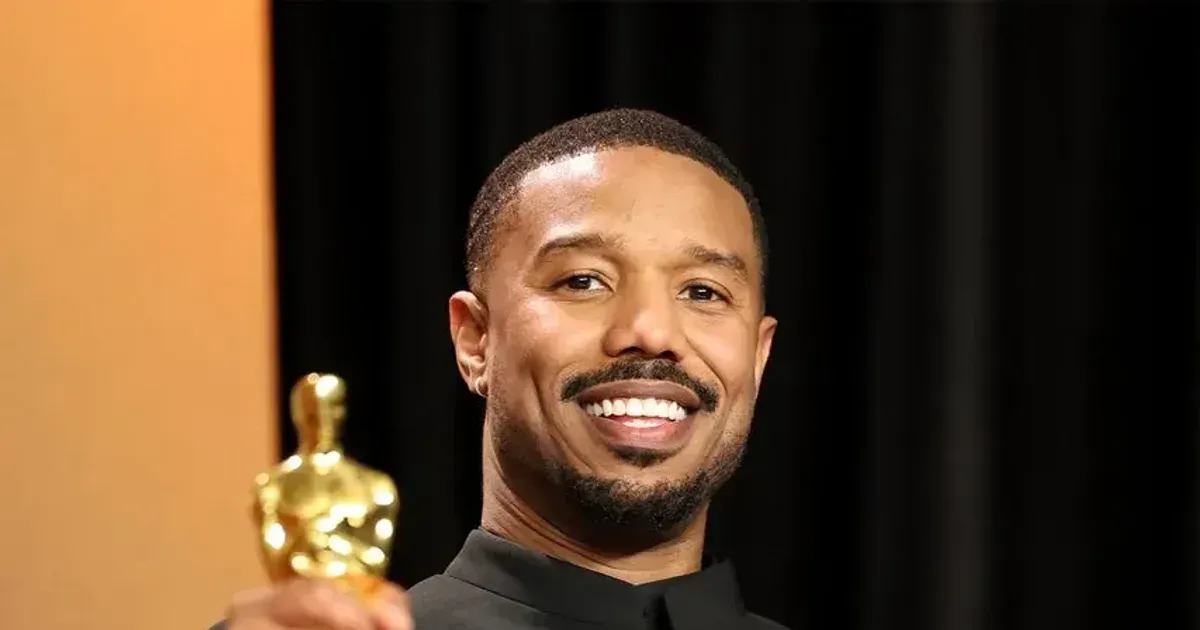
Michael B. Jordan stood frozen at the Dolby Theatre podium on Sunday night after presenters announced his Best Actor win for the Ryan Coogler film Sinners. Jordan earned the industry top honor for his portrayal of the twins Smoke and Stack, characters defined by the director as a study in vampires and Black art. Applause from the audience reached a deafening pitch while colleagues in the mezzanine stood to acknowledge the victory. Peers within the film industry erupted in tears and laughter as the first-time winner gripped his trophy. Ryan Coogler watched from the front row as his frequent collaborator secured a place in the history of the Academy Awards.

Jordan captured the gold following a performance that required him to play two, or perhaps three, complex men struggling with freedom and love. Filmmakers and press members huddled around screens in the lobbies joined the celebration when his name was finally called. Sinners is a major milestone for Coogler, who has spent years developing original stories that challenge traditional genre boundaries. Success for this specific project confirms the commercial and critical viability of high-concept Black cinema in the current market. Critics pointed to the actor's ability to distinguish the twins through subtle physical ticks rather than heavy prosthetic work.

Michael B. Jordan Wins Best Actor for Sinners

Voters shifted their support toward Jordan in the final weeks of the season after his dual performance in Sinners became a cultural phenomenon. Critics from major trade publications argued that his work as Smoke and Stack provided a depth rarely seen in traditional horror or action hybrids. Ryan Coogler directed the film with a bombastic and thrilling energy that connected with the younger voting bloc of the Academy. Jordan sat stunned in his seat for several seconds before making his way to the stage. Members of the production team described the win as an overdue recognition of his technical range.

Meanwhile, Dolby Theatre staff members noted that the energy in the room surpassed previous years during the acting categories. Publicists for the film highlighted the emotional connection audiences formed with the tragic arcs of the two brothers. Ryan Coogler has now solidified his position as a director capable of guiding his actors to the highest levels of professional achievement. Industry veterans observed that the win felt inevitable as soon as the final box office numbers for the second quarter arrived. Jordan dedicated the award to his family and the community that supported his early career in television.

Timothée Chalamet Struggles With Marty Supreme Strategy

Timothée Chalamet entered the awards season as an early frontrunner for his role in Marty Supreme. His campaign strategy involved a series of unconventional press appearances where he spoke openly about his desire to win an Academy Award. Some voters expressed discomfort with his blatant performance of ambition during the late winter circuit. Pundits suggest that these comments eventually alienated the more traditional wing of the voting body. Chalamet performed his desire for the statue with a level of intensity that many found clumsy.

But the competition proved too stiff for the young star despite his high visibility in the media. Ethan Hawke received significant support for his work in Blue Moon, while Wagner Moura was still a pleasant surprise in the race for The Secret Agent. Leonardo DiCaprio also held a strong position for his role in One Battle After Another, a film that dominated the Best Picture discussion for months. Chalamet eventually saw his momentum stall as the industry pivoted toward the more grounded narrative surrounding the Sinners production. Voters preferred the quiet intensity of Jordan over the loud campaigning of the Marty Supreme star.

Javier Bardem Breaks Silence During Academy Awards

Javier Bardem provided the only overt political moment of the evening when he took the stage to present an award. He used his brief time at the microphone to state "Free Palestine" to the silent room at the Dolby Theatre. Hannah Einbinder later told reporters that she felt a sense of gratitude for the comment. She also noted that she was not surprised by the lack of similar statements from other presenters throughout the night. Most attendees remained focused on the logistical flow of the ceremony rather than current global events.

I felt absolute pride and gratitude.

Yet the silence from other winners stood in sharp contrast to the atmosphere at the Grammy Awards held just weeks prior. Bad Bunny had previously won Album of the Year for the first Spanish-language project to ever take that title. He used his speech to call for specific changes in immigration policy, receiving a standing ovation from the music industry crowd. Billie Eilish and other musicians wore pins that signaled their political stances during the red carpet arrivals. The Academy Awards chose a much more reserved path this year.

Red Carpet Remnants Repurposed After Ceremony Ends

Paige Thalia turned the waste of the ceremony into a personal interior design project this week. She successfully recovered sections of the discarded red carpet from a dumpster located near the Dolby Theatre. This specific upgrade to her apartment floor highlights the sheer volume of material required to cover the Hollywood boulevard for a single night. Waste management experts estimate that thousands of square feet of synthetic fabric end up in landfills after the cameras stop rolling. Thalia shared images of the cleaned and installed rug on social media.

Separately, environmental activists have questioned the sustainability of the massive red carpet infrastructure. Most of the materials used for the walk are treated with chemicals that make recycling difficult or impossible. The Academy has pledged to look into more lasting options for the 2027 ceremony to reduce the environmental footprint of the event. For one, several manufacturers have proposed using recycled ocean plastics for the next iteration of the walk. Thalia intends to keep her section of the carpet as a permanent fixture in her living room.

At its core, the Oscars 2026 will be remembered for the individual triumph of Michael B. Jordan rather than any collective statement. Ryan Coogler has now successfully handled the studio system to produce a Best Actor winner. Chalamet is still a powerful force in the industry despite his loss on Sunday night. The contrast between the vocal music industry and the quiet film industry is still a topic of debate among cultural critics. Jordan left the theatre with his first Oscar in hand.

The Elite Tribune Perspective

Awards ceremonies have devolved into corporate focus groups terrified of a single rogue tweet. The 2026 Academy Awards proved that Hollywood has effectively neutered the artist's platform in favor of a sterile, risk-averse broadcast. While the music industry at the Grammys embraced the chaotic energy of the current political climate, the film industry retreated into a defensive shell of Dave & Buster’s jokes and scripted banter. This cowardice is not an accident. It is a calculated business decision made by executives who view a Best Actor win as a marketing metric rather than a cultural achievement. Michael B.

Jordan is a formidable talent, but his victory occurred in a vacuum where the outside world was forbidden from intruding. Javier Bardem was the only individual in the room with the courage to acknowledge the reality beyond the Dolby Theatre walls. The rest of the attendees seemed content to ignore the world as long as the champagne remained cold and the lighting remained flattering. If cinema wants to maintain its relevance in an with growing frequency fragmented media environment, it must stop treating its biggest night like a closed-door board meeting.

Silence is a choice, and on Sunday night, Hollywood chose to have nothing to say.