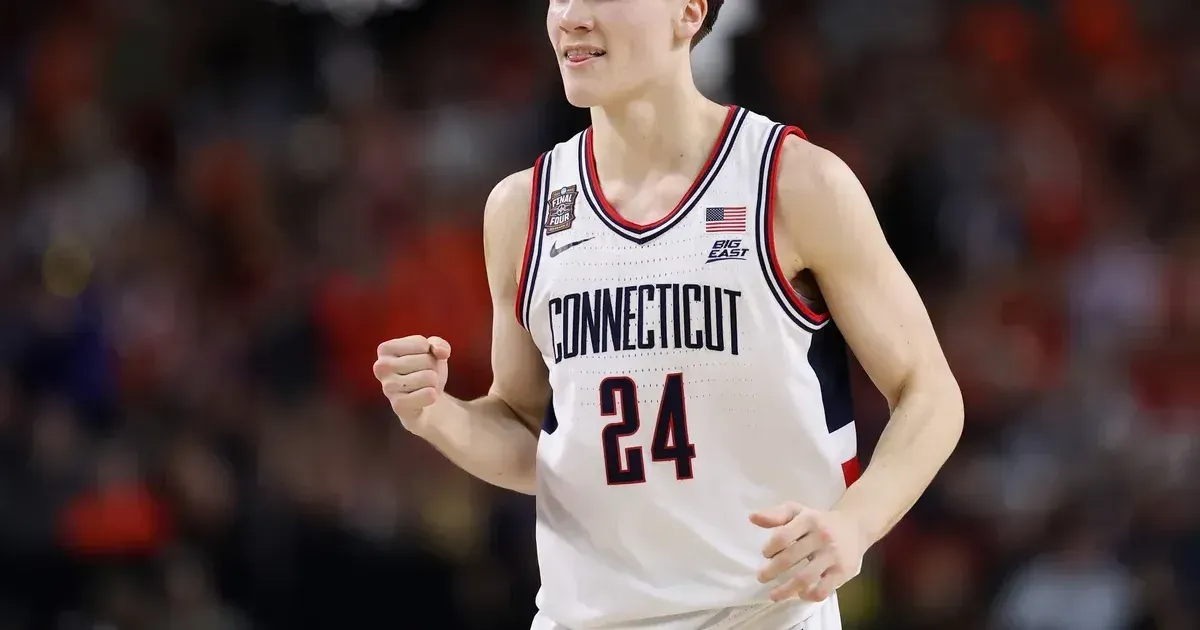
Michigan and UConn enter the title game with sharply different advantages.
The matchup turns on whether size, rebounding and interior pressure can disrupt Connecticut's system. The title game is therefore a contrast of structure and force.
Lucas Oil Stadium hosts the NCAA men's championship game on April 6, 2026, when Michigan and UConn compete for the national title. Tipoff for the final game occurs at 8:50 p.m. ET under the retractable roof of the Indianapolis venue. National broadcast rights for the event reside with TBS, TNT, and TruTV, while streaming access is provided through Max and YouTube TV.
Michigan enters the matchup as the top-seeded favorite following a season of dominance in the Big Ten conference. SportsLine models simulated the contest and currently favor the Wolverines over the Huskies. Experts observe that the physical presence of the Michigan frontcourt presents a unique challenge for the Connecticut defensive system. Statistical projections indicate a high-possession game if UConn fails to control the tempo from the opening tip. Connecticut enters this final seeking a record-breaking seventh national title. Since 1999, the Huskies program has secured six championships, a feat that establishes them as the most successful modern dynasty in college basketball. Dan Hurley has maintained this standard by recruiting versatile players who thrive in a complex offensive scheme. Winning tonight would move the Huskies into a tie for the third-most championships in the history of the sport.
Michigan Size Tests Connecticut Defensive Discipline
Tactic-heavy preparations defined the lead-up to this contest as coaches analyzed the interior mismatch. Tarris Reed Jr. is the focal point for the Michigan offense, using his size to generate second-chance opportunities. The Guardian reports that the Huskies must prioritize discipline and patience to prevent the Wolverines from turning the game into a high-scoring shootout. Success for Connecticut depends on executing off-ball actions with precision while forcing Michigan to defend for the entire duration of the shot clock.
Stopping the Wolverines requires more than interior strength. Perimeter defense will determine whether the Huskies can weather the initial Michigan surge. UConn players must make timely three-pointers to stretch the floor and pull the Michigan big men away from the basket. Transition defense also remains a critical factor, as Michigan excels at converting turnovers into fast-break points.
Previous tournament rounds showed that Michigan thrives when it dominates the rebounding margin. Its ability to control the glass often dictates the outcome of its games. If Connecticut permits repeated offensive rebounds, its chances of an upset diminish rapidly. Coaches at UConn have emphasized boxing out and collective rebounding efforts during recent practice sessions.
Dan Hurley Pursues Seventh Title for Huskies
Program culture has been a defining characteristic of the Connecticut resurgence under the current coaching staff. Dan Hurley built this roster on the premise of overcoming unlikely odds and maintaining a chip-on-the-shoulder mentality. This approach has yielded consistent results in March, with the team displaying striking composure during high-pressure situations. This championship matchup builds on the extensive coverage featured in our analysis of how Michigan and UConn arrived at the final.
Hurley's philosophy centers on relentless movement and a shared scoring load. No single player carries the entire offensive burden, making the Huskies difficult to scout and defend. Defenders often lose track of shooters during the complex series of screens and hand-offs that defines the Connecticut system. This offensive fluidity has dismantled higher-seeded opponents throughout the tournament.
Resilience despite size disadvantages defines the identity of this Huskies squad. While they lack the seven-footers found on the Michigan roster, they compensate with speed and basketball intelligence. Financial investment in the program has also surged, with boosters providing the resources necessary to keep Hurley and his staff in Storrs. The payoff for that investment is a second consecutive trip to the national title game.
Tarris Reed Jr Anchors Wolverines Title Ambitions
Michigan centers its championship hopes on the development of its interior talent. Tarris Reed Jr. has evolved into one of the most efficient post scorers in the country, drawing double-teams that open up shots for his teammates. His defensive presence is equally important, as he averages multiple blocks per game and alters numerous shots at the rim.
Scouts from the NBA have flocked to Indianapolis to observe how Reed handles the Connecticut system. The Huskies will likely employ a variety of defensive looks, including hard hedges and occasional zone traps, to disrupt his rhythm. Reed must stay out of foul trouble for Michigan to maintain their advantage in the paint. His absence from the floor during the middle of the second half could provide UConn with the opening they need.
Guards for the Wolverines must also provide consistent scoring to balance the inside-out attack. If the Husky defense collapses on the post, Michigan shooters must capitalize on open looks from the corners. The team has shot over 40 percent from beyond the arc during this tournament run, providing the necessary spacing for their big men to operate. Efficiency in the mid-range will also be a factor against a Connecticut defense that specializes in taking away the three-point line.
Lucas Oil Stadium Preparation and Viewing Logistics
Indianapolis has transformed into a basketball hub since Selection Sunday on March 15, 2026. Lucas Oil Stadium has undergone meaningful modifications to accommodate the elevated court and large seating banks required for the Final Four. Capacity for the event exceeds 70,000 spectators, with tickets on the secondary market reaching four-figure prices. Local businesses report a meaningful increase in revenue as fans from Michigan and Connecticut flood the downtown area. Media coverage of the championship has reached a saturation point. Networks including TBS and TNT have deployed hundreds of staff members to manage the technical requirements of the broadcast. For viewers without cable, the game is accessible through DirecTV and various streaming platforms. The 8:50 p.m. start time ensures a primetime audience across both the United States and the United Kingdom.
Logistical challenges have been managed through a coordinated effort between the NCAA and local law enforcement. Security around the stadium is tight, with multiple checkpoints for fans entering the venue. Despite the crowds, the city has maintained a smooth flow of traffic and public transportation. This championship concludes a tournament that began with the First Four in Dayton and progressed through various regional sites.
Title Game Matchup
Basketball at this elite level rewards physical coercion over tactical fluidity. While the media often celebrates the complex systems deployed by Dan Hurley, the reality on the court is far more brutal. Michigan possesses a size advantage that cannot be schemed away by clever off-ball movement or emotional motivation. The Wolverines occupy space in a way that limits high-percentage looks for the smaller Connecticut guards, forcing them into contested mid-range jumpers.
The Huskies rely on a precision that often breaks under the weight of a physical 40-minute struggle. If the referees permit a physical contest, Tarris Reed Jr. will dominate the interior, rendering the UConn defensive rotations irrelevant. Systems are designed for regular-season consistency, but titles are won through the sheer imposition of will in the paint. Connecticut's dynasty feels fragile when confronted with a team that has both the length and the discipline to ignore their offensive distractions.