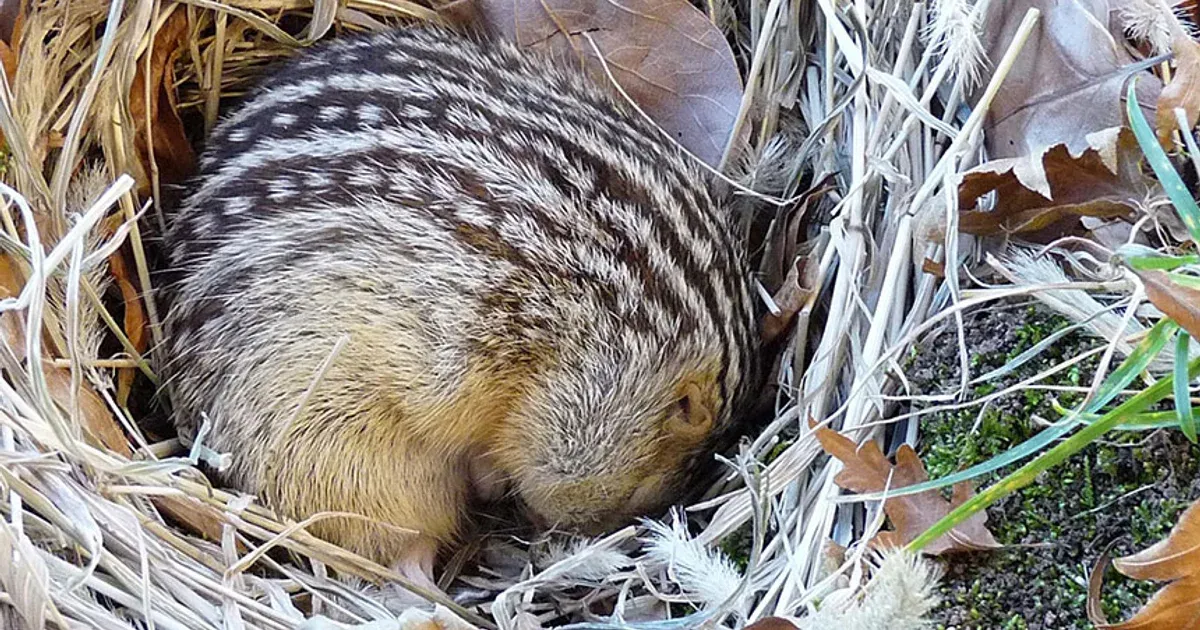
Hibernating ground squirrels are giving scientists a sharper view of how gut microbes can keep an animal alive through months without food.
Subterranean Survival Strategies
Thirteen-lined ground squirrels vanish beneath the frost each November. These rodents descend into a state of torpor, dropping their heart rates and body temperatures to levels that would kill most other mammals. Survival for half the year depends on biological frugality. By March 12, 2026, the squirrel study had drawn attention beyond wildlife biology. While many researchers focused on fat reserves as the primary fuel for these animals, a deeper mystery remained regarding their basic chemical architecture. Carbon serves as the skeletal framework for every protein and nucleic acid in the body, yet hibernating squirrels stop consuming it entirely for months at a time. Respiration continues to bleed carbon out of their systems in the form of carbon dioxide, creating a deficit that should, in theory, lead to catastrophic muscle wasting and organ failure. The study begins with survival under scarcity.
Metabolic resilience in these creatures is not just a matter of burning fat. Biologists at the University of Wisconsin-Madison have identified a working partnership between the squirrels and their gut residents. These tiny microbes run a chemical recycling process that helps keep the host animal intact during the long winter. Without this intervention, the nitrogen and carbon lost through daily maintenance would never be recovered, leaving the squirrel too weak to emerge in the spring. Scientists utilized isotope labeling to track the movement of specific atoms through the squirrel's system. They found that bacteria in the digestive tract catch urea, a waste product that typically exits through urine, and break it down into usable components.
Nitrogen and carbon molecules liberated by these bacteria travel back through the gut wall and into the squirrel's bloodstream. Such a recycling program ensures that the animal can build and repair tissues even while trapped in a frozen burrow. Most mammals would succumb to muscle atrophy under similar conditions of prolonged fasting. Over time, these squirrels have developed a circular economy of nutrients. The math of their survival becomes easier to explain. By leaning on their internal flora, these animals bypass the traditional rules of nutrition that govern humans and other non-hibernators.
The Carbon Deficit Crisis
Carbon loss is an inescapable consequence of being alive. Every breath out releases carbon dioxide, which means every animal is constantly shedding its building blocks. When a squirrel eats, it replaces this lost carbon. But during hibernation, the intake stops. Still, the heart keeps beating and the brain continues to function at a minimal level. Previous assumptions suggested that the animal simply lived off its own tissues until they were depleted. New data indicates the process is far more sophisticated. The gut microbiome acts as a miniature processing plant, salvaging what would otherwise be discarded as waste. This cycle allows the squirrel to maintain its protein levels despite the lack of external food sources.
Researchers observed that the diversity of the gut microbiome shifts dramatically as the seasons change. Bacteria capable of processing urea become more prominent during the winter months. This shift is not accidental. It appears the squirrel's body prepares the environment for these specific microbes, ensuring they have the space to operate when the fast begins. The relationship is symbiotic in the truest sense. The squirrel provides a stable, though cold, environment, and the microbes provide the essential chemical recycling services that keep the host alive. If the microbes were removed, the squirrel would likely die from a lack of nitrogen and carbon before the spring thaw could save it.
Muscle maintenance during inactivity remains a major target for medical science. Humans who spend long periods in bed or in low-gravity environments suffer from rapid muscle loss. Ground squirrels do not. Even after months of stillness, they emerge from their burrows with their muscle mass largely intact. Scientists believe that the urea nitrogen salvaging process is the primary reason for this physical preservation. By capturing nitrogen and carbon from urea, the squirrels can synthesize new amino acids. It is a precise recycling system. This metabolic mechanism could help researchers study human conditions like sarcopenia, the natural muscle loss that occurs with aging.
Extraterrestrial and Medical Implications
NASA and other space agencies have watched these developments with intense interest. Long-duration space travel presents a massive challenge regarding muscle and bone density loss. If humans could somehow mimic the microbial recycling seen in squirrels, the physical toll of a trip to Mars would be sharply reduced. Such a goal requires a deep understanding of how to manipulate the human microbiome. Current research is investigating whether specific probiotic cocktails could induce a similar nitrogen-salvaging effect in humans. While the human digestive system is vastly different from that of a ground squirrel, the fundamental chemistry remains the same. Urea is a universal waste product in mammals.
Biologists are also looking at how this research impacts our understanding of starvation. In many parts of the world, protein-energy malnutrition is a constant threat. Understanding how the body can be nudged to recycle its own waste could provide new avenues for medical intervention. Still, we are far from clinical trials. The complexity of the human gut ecosystem makes it difficult to introduce specific functions without disrupting the balance of other essential bacteria. The ground squirrel offers a simplified model of a process that is likely occurring at various scales across the animal kingdom. Nature has already solved the problems we are just beginning to define.
Data from these studies suggests that the gut is not just a tube for processing food. It is a dynamic chemical reactor that plays a role in nearly every facet of an animal's health. The traditional view of the microbiome as a passive group of passengers is dead. These bacteria are active participants in the survival of their hosts. That realization has forced a total reevaluation of hibernation physiology. Future studies will likely focus on the specific genetic triggers that allow the squirrel and its microbes to begin this recycling process in synchronization with the seasons.
The squirrels stay hidden for now.
Winter is their testing ground. Each spring, the emergence of healthy, muscular squirrels proves that their internal partners have done their job. The science of hibernation is no longer just about sleep. It is about chemistry, cooperation and the hard accounting of nutrients during months in the dark. Researchers are still mapping the process.
Biology Transfer Question
The danger now is overpromising a discovery that still belongs first to hibernation biology. A squirrel's winter metabolism is not a prescription pad for astronauts, older patients or people facing starvation. Turning this mechanism into medicine will require proof that the human gut can be pushed in the same direction without creating a different set of harms. Still, the finding is too useful to treat as a curiosity. It shows that survival is not only written in the animal's own tissue but also in the microbes it carries into the dark. Medicine has spent years talking about the microbiome in vague wellness language. This research is a reminder that the real value is harder, narrower and more demanding: chemistry that can be measured, tested and either proved or discarded.