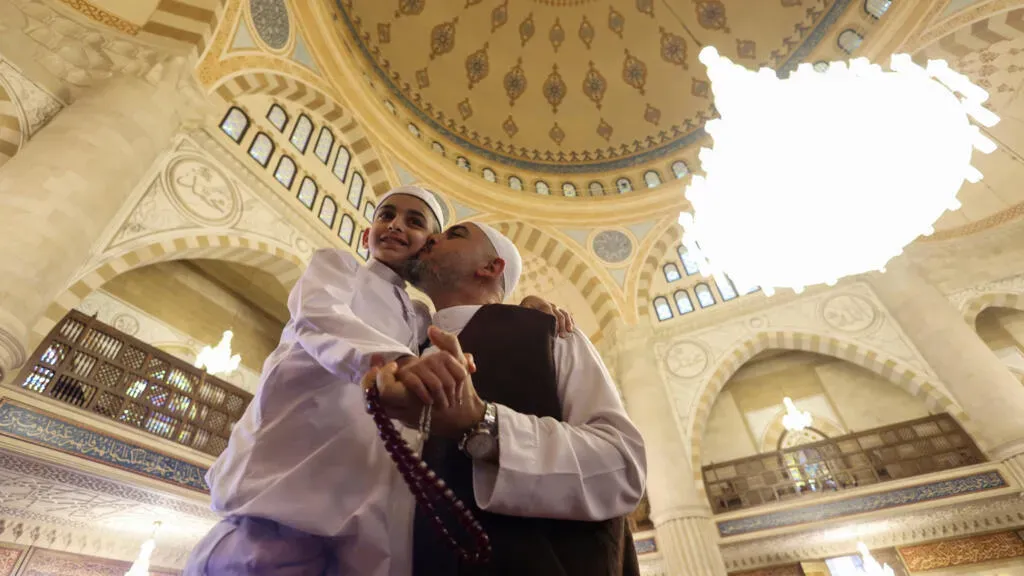
Families across the Middle East gathered to observe Eid al-Fitr while military operations in Iran and Lebanon reshaped the traditional religious holiday. Congregations met in scarred mosques and makeshift shelters to mark the end of Ramadan. This religious milestone usually features lavish feasts and new clothes for children. Instead, the US-Israeli war on Iran dominated the communal psyche. Beirut residents woke to the sound of distant shelling rather than celebratory music. the holiday had become another measure of how deeply the war was cutting into civilian life. Worshippers in the Lebanese capital moved quickly through morning prayers. Security concerns forced many to abandon large public squares for the relative safety of smaller, neighborhood prayer halls. Reports from local media indicate that public attendance dropped greatly compared to previous years. Fear of aerial strikes kept many families indoors. Tehran saw a similar contraction of public festivity. Iranian authorities restricted large gatherings in central districts. Military hardware remained visible near major intersections throughout the city. Most families opted for private meals. They shared modest portions of traditional sweets while monitoring news broadcasts for updates on the regional escalation. War has fundamentally changed the social fabric of the holiday.
Economic Strain and Displacement in Lebanon
Lebanon faces a dual crisis of military aggression and financial ruin. Prices for basic foodstuffs like flour and sugar have tripled over the last twelve months. For instance, the cost of a traditional Eid meal now exceeds the monthly salary of an average civil servant. Many parents could not afford to buy new clothes for their children this year. They relied on charitable donations or second-hand markets instead.
Displacement has complicated the religious observation further. Thousands of families from southern border regions spent the holiday in schools or tent cities in the north. These makeshift camps lacked the facilities for traditional Eid preparations. Crowded conditions made communal cooking nearly impossible. Charities struggled to provide even basic rations to the growing number of internal refugees. Relief agencies reported a major shortfall in funding for holiday food parcels. But the spirit of communal support persisted in these camps. Neighbors shared what little they had. Even so, the atmosphere remained somber. Older generations recounted stories of past celebrations to children who have known only instability. These narratives serve as the only link to a more stable cultural history. Memory has become a form of resistance.
Iranian Cities Mark Eid Under Aerial Threat
Religious leaders in Iran called for perseverance during their sermons. They emphasized the spiritual rewards of fasting under duress. Meanwhile, the pragmatic realities of life in a combat zone dictated the day. Air raid sirens occasionally interrupted the call to prayer in border provinces. Civilians have learned to distinguish between different types of outgoing and incoming fire. This grim expertise is now a part of daily life.
Marketplaces in Isfahan and Shiraz remained largely empty. Shopkeepers who normally see their highest profits during the final week of Ramadan reported record lows in sales. People are hoarding cash for emergencies. In fact, the local currency has hit new lows against the dollar since the start of the current offensive. Economic survival has taken precedence over cultural ritual. Most vendors closed their stalls by midday.
Military patrols in Tehran remained on high alert throughout the morning. To that end, the government suspended some public transport routes to prevent large crowds from forming at major transit hubs. Security forces searched worshippers entering the main mosques. These measures were intended to prevent sabotage or targeted strikes during the high-profile religious event. The presence of armed guards at the mosque doors redefined the experience of sanctuary.
Gaza Humanitarian Crisis Stifles Traditional Feast
Conditions in Gaza reached a new nadir during the 2026 holiday. Years of siege and the current intensity of the US-Israeli conflict have left the infrastructure in ruins. Families prayed in the rubble of their former homes. Most mosques in the northern districts are no longer standing. They used plastic mats spread over broken concrete to create prayer spaces. Rain during the early hours made the environment even more challenging for the elderly.
Food insecurity is the primary concern for every household in the strip. Traditional desserts like maamoul are nonexistent due to the lack of dates and nuts. Families instead shared meager portions of canned goods provided by international aid convoys. According to humanitarian workers, the caloric intake for most Gazans remains well below the minimum requirement. Malnutrition has turned a day of feasting into a day of basic survival. Children played with toys fashioned from scrap metal and discarded wire.
Separately, medical facilities reported an influx of patients suffering from stress-related illnesses. The constant hum of drones overhead provided a persistent backdrop to the religious chants. Hospitals struggled to maintain power for essential equipment. Doctors noted that the psychological toll on the population is immeasurable. People no longer ask when the war will end. They ask if they will survive the next hour.
Why Eid Became a Measure of Civilian Cost
If a society cannot pause its slaughter to allow a child to eat a piece of candy in peace, that society has lost its moral compass entirely. The silence of the world is the loudest sound of all. war changes public ritual before it changes official calendars. Eid can still be observed, but its civic meaning changes when families are mourning, displaced or worried about what the next escalation will cost.