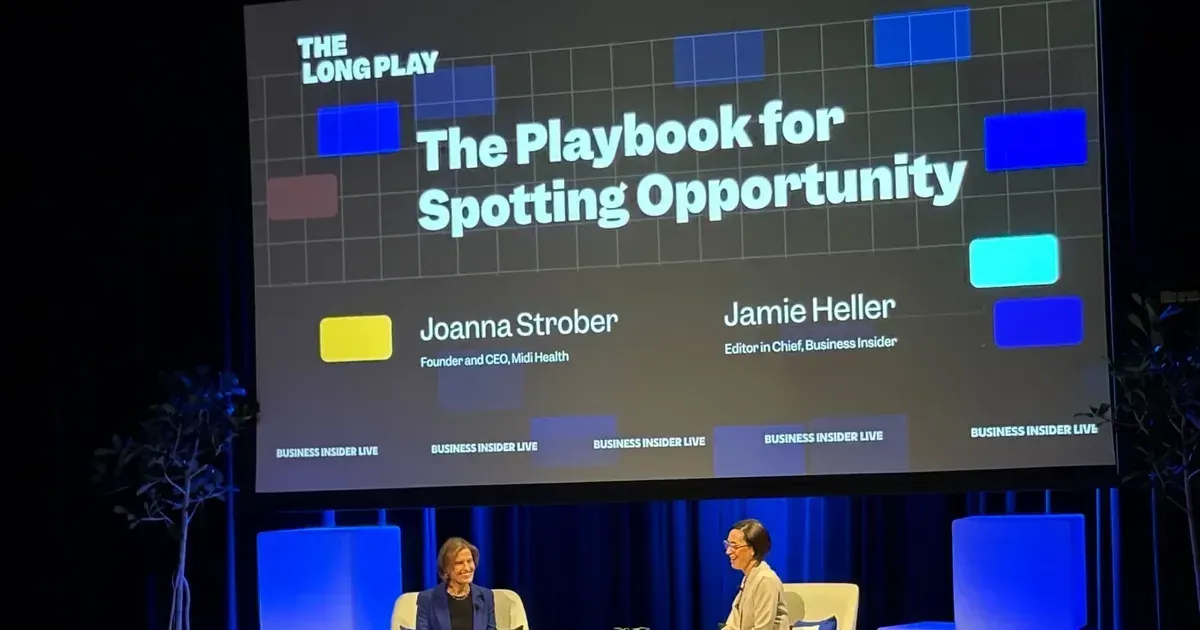
Midi Health and Blumhouse offered two very different examples of how companies are trying to use artificial intelligence for growth. One case centered on scaling virtual care for women in midlife. The other involved a horror studio testing tools that can accelerate creative work while raising concerns among artists and audiences.
The April 15, 2026, discussion stood out because it avoided a single AI narrative. For Midi Health, automation is tied to clinical workflow, patient access, and the economics of care delivery. For Blumhouse, AI touches story development, production experiments, and the trust between creators and viewers.
Those differences matter. A health care company using AI to triage needs or support clinicians faces questions about safety and oversight. A film studio using AI faces questions about originality, labor, and whether audiences will accept machine-assisted creative choices.
Health Care AI Solves a Scale Problem
Midi Health's growth story is built around demand. Virtual care for menopause and related conditions can reach patients who struggle to find specialized providers locally. If the company wants to serve more patients without lowering quality, it needs systems that help clinicians handle routine tasks efficiently.
AI can support intake, symptom tracking, follow-up reminders, and documentation. Those uses are not glamorous, but they can reduce administrative drag. In health care, the strongest AI products may be the ones that make clinicians faster without replacing medical judgment.
The risk is overconfidence. Patients need to know when they are interacting with automated systems, how their data is protected, and when a licensed clinician is making the final call. Scaling care only works if trust scales with it.
Blumhouse Faces a Creative Trust Test
Blumhouse faces a different challenge. Horror depends on timing, surprise, atmosphere, and a sense that a human mind understands fear. AI tools may help generate concepts, visualize scenes, or test marketing material, but they can also make work feel generic if used without discipline.
The studio's interest reflects a broader entertainment trend. Production companies are exploring AI because budgets are tight and content demand remains high. Faster workflows are tempting, especially for preproduction and marketing. The cultural cost, however, can be high if writers, actors, or designers feel displaced.
Audience trust is also fragile. Viewers may accept AI as a tool if the final work still feels authored. They may reject it if the technology becomes the selling point or if it appears to replace the craft that gives a film its identity.
AI Growth Depends on Boundaries
The shared lesson is that AI strategy needs boundaries. Midi Health must protect clinical responsibility and patient data. Blumhouse must protect creative authorship and labor relationships. In both cases, growth comes from using tools where they improve work, not from treating AI as a brand label.
Investors often reward companies that can describe an AI advantage, but the long-term test is operational. Does the tool reduce wait times, improve care, save production time, protect review standards, or help teams make better decisions? If the answer is vague, the pivot risks becoming marketing.
Midi Health and Blumhouse show why AI adoption cannot be judged in one category. In health care, the stakes are safety and access. In entertainment, they are craft and credibility. Both industries may use similar technology, but success depends on whether humans remain responsible for the outcome.
That responsibility should be visible in product design. In health care, patients should know when automation is collecting information and when a clinician is making a decision. In film, audiences and workers need confidence that AI is supporting craft rather than replacing the people whose taste gives a project its character. The companies that explain those boundaries clearly will have a better chance of turning AI from a public-relations risk into a durable operating advantage.
The comparison also shows why investors should ask different questions in different sectors. In health care, the key measure is whether AI improves access, accuracy, documentation, and follow-up without weakening patient safety. In entertainment, the measure is whether tools help creative teams move faster while preserving taste, authorship, and labor trust. A single claim that a company is "AI-powered" does not answer either question. Midi Health and Blumhouse may both use generative tools, but their success will depend on governance, disclosure, and whether the people closest to the work believe the tools make the final product better.
The strongest companies will probably avoid treating AI as a replacement story. In both medicine and entertainment, the better pitch is that the technology removes bottlenecks so trained people can focus on judgment. That pitch is easier to believe when companies disclose where AI is used, measure outcomes, and keep humans accountable for decisions that affect patients, workers, or audiences. That is the difference between adoption and credibility. Without that proof, the pivot remains more slogan than strategy. The next funding round or release slate will test that claim.