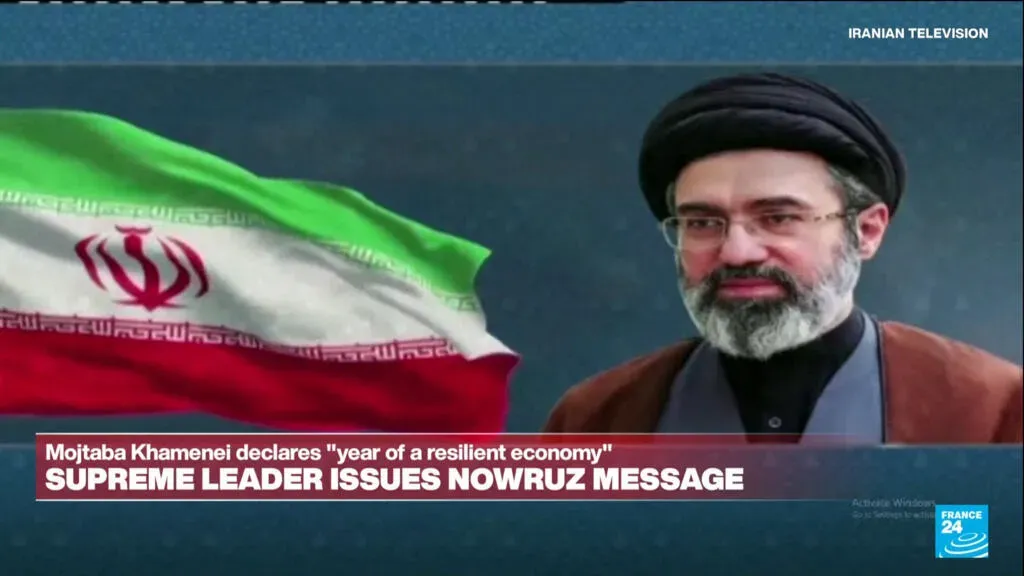
Mojtaba Khamenei issued a written Nowruz message asserting that the Islamic Republic has defeated its enemies despite ongoing US and Israeli military strikes. This pronouncement arrived as the nation marked its first wartime spring equinox in several decades. Broadcasters on state-run television read the statement aloud while viewers waited for a visual appearance that never materialized. Silence from the seat of power creates a vacuum of visual authority. State media outlets presented the written text as a definitive sign of regime resilience. The younger Khamenei has not appeared in public since he assumed the role of Supreme Leader after the death of his father. Military analysts in Washington and London have noted this continued absence with growing curiosity. Written communications allow the clerical establishment to maintain a facade of stability without exposing the new leader to the risks of live appearances or potential assassination attempts.
Meanwhile, the capital city of Tehran is still a theater of contradictions. Families gathered for the traditional Haft-sin table setting even as air raid sirens echoed across the Alborz mountains. Residents exchanged new year wishes in the shadow of anti-aircraft fire. Many citizens expressed a weary determination to maintain cultural traditions regardless of the geopolitical firestorm surrounding the country. Persian culture often acts as a shield against the volatility of its political systems.
Mojtaba Khamenei Maintains Silence During Military Conflict
Mojtaba Khamenei is still a ghost within his own government. Since taking the oath of office, the 56-year-old cleric has avoided the cameras that defined his father’s long tenure. France 24 reported on Friday that his Nowruz message lacked the traditional video component that usually accompanies such high-profile holidays. This departure from protocol suggests either a high-security lockdown or a leader who lacks the oratorical confidence of his predecessor.
In fact, the war against the US and Israel has forced the entire top tier of the Islamic Revolutionary Guard Corps into deep bunkers. Security protocols have tightened greatly since the precision strikes that eliminated the previous Supreme Leader. While Al Jazeera noted that the message claimed victory, the lack of a face to match the voice has fueled rumors regarding Mojtaba's physical health or actual location. Power in Iran has always relied on the visible presence of the patriarch. Removing that presence changes the psychological relationship between the state and its subjects.
Still, the clerical apparatus continues to function through bureaucracy and recorded directives. Institutional momentum allows the government to project strength even when the individual at the top is invisible. By contrast, the previous administration favored long, televised sermons to rally the faithful. The transition to written edicts marks a shift toward a more insular and perhaps more fragile leadership structure.
Tehran Residents Celebrate During US and Israeli Strikes
Tradition persists even when the sky glows with the fire of interception. Iranians celebrated the arrival of 1405 on the Persian calendar by crowding into local markets to buy goldfish and sprouts. These acts of normalcy are deliberate. For one, the domestic population has become accustomed to the rhythmic nature of modern aerial warfare. People shop for sweets while news tickers describe the latest drone incursions on the periphery of the city.
Separately, the economic toll of the conflict has made the holiday's traditional gift-giving more difficult for the average family. Sanctions and the cost of the war effort have depleted the savings of the middle class. Yet the desire to mark the equinox is still a unifying force across the 85 million people living within the borders. It is a moment where the ancient identity of the nation outweighs the immediate anxieties of the Islamic Republic.
Reports from Al Jazeera describe Tehran residents exchanging greetings as the spring sun rose over the city. Many of these citizens are less interested in the Supreme Leader's claims of victory than they are in the price of meat and fuel. But the state insists on linking the holiday to its military narrative. Officials use the celebration to frame the current hardship as a necessary sacrifice for national sovereignty.
Iranian State Media Broadcasts Claims of Victory
Nationalist rhetoric dominated the airwaves throughout the day. Presenters on IRIB, the state broadcaster, spent hours deconstructing the written message from Mojtaba Khamenei. They emphasized his use of the word defeated to describe the Western coalition. To that end, the media strategy focuses on internal cohesion by projecting an image of an enemy in retreat. This narrative often contradicts the reality of damaged infrastructure and supply chain disruptions.
In turn, independent observers have questioned the validity of these victory claims. Intelligence reports from Western sources suggest that the Iranian air defense network has suffered substantial losses in recent weeks. Even so, the domestic news cycle remains tightly controlled. By framing the war as a successful defense, the regime hopes to prevent the kind of civil unrest that followed previous economic crises. Control of the narrative is just as important as control of the airspace.
One might argue that the written message is a calculated move to project calm. A recorded video could reveal signs of stress or exhaustion in the new leader. Written words are clinical and unchanging. They provide a baseline of policy without the vulnerability of human emotion. Coldness is becoming the hallmark of the Mojtaba era.
Regime Continuity and the Shadow of Ali Khamenei
Ali Khamenei’s death left a void that his son is struggling to fill with paper and ink. The late leader was a fixture of Iranian life for over three decades. His voice was the soundtrack to the revolution’s survival. Mojtaba, by comparison, is an enigma to the majority of the youth who now make up the bulk of the population. They see a name they recognize but a man they do not know. The lack of personal connection could prove dangerous if the war effort falters further. Mojtaba Khamenei's wartime Nowruz message is aimed at loyalty as much as victory. In a conflict, claims of strength often reveal where legitimacy feels most exposed.