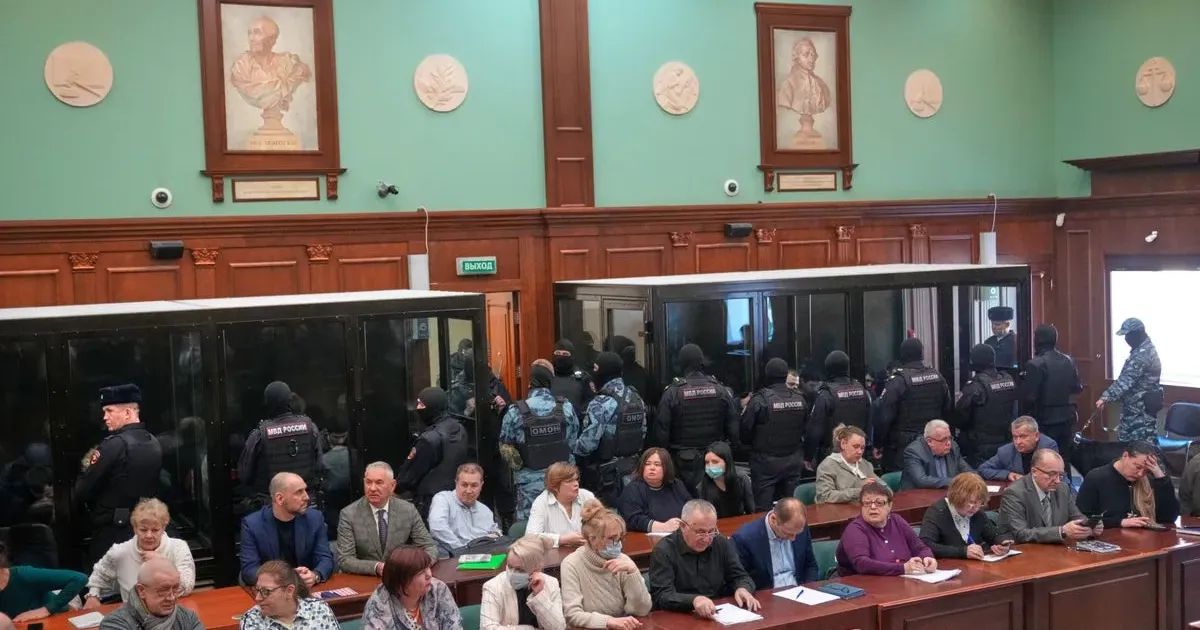
Justice Rendered in a High-Security Moscow Enclosure

Inside the sterile, glass-walled enclosures of a high-security Moscow courtroom, the legal reckoning for the deadliest terror attack on Russian soil in two decades reached its conclusion. Judges handed down convictions for 19 individuals involved in the March 2024 massacre at the Crocus City Hall concert venue. The proceedings, which have lasted nearly two years, culminated in life sentences for the primary gunmen and lengthy prison terms for a network of facilitators and accomplices. Official records confirm that the assault claimed 149 lives and left more than 600 people with varying degrees of physical and psychological trauma. Nineteen defendants stood before the bench to hear their fates as a heavy police presence cordoned off the surrounding streets. Four men identified as the primary shooters, all citizens of Tajikistan, received the maximum sentence of life imprisonment. Prosecutors successfully argued that these individuals acted with premeditated cruelty, opening fire on civilians attending a concert by the rock band Picnic before setting the massive entertainment complex ablaze. The remaining 15 defendants, accused of providing logistical support, financing, and transport for the attackers, received sentences ranging from 12 to 25 years in high-security penal colonies.

Brutality and the Narrative of Blame

Memories of the initial arrests remain vivid for those who followed the case from its bloody inception. During the early hearings in 2024, the suspects appeared in court with visible signs of physical abuse, including facial swelling, bandages, and, in one instance, a defendant being wheeled in on a stretcher while barely conscious. While the Kremlin remained silent on allegations of torture during interrogation, international human rights groups voiced concerns that the brutality of the arrests might compromise the integrity of the evidence. Still, the Russian public, gripped by a desire for retribution, largely ignored these procedural irregularities. Security failures continue to haunt the official narrative of the event. Just weeks before the shooting, the United States embassy in Moscow issued a public warning that extremists were planning an imminent attack on large gatherings in the Russian capital. President Vladimir Putin dismissed these warnings at the time, characterizing them as Western attempts to destabilize Russian society. This ruling is final legal seal on the tragedy, yet it does little to address the Intelligence gaps that allowed the attackers to operate with such impunity for nearly an hour inside the burning venue.

Divergent Accounts of Responsibility

Discrepancies between Russian state claims and international intelligence reports defined the trial process. Although the Islamic State-Khorasan (ISIS-K) repeatedly claimed responsibility and released graphic bodycam footage of the slaughter, Russian officials spent months attempting to link the operation to Ukrainian intelligence services. Investigators presented testimony during the trial claiming the suspects were headed toward the Ukrainian border to collect a reward. Kiev denied any involvement, and Western officials maintained that the evidence pointed exclusively to Islamic extremists. This conviction validates the state's timeline but fails to reconcile why a group ostensibly motivated by religious extremism would seek sanctuary in a predominantly Christian nation currently at war with Russia. Evidence presented during the closing arguments detailed a sophisticated recruitment process conducted via encrypted messaging apps. Prosecutors described how the primary suspects, working as low-wage laborers in Russia, were radicalized over a period of months. They were allegedly promised several thousand dollars to carry out the massacre, a sum that highlighted the economic desperation often exploited by extremist recruiters in Central Asia. The court heard that the logistics team secured the weapons, rented the getaway vehicle, and rented an apartment that served as a staging ground for the final assault.

The Human Toll and National Security

Survivors and families of the deceased occupied the front rows of the gallery, many wearing black as the judge read the names of the 149 victims. Each name served as a grim count of the failure of the domestic security apparatus. Victims died from gunshot wounds, but a significant number perished from smoke inhalation after the gunmen used gasoline to ignite the auditorium's seating and curtains. The structural collapse of the roof during the height of the fire complicated recovery efforts and led to a multi-day search for remains. This legal outcome provides a sense of closure for some, though many survivors expressed frustration that the trial focused heavily on the foot soldiers rather than the high-level architects of the plot. Russian authorities have used the convictions to justify a broader crackdown on migration from former Soviet republics. In the months following the attack, police conducted thousands of raids on dormitories and construction sites housing Central Asian workers. These actions have strained diplomatic relations with Tajikistan and Kyrgyzstan, as thousands of their citizens face deportation or increased harassment. Security experts suggest that while the 19 convictions remove a specific cell from operation, the underlying conditions that allowed for such radicalization remain unaddressed in the sprawling suburbs of Moscow.

Long-Term Geopolitical Repercussions

Global security analysts view the Crocus City Hall trial as a reflection of Russia's shifting domestic priorities. With the bulk of the Federal Security Service (FSB) focused on internal dissent and the ongoing conflict in Ukraine, the traditional threat of Islamist terrorism appears to have slipped through the cracks. The court emphasized the severity of the sentences as a deterrent to future extremist activity. Yet, the persistence of the ISIS-K threat in the region suggests that the threat remains potent, particularly as the group seeks to capitalize on Russia's military involvement in the Middle East and Africa. Life in the penal colonies for the 19 convicted men will likely be characterized by extreme isolation. Russian life sentences for terrorism usually involve placement in specialized prisons like the Black Dolphin or the Polar Owl, where inmates are subjected to 24-hour surveillance and restricted movement. The facilitators will serve their time in general or strict-regime colonies, where the Russian state exerts total control over communication and labor. As the doors of the courtroom closed for the final time, the legal chapter of the Crocus City Hall tragedy ended, leaving a scarred nation to grapple with the reality of its own vulnerability.

The Elite Tribune Perspective

Justice in a Russian courtroom is a theatrical production designed to reassure a terrified public while shielding a negligent state from accountability. While the convictions of 19 individuals for the Crocus City Hall massacre may satisfy the public's thirst for vengeance, the trial was a missed opportunity for transparency. By ignoring the documented torture of suspects and doubling down on a shaky Ukrainian connection, the Kremlin has prioritized propaganda over a genuine investigation into its own catastrophic intelligence failures. The 149 people who died deserved a trial that exposed how an extremist cell could operate in the heart of the capital for an hour without intervention. Instead, they received a choreographed display of state power that punishes the perpetrators without admitting to the systemic incompetence that allowed them to succeed. That verdict will be used as a blunt instrument to further marginalize migrant communities, a move that will likely fuel the very radicalization the state claims to be fighting. True security is not found in the brutalization of suspects or the fabrication of political narratives, but in the honest appraisal of national defense gaps. In today's Russia, that honesty remains the rarest of commodities.