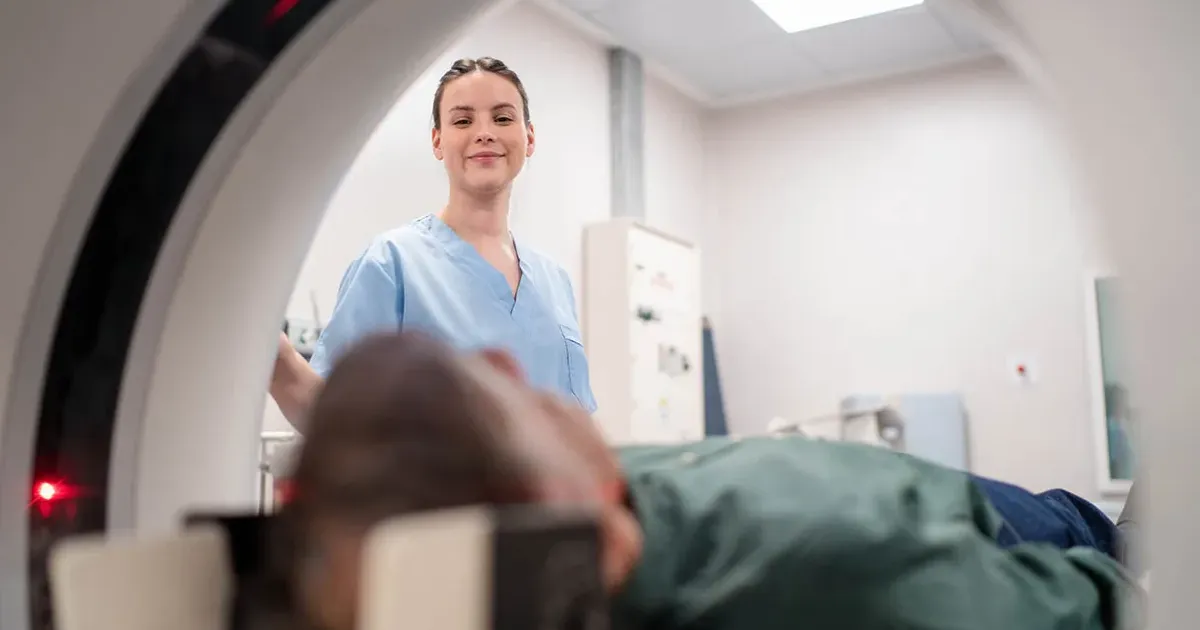
Two cardiac MRI studies published in March 2026 improved how researchers measured the moving heart, but neither showed that patients were diagnosed earlier or lived longer. One Cedars-Sinai project estimated how much oxygen the heart consumes. A separate study from Zhongshan Hospital of Fudan University in Shanghai tested an AI-reconstructed cine sequence in people with suspected arrhythmia.
The distinction matters because the original findings concern measurement and image acquisition. They do not establish a new heart-failure screening test, an emergency diagnosis in minutes or a treatment that changes clinical outcomes. Combining the two projects into one diagnostic system also obscures their different methods, institutions and patient groups.
The Cedars-Sinai Method Estimated Whole-Heart Oxygen Use
Heart muscle requires a continuous supply of oxygen to do mechanical work. Researchers can estimate myocardial oxygen consumption by measuring blood flow and comparing oxygen content before and after blood passes through the heart. The invasive reference method samples blood from the coronary sinus, the large vein that drains the heart muscle.
The Cedars-Sinai team developed a motion-resolved MRI approach to estimate oxygen saturation in the coronary sinus without a catheter, contrast agent or ionizing radiation. The sequence was designed to handle heartbeat and breathing motion and to produce a whole-heart oxygen-extraction measurement within about three minutes.
Development included computer simulations and experiments in pigs. The team then combined the oxygen measurement with other clinical MRI sequences to estimate myocardial oxygen consumption and efficiency in patients with and without heart failure following myocardial infarction at one institution. The journal's editor summary says direct accuracy was checked in three people who underwent both MRI and invasive cardiac blood sampling.
That is a proof of measurement, not a prospective test of early heart-failure detection. The study compared metabolic measures among selected participants; it did not enroll an asymptomatic screening population and follow them to see who developed heart failure. It did not report sensitivity, specificity or a diagnostic threshold for deciding that an individual patient has early disease.
Potential Clinical Uses Remain Hypotheses
The oxygen method could eventually help researchers study metabolic changes that conventional structural imaging does not capture. It may also provide a way to observe how a therapy affects cardiac energetics without repeated catheterization. Those uses require larger validation studies that show the measurement is reproducible across scanners, centers, rhythms and disease types.
The paper did not test whether the MRI result changed medication, prevented fibrosis, reduced hospitalization or improved survival. Statements about early diagnosis and personalized therapy were framed as potential future applications. The investigators also disclosed patents covering aspects of the imaging system, an important context for a technology that may be developed commercially.
Nor is oxygen efficiency the single primary measure by which cardiologists judge heart muscle. Heart-failure assessment can include symptoms, physical examination, blood tests, electrocardiography, echocardiography, MRI and other testing depending on the clinical question. A new metabolic measurement would add information to that process rather than replace it.
The Arrhythmia Study Tested Image Acquisition, Not Diagnosis
The second study was conducted in Shanghai and addressed a different problem. Conventional segmented cine MRI collects data over multiple heartbeats and depends on reliable electrocardiographic triggering and repeated breath-holds. Irregular rhythms can cause mistiming and motion artifacts, making chamber borders harder to measure.
Researchers enrolled 25 healthy volunteers and 45 people with suspected arrhythmia. Every participant underwent both conventional balanced steady-state free-precession cine imaging and a free-breathing, single-shot sequence reconstructed with deep-learning-enhanced compressed sensing. Three cardiovascular radiologists who were blinded to clinical information and earlier imaging assessed the results.
The single-shot sequence captured a cardiac cycle in two heartbeats and had fewer mistrigger and motion artifacts. Its reported imaging success rate was 100%, compared with 88% for the conventional sequence. Measurements of ventricular volumes and left-ventricular mass showed good-to-excellent agreement between methods. When conventional cine failed, ejection-fraction estimates from the single-shot sequence were comparable to echocardiography.
Those results support technical feasibility in a small, single-center sample. They do not show that an algorithm diagnosed an arrhythmia, staged heart failure more accurately than a cardiologist or predicted the need for a pacemaker. The study measured image quality, acquisition success and agreement between measurements. It did not compare clinical decisions or patient outcomes.
The RSNA report also noted that conventional cine produced better blood-pool contrast in some qualitative ratings, while the authors called for further optimization of contrast and artifact reduction. The study used a particular MRI setup and reconstruction framework, so multicenter testing is needed before assuming the same performance across vendors and routine practice.
Better Images Are Valuable Without Inventing Outcomes
Both projects address real limitations. A noninvasive oxygen measurement could make cardiac metabolism easier to study, and a free-breathing cine sequence could make MRI more usable for people whose rhythm or breathing complicates conventional imaging. The gains are meaningful at the level actually tested.
Neither project reported emergency-department pilots in London or New York. Neither showed diagnosis in minutes, earlier preventive treatment, more hospital throughput, lower costs or better survival. No comparison with cardiologists was performed, and no study participant was assigned treatment on the basis of either new method.
Future research should ask different questions for each technology. The oxygen method needs larger human comparison with invasive measurements, repeatability testing and prospective evidence that the metric detects disease or improves decisions. The AI-reconstructed cine sequence needs multicenter evaluation across scanners, arrhythmia types and patients unable to complete standard imaging, followed by studies of whether better acquisition changes care.
Medical imaging advances often arrive first as better measurements. That is not a weakness; it is the correct stage of development. The problem begins when a cleaner image or faster sequence is rewritten as a proven diagnosis, treatment benefit or survival gain. These studies earned a narrower conclusion: researchers measured cardiac oxygen use more practically and obtained more reliable cine images in a difficult group. The clinical consequences remain untested.