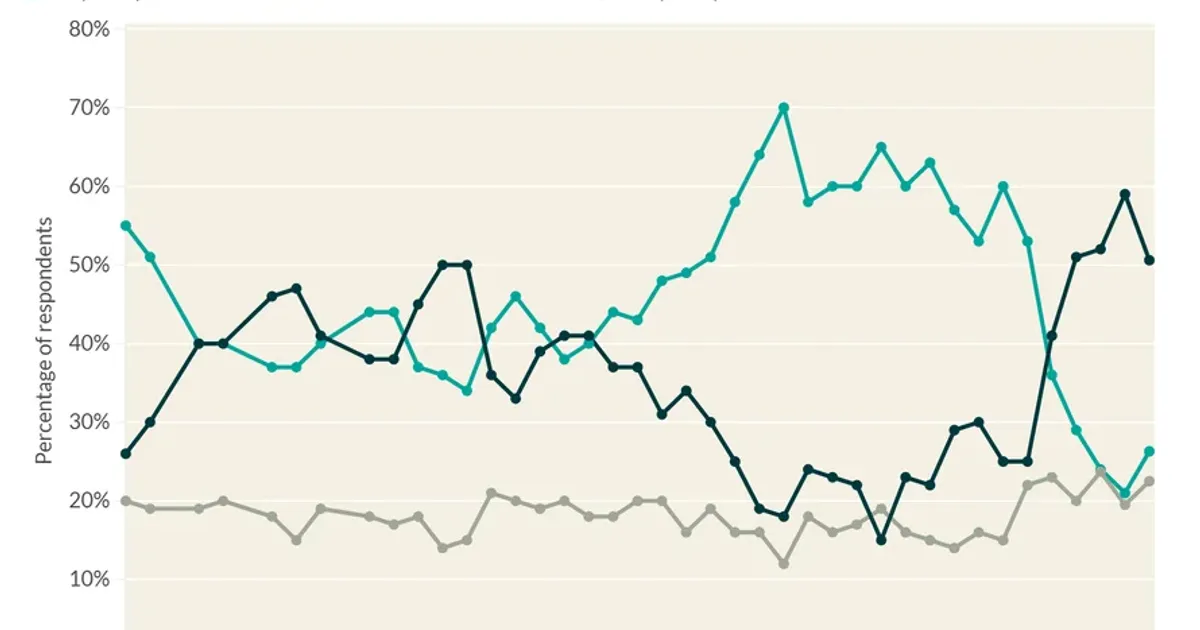
Wes Streeting hailed a minor uptick in public support for the NHS on March 25, 2026, as the health service struggled with accusations of negligence surrounding a deadly meningitis outbreak. Recent data from the British Social Attitudes survey reveals that public satisfaction with the healthcare system has climbed to 26%, up from a record low of 21% recorded in the previous year. Cabinet ministers characterized the 5% gain as a sign of stabilization after years of declining confidence. Dissatisfaction with the service fell by 8%, which is the largest single-year drop since 1998.
Patients still express deep frustration with wait times for urgent care and routine appointments. While 26% of the public now views the service favorably, more than half of the population remains dissatisfied. Overall dissatisfaction currently sits at 51% despite the recent improvement. The gap between those who value the principle of a national health service and those who are happy with its current delivery remains wide. Public sentiment has not reached these levels of volatility since the late 1990s.
Health officials noted that the rise in satisfaction occurred even as the service struggled with acute operational crises. British voters appear to be rewarding the government for incremental changes in management rather than broad clinical improvements. Only 16% of respondents believe the healthcare system will improve over the next five years. This skepticism persists despite the recent statistical gains in approval ratings.
NHS Satisfaction Metrics and Political Recovery
British voters continue to distinguish between the abstract ideal of the NHS and the reality of accessing its services. Satisfaction with the quality of care remains stalled at 50%, suggesting that half of all interactions with the service leave patients feeling underserved. Political analysts suggest that the rise in overall satisfaction may stem from a cooling of the labor disputes that previously paralyzed hospital operations. Fewer strikes and a more stable workforce have likely colored public perception more than actual wait-time reductions.
Hospital care and general practitioner services remain the strongest components of the system, scoring 37% and 36% satisfaction respectively. These figures are historically low, but they dwarf the public opinion of dentistry and emergency departments. Only 22% of voters expressed satisfaction with A&E services. Dental care continues to be a primary driver of public anger as private costs rise and public access shrinks. The lack of available appointments in high-poverty regions has created a two-tier system for oral health.
Social care remains the least popular branch of the public infrastructure. Satisfaction with social care services has bottomed out at 14%. Policy experts suggest that the failure to integrate social care with hospital discharge programs is the primary cause of A&E congestion. Without a functional exit route for elderly patients, hospital beds remain occupied by those who no longer require acute clinical intervention. Funding for these services has failed to keep pace with the aging demographic of the United Kingdom.
Clinical Failures During Meningitis Outbreak
Management teams within the NHS are currently defending their response to a meningitis outbreak that was not disclosed to the public for 48 hours. Experts have condemned the delay as a failure of clinical governance that may have compromised patient safety. Early identification of meningitis is critical because the infection can cause permanent brain damage or death within hours. The decision to withhold information from the public suggests a culture of secrecy that contradicts government promises of transparency.
Experts say the wait was indefensible and possibly delayed identification of the outbreak.
Public health officials argue that the two-day delay allowed for internal verification of the data before causing mass alarm. Clinicians outside the government disagree, stating that the public should have been notified as soon as a cluster of cases was confirmed. Delayed warnings prevent general practitioners from looking for specific symptoms in their patients. Faster communication could have led to earlier antibiotic treatment for those in the affected regions. The incident has cast a shadow over the positive satisfaction data released earlier in the day.
Internal memos suggest that hospital administrators were hesitant to release information during a period of intense political scrutiny. This delay has sparked a formal review into how the health service communicates emerging threats. Public trust in the clinical competence of the service remains fragile. The meningitis outbreak is a reminder that management efficiency cannot replace rapid clinical response. Investigations into the timeline of the outbreak notification are ongoing.
Primary Care and Hospital Performance Gaps
Wait times for GP appointments remain the most common complaint among the British public. While satisfaction with the quality of GP care is higher than that for other services, the difficulty of securing an appointment is still a barrier. Many patients report waiting several weeks for non-urgent consultations. This bottleneck forces patients into A&E departments for issues that could be managed in primary care. The resulting pressure on emergency rooms contributes to the low satisfaction scores for hospital admission units.
Hospital managers have focused on clearing the elective surgery backlog as a priority for 2026. Data shows that the number of people waiting more than a year for treatment has started to decline. Yet, the total waiting list remains near record highs. Staffing shortages in nursing and specialized surgery roles continue to limit the capacity of the system to process patients. Overseas recruitment has filled some gaps, but retention of local staff is still a sizable challenge for the Department of Health.
Technology adoption has been inconsistent across different regional trusts. Some hospitals have implemented AI-driven scheduling tools that have reduced cancellations by 15%. Other regions still rely on antiquated paper systems that lead to administrative errors. These disparities mean that a patient's experience with the NHS is largely determined by their geographic location. Regional inequality is still a core concern for those monitoring health outcomes. Patients in the North of England report longer wait times for cancer diagnostics than those in the South.
Social Care Funding and Future Expectations
The British Social Attitudes survey highlights a growing pessimism regarding the long-term viability of the current healthcare model. Only a small fraction of the public believes that the service will be better in five years than it is today. Rising costs of medical technology and an aging population are putting permanent strain on the budget. Taxpayers appear increasingly aware that current funding levels may be insufficient to maintain a full service. The realization has not yet translated into support for alternative insurance models.
Government officials have resisted calls for a move toward a social insurance system similar to those found in Germany or France. Streeting continues to advocate for reform from within the existing structure. But the public remains unconvinced that management changes alone can fix the structural deficits. The failure to address social care reform is a primary driver of this skepticism. Without a sustainable plan for elderly care, the broader healthcare system will continue to experience operational friction. Most experts believe that social care requires a dedicated tax or a serious reallocation of existing funds.
Spending on the NHS now accounts for an extensive portion of the United Kingdom's total public expenditure. Every increase in the health budget requires cuts to other departments like education or defense. Public satisfaction may have ticked upward this year, but the fundamental math of the system has not changed. The service remains in a state of permanent crisis management. Future surveys will likely show whether this 5% gain is a temporary blip or a sustainable trend in public opinion. The satisfaction rate remains 44 percentage points lower than its 2010 peak.
The Elite Tribune Perspective
Celebrating a 26% approval rating is the political equivalent of a student bragging about a failing grade because it was slightly less terrible than the month before. The British public has become so accustomed to the widespread decay of the NHS that any week without a total collapse is now mistaken for progress. Wes Streeting and the current administration are operating under the delusion that minor statistical fluctuations represent a mandate for their current path. In reality, the 51% of citizens who remain dissatisfied are the true indicator of the nation's health.
The two-day delay in reporting a meningitis outbreak exposes the rot central to this bureaucracy. Managers chose to protect the institution's image rather than protecting the lives of the people it was built to serve. Transparency is not an optional luxury for a government service, it is the absolute minimum requirement for public trust. If the health service cannot be trusted to report a deadly contagion in real-time, then its satisfaction scores are irrelevant. The UK must decide if it wants a healthcare system that functions or a national religion that it can no longer afford to worship.
Genuine reform requires more than management consulting and modest budget increases. It requires an honest admission that the current centralized model is failing the very people it claims to protect.